Campaign Calendar: Planning Missions Around the Deadlines You Don’t Control15 min read

The calendar gets drawn in December. 4 campaigns, 1 per quarter, evenly spaced – it looks disciplined on the slide.
Look at what that spacing quietly assumes:
- That each quarter’s ideas have somewhere to land.
- That reviewers have as much capacity in December as they do in February.
- That an idea arriving in March can still find money in a budget locked last autumn.
- That each theme carries the same urgency.
That spacing is a communications rhythm. It keeps the program visible and says nothing about when anyone decides.
Build the year backward from the deadlines you don’t control, the ones owned by finance, by planning, and by whoever runs the gate.
Your reviewers’ reading capacity is the 2nd constraint. Cadence is an output of both. If there’s no decision date, there shouldn’t be a campaign.
Why the Quarterly Default Is a Scheduling Decision Nobody Made
The 4-campaign year has an unglamorous origin. A quarter is the unit the rest of the business already counts in.
Where steering groups meet quarterly and reports land quarterly, the intake rhythm quietly inherits a shape that was built for reporting.
Cadence itself has real value. Reinertsen’s principles of product development flow hold that a regular cadence limits accumulated variance and makes waiting times predictable.
That’s product development flow, borrowed here by analogy. The analogy holds only while the cadence is tied to something.
The Money Has Already Moved
An idea that lands in March meets a budget that was fixed the previous autumn – reopening it takes an exception.
Capital moves slowly. McKinsey’s work on nimble resource allocation found that a third of surveyed companies reallocate about 1% of capital from year to year.
The average across that survey was 8%, and active reallocators delivered a 10% return to shareholders against 6% for sluggish ones.
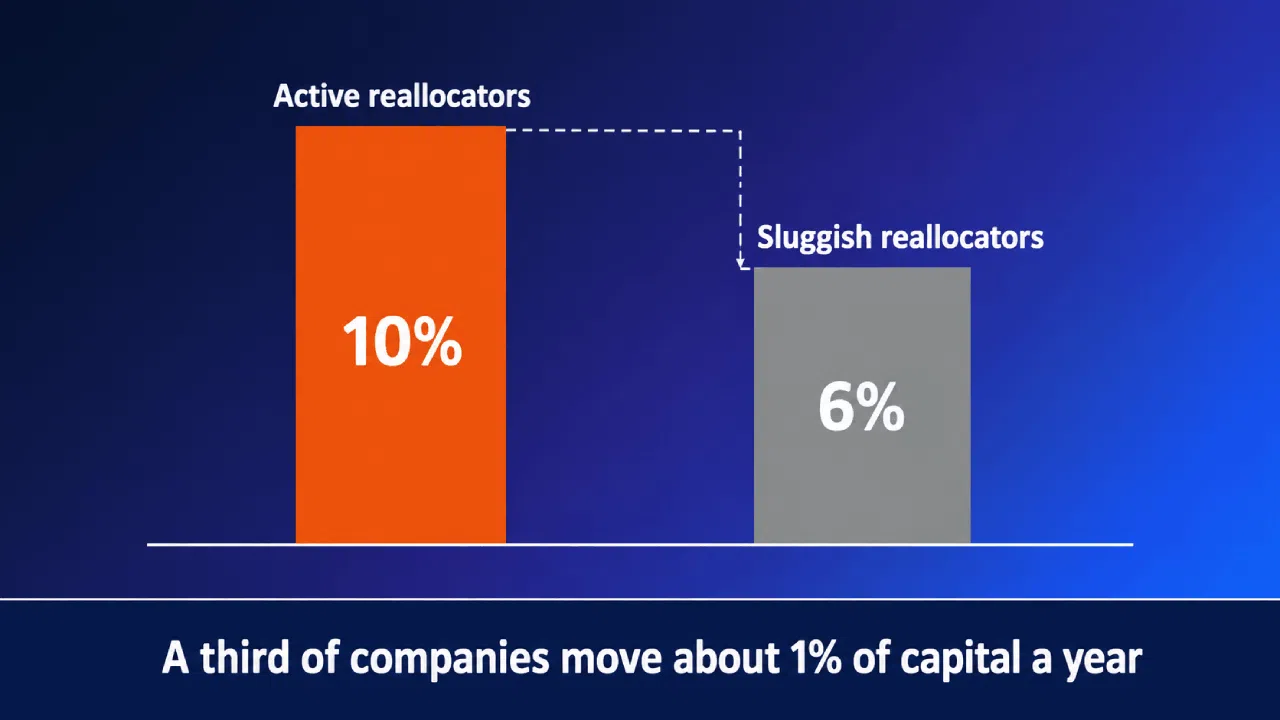
That evidence covers capital shifting between business units, and it’s correlational. Read it as a description of how slowly money moves.
In a survey reported by McKinsey, fewer than a third of over 1,200 executives said their budgets were similar to their most recent strategic plans.
A study cited in that same work found a striking 90% correlation in investment spending from 1 year to the next.
So in short, last year’s allocation predicts this year’s. A campaign that produces ideas after the lock is bidding for an exception.
Start With the Dates You Don’t Control
Before you pick a launch week, list the dates you can’t move. They belong to finance, to planning, and to whoever runs the gate.
Each of those dates consumes something from the campaign. Each one implies a close date that sits well ahead of it.
Here are the 4 anchors worth mapping first:
| Fixed Date | What It Consumes | How Far Ahead the Campaign Must Close |
|---|---|---|
| Annual budget lock | Next year’s funding envelope | Far enough that scored ideas exist before the numbers are written |
| Strategy or planning cycle | Slots on the roadmap | Far enough that themes can shape the plan while it’s still open |
| Portfolio or gate review | Committed people and money | Far enough that a shortlist reaches the pack before it circulates |
| External deadline (regulatory, customer, seasonal) | The window itself | Far enough that build time survives after the decision |
Expect the 3rd row to be the anchor you underestimate, because gate reviews run on a calendar that was never yours to set.
Cooper’s account of a quarterly portfolio review describes one company forcing a ranking of projects at each session. That’s one company’s cadence in a worked example.
In the same paper, gatekeepers score a project independently on a scorecard, the scores are displayed, differences get debated, and resources are committed on a Go.
So the review is where money and people change hands. That’s what makes it a real anchor. External deadlines are the simplest to respect. They’re also the ones you find late.
The Dates Programs Forget to Map
The innovation fund at one NASA center publishes its whole FY26 cycle:
- An optional notice of intent in April 2025
- Proposals due in June
- Notification targeted for late August
- Funding released on 1 October 2025
Awards there run for a single year only. That’s one center’s version of the fund – and the shape is really important here.
The NHS Innovation Accelerator has held annual calls since 2015, opening applications on 1 September 2025 and closing them on 12 October, about 6 weeks later.
Assessment ran through November, with interviews in January 2026. Final decisions landed on 28 January.
It’s a fellowship and adoption program, so the part that’s worth copying is the published decision date, fixed before applications opened.
Work Backward From the Decision, Not Forward From the Launch
Start at the decision date and count backward. Each step before it eats calendar time you already own.
The decision needs a scored shortlist with owners attached, so the campaign has to close early enough to produce one. Counting backward, the 5 steps run:
- Decision date. The gate, board or budget meeting where a Go commits money and people.
- Decision prep. Packet assembly, pre-reads, and the quiet conversations that happen first.
- Evaluation and scoring. Reviewers read what came in, score it and cut it to a shortlist.
- Submission window. The campaign is open and ideas arrive.
- Launch. Briefing, comms and the first day anyone can submit.
Take a portfolio review on 14 September. Work back through packet assembly in late August and scoring across the first 3 weeks of August.
That puts the submission deadline in the last days of July, which means launch sits in June and the briefing happens in May.
Notice what the arithmetic did. It moved a Q3 campaign into Q2, and nobody in the room chose to move it.
How Long to Leave the Window Open
Submissions cluster at the deadline. One analysis of conference submission timestamps found authors filing in the final hours before the cut-off.
That’s one researcher’s read of submission receipts from a single conference series, and the data stops in 2008. It isn’t peer reviewed.
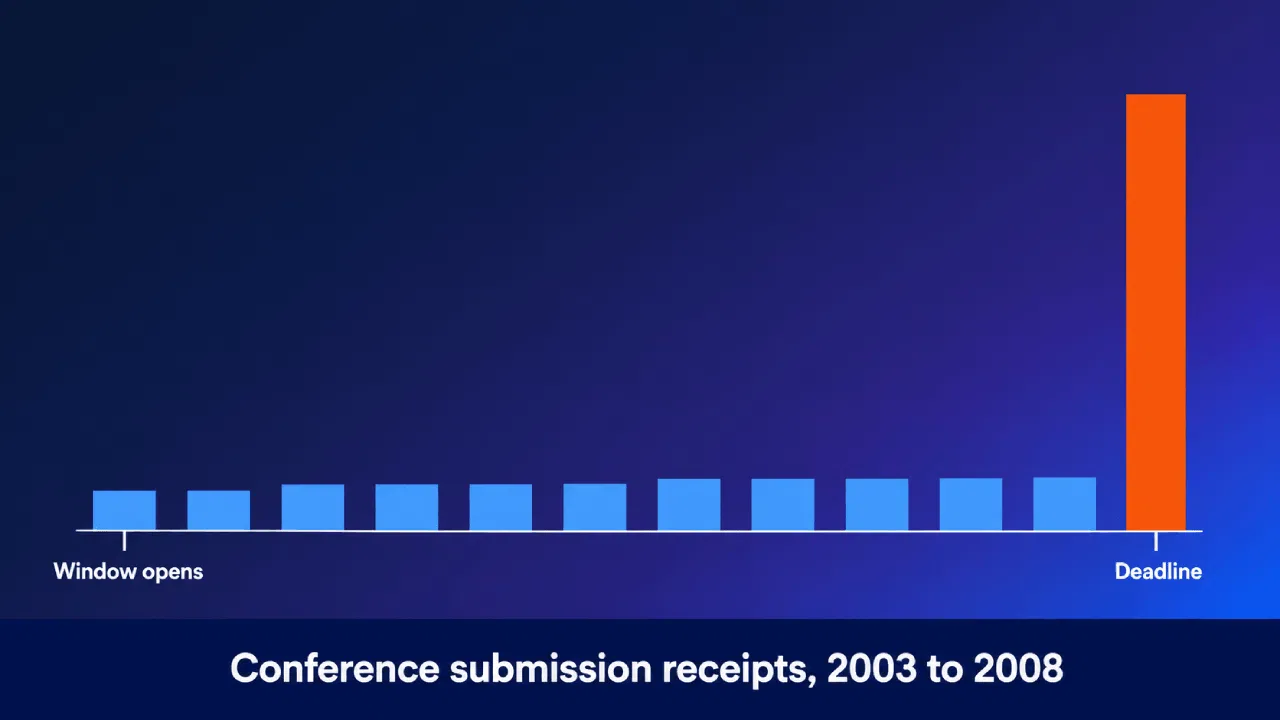
As an illustration, it holds up. The receipts show a quiet stretch and a late rush, and nothing about window length.
Honestly, there’s no clean number here. The published evidence on window length for internal campaigns is thin.
The NHS call ran about 6 weeks. The NASA cycle gave 2 months from notice of intent to deadline. 2 reference points and no benchmark – what you can reason about instead is capacity.
A window that closes 6 weeks before the decision leaves 6 weeks to read, score and package. That’s the number you’re really setting.
Shorten the window when the review load is heavy, and lengthen it when the theme needs socializing before people will submit.
Your Evaluation Capacity Is the Other Constraint
Attraction is the easy half. The other binding constraint is how much a small group can read properly before the decision.
An explainer from the Wisconsin School of Business applies Little’s Law to project pipelines: as arrivals increase, the average time to complete activities slows.
The slowdown is small while the pipeline is uncongested. As it clogs, delays increase exponentially.
Size the campaign against 4 numbers:
- How many submissions you expect, based on the last comparable campaign.
- How many reviewers you have, and how many have actually confirmed.
- How many hours each of them can give, honestly.
- How many working days sit between close and decision.
Multiply the middle 2 numbers, compare the result with the reading time the first one implies, and you’ll know whether the campaign is sized or aspirational.
Attrition further down the funnel is real too. Cooper’s 2024 note says PDMA studies over the years show 70 percent of approved development projects fail or are killed.
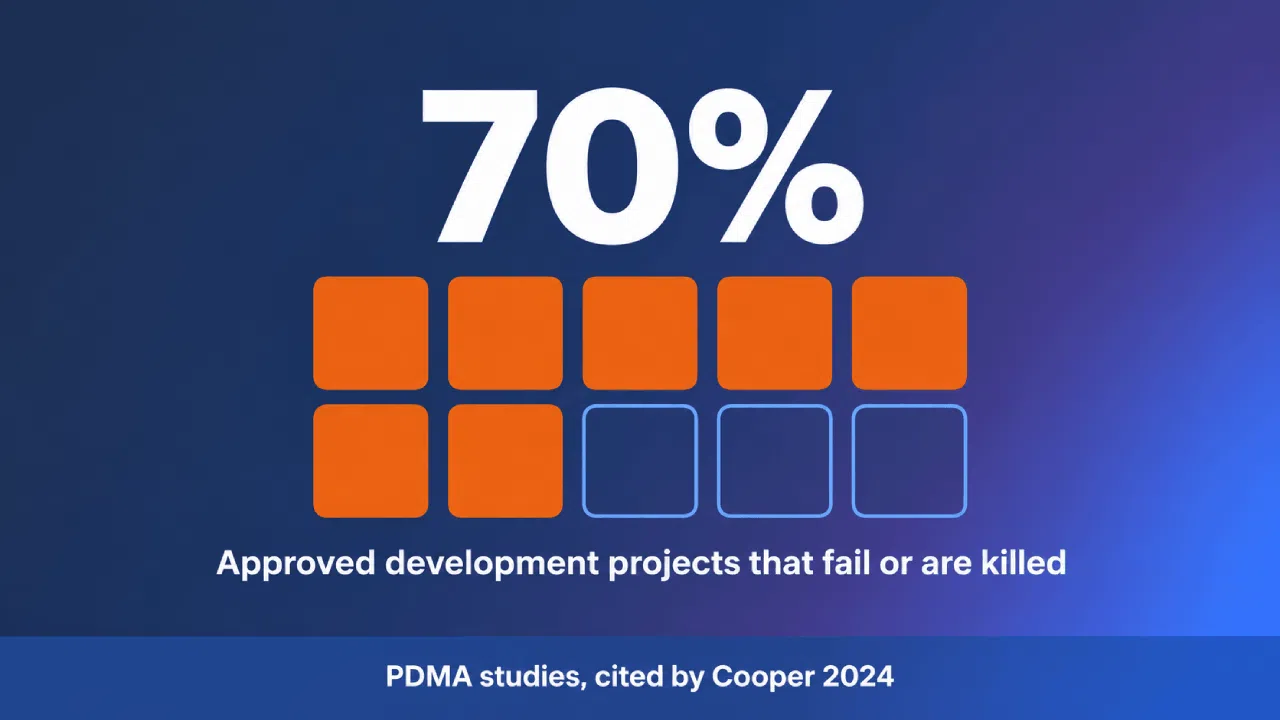
That figure covers approved projects, and raw ideas fall away well before approval. It’s a reason to keep the scoring cheap and the shortlist short.
So here’s the rule – never schedule a campaign whose output you can’t read, score, and package before its decision date.
When the Reading Load Beats the Reviewers
Overload has a documented cost. In a 1992 Harvard Business Review case, a company called PreQuip had 30 projects running at once.
It carried 2-3 times more development work than it could complete inside its 3-year planning horizon, and productivity dropped as more projects were added.
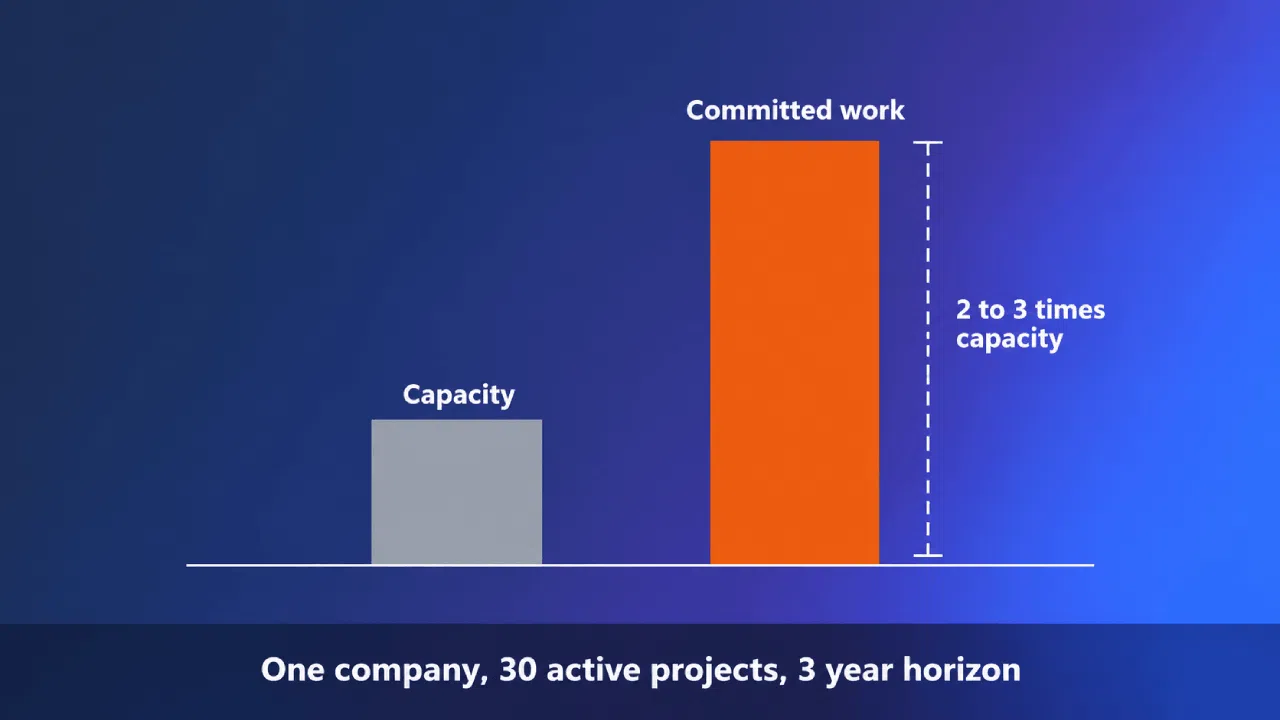
After the portfolio was cut, commercial development productivity improved by a factor of 3 between 1989 and 1991. That’s one anonymized company, so read it as a case.
AI earns its place in the evaluation window by clustering near-duplicate submissions and summarizing long ones, which shortens the reading load.
It helps you triage. The judgement, the scoring and the Go still belong to people.
What to Do When the Campaign Overshoots
Sometimes 400 submissions arrive when you planned for 150. You have 3 options, each of them spends something.
- You can add reviewers, which spends other people’s weeks
- You can ask for the decision to move, which spends credibility
- You can screen harder, which spends good ideas.
Pick one before the campaign opens. Deciding under pressure tends to produce the 3rd option by accident.
Space Campaigns by Theme, Not by Calendar Symmetry
The number of campaigns you run in a year equals the number of strategic domains with a live decision attached.
That might be 2. It might be 6.
BCG’s 2024 innovation review reports that strategy-led innovators achieve a share of revenue from new products 74 percent higher than companies with a weak link between strategy and innovation.
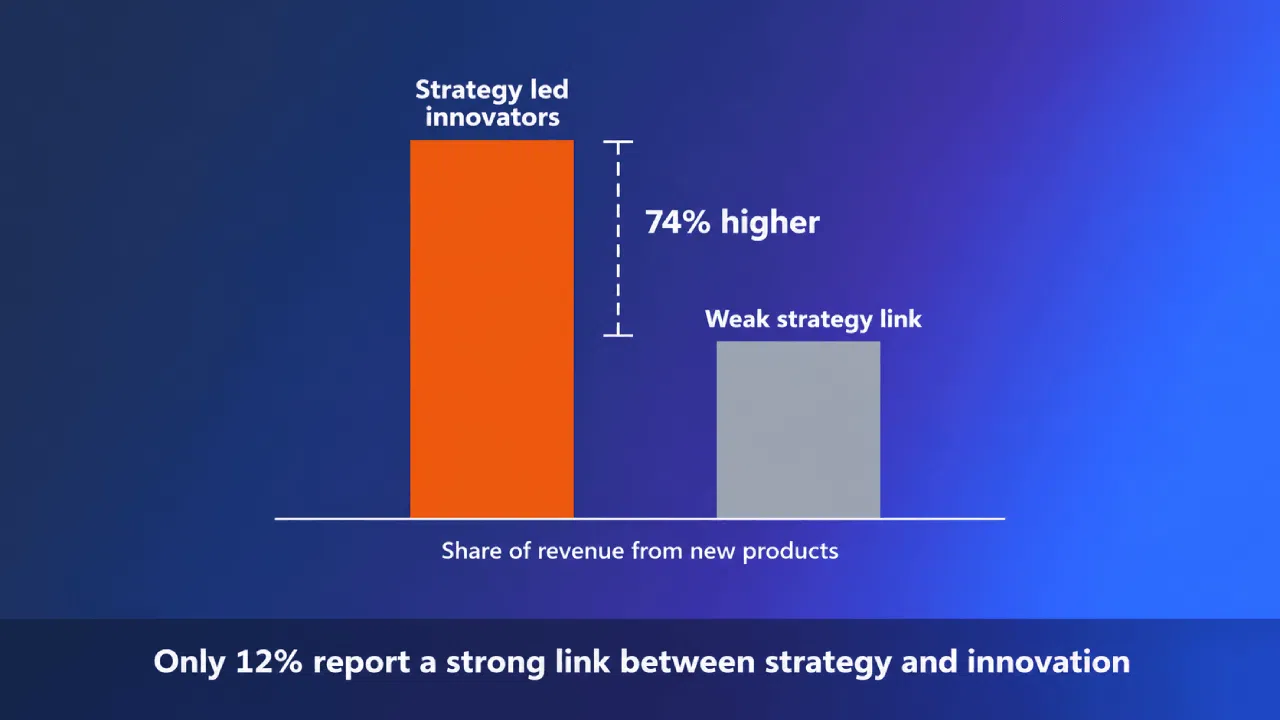
Just 12 percent say their company has a strong link between the two. It’s a correlational survey, so themed campaigns don’t earn credit for the 74%.
What it does support is the habit of tying a campaign to a domain where somebody is already scheduled to decide something.
In a McKinsey survey on strategic planning, only 23% of nearly 800 executives said major strategic decisions were made within the formal process.
That’s 2006 fieldwork, so it isn’t a current reading. It’s a reminder to map where decisions actually happen.
Remember that a theme without any decision behind it is a survey. It’ll collect answers and owe people nothing afterwards.
When Two Campaigns Should Overlap
Overlap works when the decisions differ and the reviewer pools don’t share people. It stops working the moment 1 person sits on both panels.
2 campaigns aimed at the same audience in the same fortnight compete for the same attention. Expect the smaller theme to come off worse.
So stagger the closes, even by 2 weeks. The evaluation queues then don’t collide.
When to Leave a Quarter Empty
A quiet quarter is a choice. If no decision lands in it, a campaign there produces ideas with nowhere to go.
The always-on intake channel covers the gap: people can still submit, and what arrives waits for the next decision it fits.
Toyota’s own history of its suggestion system reports adoption rising from 29% in 1956 to 76 percent in 1972, with 1973 suggestions from 43,000 employees expected to surpass 250,000.
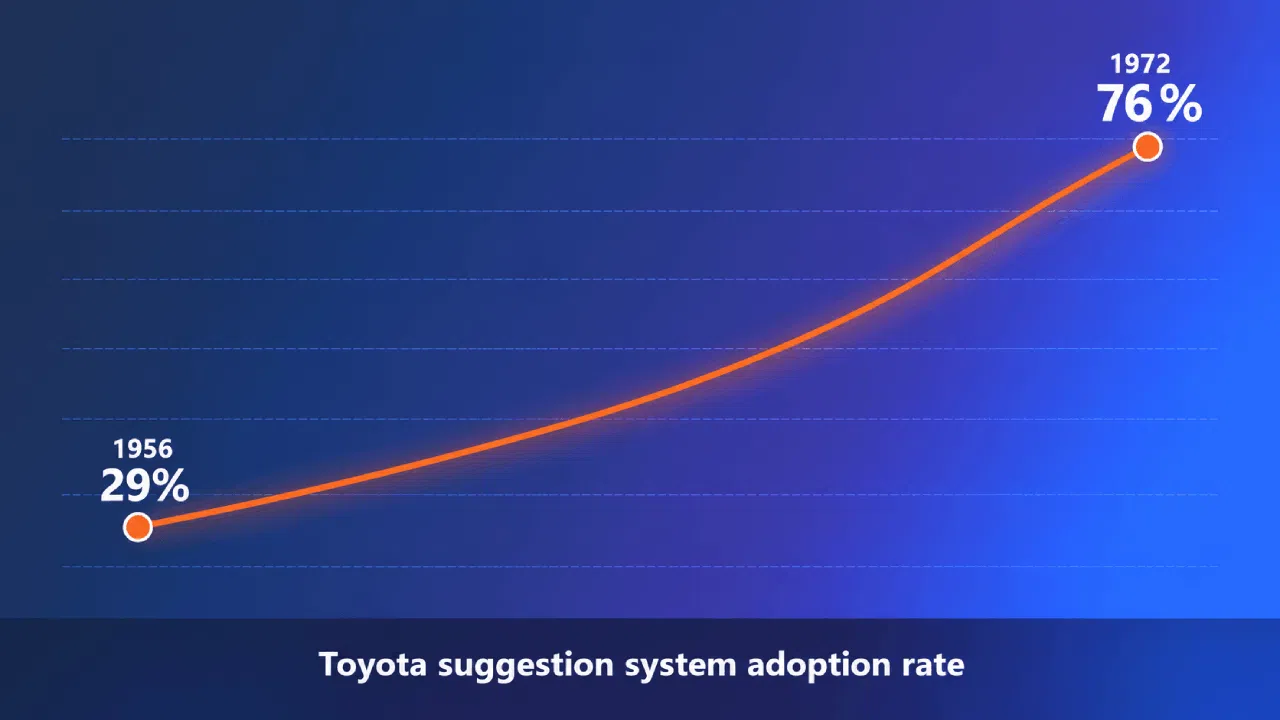
That’s the early 1970s, in a manufacturing culture built around the habit. The transferable part is the channel that never closes.
The cost of a quiet quarter is visibility. The program goes quiet, and someone will read that as inactivity.
The Attention Budget You’re Spending
A campaign asks for time from people who don’t have spare time. The collaborative overload research put numbers on that.
Time spent in collaborative activities has ballooned by 50% or more, and at many companies the share of time in meetings, phone and email hovers around 80%.
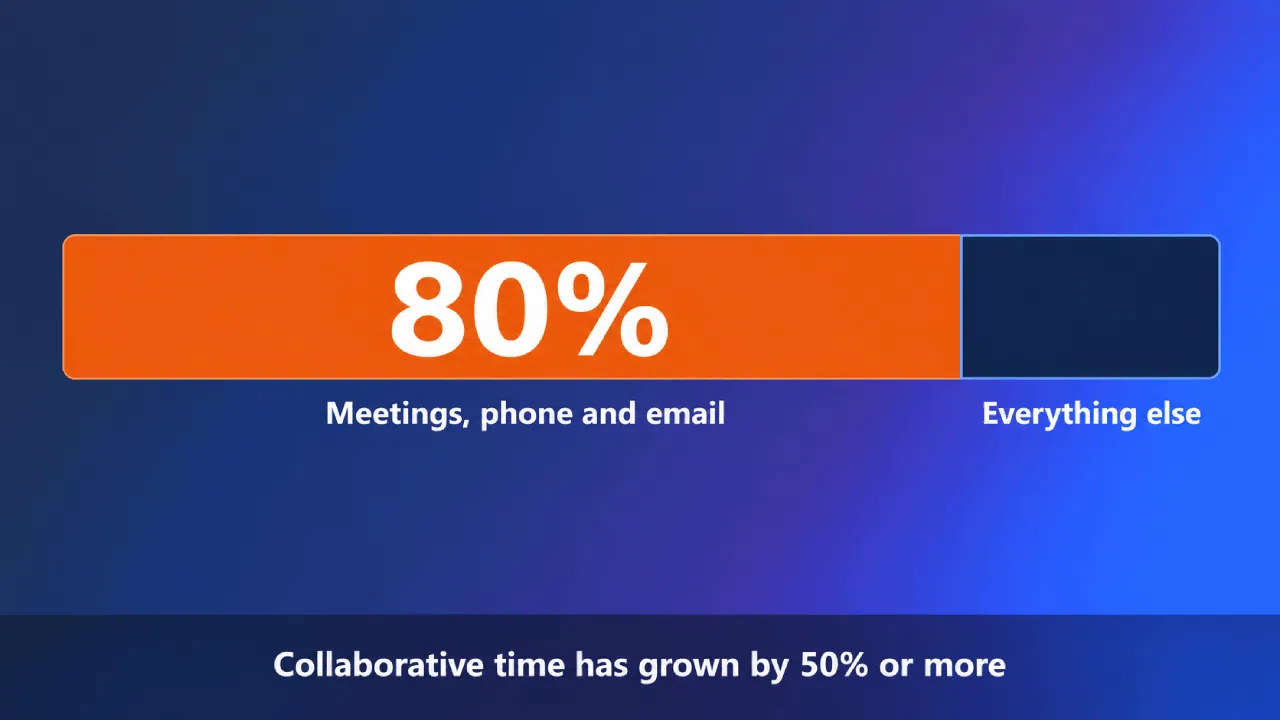
That leaves little room for the work people do alone. It’s general collaborative load, so read it as context on scarcity.
Campaign fatigue gets asserted more often than it gets measured, and the evidence that does exist points in 2 directions.
A 2004 study of survey fatigue saw response fall across 68%, 58% and 46% as the number of prior surveys that semester rose from none to 2.
Those were college students, in one semester, answering surveys. A 2022 review of that literature points the other way.
It reports the sparse literature running contrary to the assumption that excessive surveys necessarily raise nonresponse. To be fair, that’s thin on both sides.
Treat fatigue as unsettled. The risk you can manage is collision: a launch week landing on the engagement survey, the reorg announcement and year-end close.
Before You Fix a Launch Week
Ask internal comms what else goes out that month. Ask HR when the engagement survey runs.
Then check the finance calendar, because a close week removes the exact managers you’d be counting on to promote the campaign.
Moving a launch by 2 weeks is cheap. Moving a decision date is expensive, because other calendars hang off it.
What the Calendar Should Actually Contain
A row that holds only a launch date is an announcement. The row has to carry the whole chain, down to who says yes.
Blank fields are useful. Each one marks a part of the campaign nobody has agreed to yet.
Each campaign row carries 6 fields:
- Launch date, and who’s briefing whom.
- Close date, set backward from the decision.
- Evaluation window, with named reviewers against it.
- Decision date, already in the decider’s diary.
- Named decider, one person who’s able to commit resources.
- Destination of a Go: budget line, gate, or roadmap slot.
That last field is easy to leave vague. A Go that leads nowhere specific is a compliment with a deadline.
IBM’s Innovation Jam ran in 2 three-day phases in 2006 and involved 150,000 employees, family members, business partners, clients from 67 companies and university researchers.
Afterwards IBM announced appropriation of $100 million for the launch of 10 new businesses. That’s a global, executive-sponsored event at a company of hundreds of thousands.
The transferable part is small and specific: the jam’s output landed on a funding decision within months.
What Submitters Hear Back
One more field gets skipped. A 2025 study of feedback in web-based idea management systems tested both content and timing.
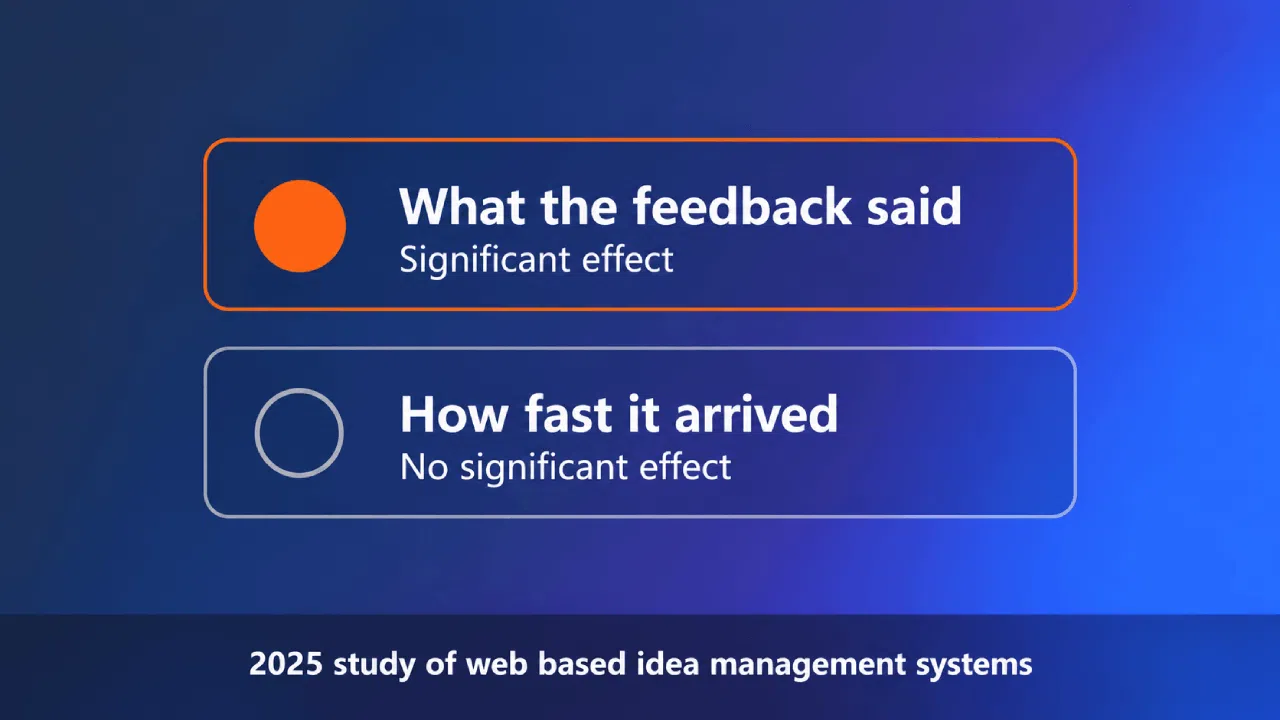
The study reports that success feedback and constructive idea-related failure feedback significantly enhance future idea success, while ideator-related failure feedback shows diminishing returns.
No significant moderating effect was found for timing. The measurable difference was in what the feedback said.
As you know, that doesn’t really license a slow reply. It moves the work from speed to substance, which is the harder half to schedule.
Put the feedback date in the calendar row anyway, with the writer named.
A Year That’s Actually Planned
Here’s what 3 campaigns look like when each one is pinned to a decision. The themes are illustrative – the shape is the point.
| Campaign | Close Date | Decision Date | What the Decision Feeds |
|---|---|---|---|
| Service cost-to-serve | Late July | 14 September portfolio review | Resourcing for two projects at the autumn gate |
| Regulatory readiness | Mid-October | 30 November program board | A compliance workstream with a fixed external date |
| Adjacent revenue | Mid-February | 20 March strategy session | Themes carried into next year’s plan before the budget locks |
The gap between the close and decision columns is the evaluation window you’re committing to.
The regulatory row has the least freedom. Its external date sets everything else, and the campaign bends around it.
The adjacent-revenue campaign closes in February because the strategy session in March is where its output has a chance of landing.
Nothing here is evenly spaced. The gaps are where the decisions weren’t.
Book the Decision Before You Book the Campaign
A campaign calendar is a decision calendar with intake attached. Draw the decisions first.
3 moves, in this order:
- List next year’s fixed dates. Budget lock, planning cycle, gate reviews and external deadlines, with a name against each.
- Count backward from each one. Set a close date and a launch week, sized against the reviewers who’ve actually confirmed.
- Delete any campaign with no decision date. What’s left is the calendar, whether that’s 2 campaigns or 6.
The 3rd move is the one that stings, because deleting a campaign from the calendar looks like doing less innovation work.
What it removes is unfunded demand on people’s time. The ideas that would have arrived can still come through the always-on channel.
Download the free guide Idea Collecting: From Organizational Signals to Ideas and learn how to build a collection process with a clear path to decision.
Or request a demo to see how Accept Mission gives you real-time visibility into submission quality, stage progression, and campaign engagement across your calendar.










 English
 Dutch
 Portuguese
 Spanish
 French
 German
 Arabic