
The Evolution of Corporate Innovation Strategy: Historical Deep Dive19 min read
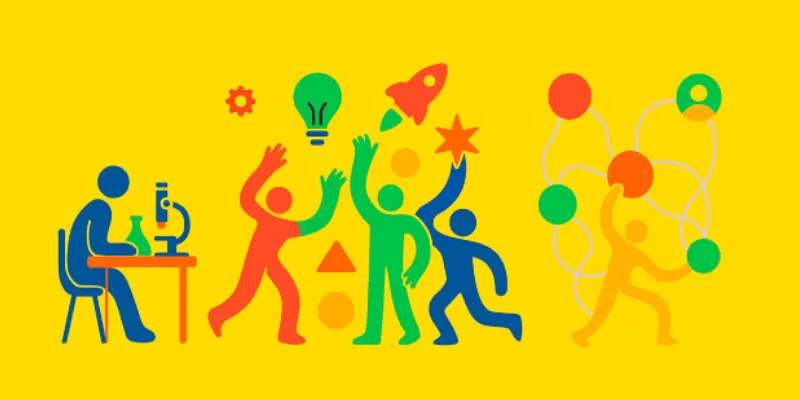
Why do some companies thrive for decades while others collapse? The answer is often how they approach innovation.
Corporate innovation strategy has transformed dramatically over the past century. What worked in 1920 would fail today.
Understanding this evolution helps modern leaders build strategies that actually work. This article traces the shift from closed labs to open ecosystems.
We’ll cover key frameworks, historical turning points, and future trends. You’ll see why the most successful companies today think differently about innovation than their predecessors did.
Understanding Innovation: Core Concepts
Before we dive into history, let’s clarify what innovation actually means.
Innovation vs. Invention
Invention and innovation are not the same thing. An invention creates something fundamentally new – a spark of discovery.
Innovation takes that invention and turns it into market value. Think of it this way: the telephone was an invention, but the cellphone was an innovation.
The mobile phone took the basic concept and transformed it through decades of work into something that reshaped society. Companies focus on innovation, not just invention.
Their goal is to solve problems, delight customers, and create competitive advantage. That’s an economic process, not just a technical one.
Types of Innovation
Innovation comes in different forms. Understanding these types helps explain strategic choices throughout history.
Here are the main categories:
- Incremental innovation – small, continuous improvements
- Radical innovation – transformative breakthroughs
- Disruptive innovation – simpler products that move upmarket
- Product innovation – changes to what you sell
- Process innovation – changes to how you make it
- Business model innovation – changes to how you create value
Incremental innovation is most common. Apple’s annual iPhone releases fit here with better cameras, faster processors, and refined designs.

Radical innovation creates entirely new markets. The airplane transformed transportation forever.
Disruptive innovation follows a specific pattern. A new entrant starts with a simpler, cheaper product that targets overlooked customers, then improves over time.
Netflix disrupting Blockbuster is a classic example.

The key insight here is that:
Companies can innovate without changing their core product. They can revolutionize service, distribution, or their entire business model.
The Early Era: Closed Innovation and Corporate Labs (1900–1945)
The 20th century started with a dramatic shift. Companies began building their own research laboratories.
Why Companies Built Internal Labs
This wasn’t about ego. It was a strategic necessity driven by four factors.
First, technology was getting complex. New industries like industrial chemistry required deep knowledge, expensive equipment, and serious capital that individual inventors couldn’t match.
Second, the external ecosystem was weak. Universities trained engineers but didn’t focus on commercial research, so companies had to fill that gap themselves.
Third, legal changes helped. Companies could now require employees to assign patents to the firm, giving them control over intellectual property.
Fourth, massive labs created barriers to entry. Competitors couldn’t easily match the investment, creating a defensive advantage.
The First Innovation Fortresses
General Electric founded its research lab in 1900. This was America’s first major effort to integrate science into competitive strategy.

The lab recruited top scientists and gave them freedom to explore with a focus on commercial application. The results were impressive.
William Coolidge developed a ductile tungsten filament that made superior lightbulbs. Irving Langmuir’s work on vacuum chemistry led to gas-filled bulbs and high-vacuum tubes that pushed GE into the radio market.
DuPont established its Experimental Station in 1903. The company transformed itself from an explosives manufacturer into a chemical powerhouse.
Its scientists invented neoprene in 1930. This was the first successful synthetic rubber. Then came nylon in the mid-1930s, creating a massive market for synthetic fibers.
Bell Labs, formally established in 1925, became the ultimate success story. Funded by AT&T’s monopoly profits, it attracted the nation’s best scientific minds.
The lab invented the transistor in 1947, laying the foundation for all modern electronics. Claude Shannon published his information theory in 1948, creating the mathematical basis for digital communication.
The list goes on: solar cells, lasers, the C programming language, Unix. This unmatched record validated the closed innovation strategy.
The Logic Behind Control
These companies needed to own the entire pipeline. Knowledge was scarce, and the external ecosystem couldn’t support their needs.
The “Not Invented Here” syndrome was often seen as a cultural flaw. But it was actually rational in this context. When you invest millions in research, you can’t let competitors profit from your discoveries.
Self-reliance was the winning strategy. For that era, it made sense.
The Strategic Shift: Diversification and Portfolio Management (1945–1980)
World War II changed everything. The massive, government-coordinated R&D efforts created new technologies and new ways of thinking about management.
Post-War Changes
The war’s Office of Scientific Research and Development pioneered large-scale R&D. It led to breakthroughs in radar, computing, and atomic fission.
This created a belief in long-range planning and systematic investment in science. “Strategy” entered the business vocabulary during the 1950s and 1960s.
Strategic management formalized as a discipline. Peter Drucker urged leaders to ask “what is our business?”
Alfred Chandler showed that structure follows strategy. Igor Ansoff provided practical tools like gap analysis and growth matrices.
Companies started thinking beyond single products. The focus expanded to managing entire portfolios of businesses.
The Conglomerate Era
Between 1950 and 1980, diversification drove corporate growth. The 1960s saw a merger wave that created conglomerates—large corporations with many unrelated businesses.
Companies like ITT and Litton Industries grew through acquisitions across different industries. The logic was compelling: management was a science, a transferable skill independent of the product.
Here’s what made the conglomerate model attractive:
- Risk diversification meant downturns in one business could be offset by growth in another.
- Internal capital markets allowed headquarters to allocate funds more efficiently than external markets.
- Financial engineering could boost earnings and stock prices through strategic acquisitions.
- Professional management could supposedly run anything well.
But this strategy had a flaw. Financial management took precedence over production and innovation.
The “business of business” became deal-making, not making things. This would later prove problematic.
The BCG Matrix
Managing sprawling enterprises required new tools. The Boston Consulting Group created the Growth-Share Matrix in the early 1970s.

The matrix plots business units on a grid based on market share and market growth rate. This creates four categories:
- Stars have a high share in high-growth markets (they’re leaders but need heavy investment).
- Cash Cows have a high share in mature markets and generate more cash than they use.
- Question Marks have low share in high-growth markets and could become stars with significant investment.
- Dogs have low share in low-growth markets and generate low profits.
The strategy was simple:
Milk the Cash Cows to fund promising Question Marks. Support the Stars to maintain leadership. Dump the Dogs to avoid wasting resources.
This formalized portfolio management for innovation. Executives could make decisions across dozens of industries without deep expertise in each.
The Walls Come Down: Disruption and Open Innovation (1980–2000)
The last two decades of the 20th century shattered the closed innovation model. The corporate fortress became a liability.
Forces That Changed Everything
Several trends converged to break down the walls:
- Globalization created hyper-competitive markets. Companies gained access to new markets and talent but lost the ability to contain knowledge as technology and ideas spread across borders.
- The digital revolution accelerated everything. Personal computers and the internet sped up information exchange, making traditional R&D models too slow.
- Mobile talent ended lifetime employment as skilled workers moved between companies and started their own. Each departure created a “leak” in the fortress, where knowledge walked out the door.
- Venture capital provided alternative funding. A sophisticated VC market emerged, especially in Silicon Valley, funding startups that could move faster than corporate bureaucracies.
Digital technologies enabled new business models and made physical labs less critical. Agile, well-funded startups became serious threats.
The Innovator’s Dilemma
Clayton Christensen explained why great companies fail. His theory was revolutionary.
Successful companies listen to their best customers. They invest in improvements those customers want and focus on profitable market segments.
This is exactly right — until it isn’t.
The theory describes a process where an incumbent improves its products for demanding customers, adding features and complexity that overshoot the needs of low-end customers.
Here’s how disruption unfolds:
- A new entrant introduces something simpler and cheaper that looks inferior to mainstream customers.
- The entrant targets low-end customers or creates a new market among “non-consumers.”
- The incumbent makes a rational decision to cede the less profitable segment and focus on high-margin customers.
- The entrant improves relentlessly, moving upmarket.
- Eventually, it attracts the incumbent’s core customers. By then, it’s too late.
This wasn’t about blindness. Market leaders saw the new technologies, but their business models made pursuing them financially unattractive early on.
Christensen’s theory made scanning for disruption a strategic priority. Leaders had to look beyond direct competitors and watch for seemingly inferior technologies.
The Silicon Valley Model
Silicon Valley showed a new path. Innovation came from an ecosystem, not single companies.
The key components worked together in a self-reinforcing system:
- Venture capitalists provided high-risk funding, mentorship, and connections on Sand Hill Road.
- Universities like Stanford supplied cutting-edge research, highly skilled graduates, and faculty-led spinouts.
- Mobile talent circulated freely between established firms like HP or Intel and new startups, spreading knowledge.
- Professional services developed deep expertise in supporting high-growth tech companies.
Success bred more success. The region became the global center of tech innovation.
Large corporations responded with Corporate Venture Capital units. CVC allowed them to invest in startups directly, providing a window into emerging technologies and access to talent.
The risk was lower than buying early-stage companies outright. The new logic was clear: access matters more than ownership, and the network beats the fortress.
Open Innovation Emerges
Henry Chesbrough formalized this shift in the early 2000s. He called it “Open Innovation.”
The definition: firms can and should use external ideas and external paths to market to advance their technology. This was a survival mechanism for incumbents facing constant disruption.
- Outside-in open innovation brings external knowledge inside through technology scouting, crowdsourcing, customer co-creation, university partnerships, and CVC investments.
- Inside-out open innovation lets internal ideas go to market externally through licensing patents, creating joint ventures, or spinning off new companies.
Procter & Gamble’s Connect + Develop program became the flagship example. In the late 1990s, P&G faced an innovation crisis despite massive R&D spending.
Its success rate was stagnating and less than 10% of its patents were used commercially.
In 2002, CEO A.G. Lafley launched C+D with an audacious goal: source 50% of innovations from outside, up from just 10%.
P&G created a global network of scouts who searched for solutions:
- The Crest SpinBrush came from an Ohio entrepreneur
- Olay Regenerist used technology from a French firm
- Swiffer Dusters were inspired by a Japanese dusting tool
Within five years, over 35% of new products had external origins. R&D productivity increased by 60%, sales doubled, and profits tripled.
P&G proved the new reality. Competitive advantage came from what you could access and orchestrate, not just what you owned.
The innovation unit shifted from the firm to the network. This was a fundamental change in how companies approached innovation strategy.
Modern Execution: Agile, Lean, and Design Thinking (2000–Present)
Open innovation required new execution methods. Traditional, linear development cycles were too slow for rapid change.
Why Old Methods Failed
The past couldn’t predict the future anymore. A multi-year plan executed in isolation could produce an obsolete product by launch day.
The new paradigm required a mindset shift. Instead of “make a plan and stick to it,” leaders had to “set a direction and test toward it.”
Constant learning and iteration replaced perfect planning. This demanded frameworks that embraced uncertainty, prioritized speed, and put customer feedback at the center.
Lean Startup
Eric Ries developed the Lean Startup methodology, inspired by Toyota’s lean manufacturing. The core is the Build-Measure-Learn loop.
Instead of building a full product based on assumptions, teams cycle through this loop quickly. Build a minimum version, measure customer response, and learn whether to pivot or persevere.
The Minimum Viable Product (MVP) is critical. It’s not a smaller final product — it’s the version that collects maximum learning with minimum effort.
Dropbox validated its concept with just an explainer video. They didn’t build the complex system first.

The video showed how it would work. The overwhelming response — tens of thousands of beta sign-ups overnight — proved people wanted the product.
General Electric adopted this with its FastWorks program. In the early 2010s, GE brought in Eric Ries to embed his principles across the organization.
Over 5,000 leaders were trained. Teams were restructured to be cross-functional and autonomous, engaging customers from day one.
A new gas turbine developed with FastWorks came to market two years faster than normal. Development costs dropped 40%, proving a 125-year-old industrial giant could innovate like a startup.
Agile Development
Agile started in software but spread everywhere. It replaced the rigid “waterfall” model with an iterative approach.
The core practices break large projects into small modules developed in short “sprints” (typically one to four weeks). Cross-functional teams hold brief daily meetings to coordinate and identify obstacles.
Each sprint produces a working increment that stakeholders and customers can see. Their feedback informs the next sprint, making responding to change more important than following a plan.
Companies now use Agile for marketing campaigns, business processes, and physical products. John Deere uses Agile principles with nine-month cycles to identify opportunities, develop solutions, and test with customers.
Spotify created a famous organizational model to scale Agile:
- Squads are small, cross-functional teams with end-to-end responsibility for a feature.
- Tribes are collections of related squads working in similar areas.
- Guilds are communities where specialists share knowledge across the organization.
This maximizes autonomy and speed at the team level while ensuring alignment across the company.
Design Thinking
Design Thinking finds the right problem to solve. It’s human-centered and empathy-driven, starting with user needs rather than technology.

The process has five phases that work together:
- Empathize through observing users to understand their experiences.
- Define the core problem from the user’s perspective.
- Ideate through brainstorming a wide range of potential solutions.
- Prototype with inexpensive, scaled-down versions to test ideas.
- Test by sharing prototypes with users to gather feedback and refine solutions.
This iterative process ensures you’re solving real problems.
GE Healthcare’s Adventure Series is a classic example. Pediatric patients were terrified of MRI scans, so the team didn’t try to make the machine faster or quieter.
They empathized with children through observation in hospitals and daycare. They defined the problem as fear and anxiety, not a technical issue.
The solution: turn scary procedures into adventure. They decorated MRI suites as pirate ships and spaceships.
Patient satisfaction scores increased 90%. Scan quality improved because children were calmer.
Airbnb used Design Thinking when bookings were flat. The founders empathized with users and realized amateur photos failed to build trust.
The solution wasn’t technical. They flew to New York, rented a camera, and took professional photos of hosts’ apartments, immediately improving bookings.
How They Work Together
These methodologies form an integrated toolkit.
- Design Thinking finds the right problem
- Lean Startup validates the business model
- Agile builds the solution iteratively
Together, they provide an end-to-end system for navigating uncertainty. Customer feedback drives every step, and learning beats prediction.
The Next Frontier: AI and Sustainability
Two forces are reshaping corporate innovation today. Artificial intelligence and environmental, social, and governance (ESG) criteria are converging to redefine innovation strategy.
AI as Innovation Accelerator
AI is transforming how companies innovate. It accelerates R&D across nearly every field.
In data-intensive research, AI collapses timelines.
“Self-driving labs” use AI to design and execute experiments, analyze datasets, and predict molecular interactions, which turns years of drug discovery into months.
AI enhances strategic decisions. Generative models analyze market data, competitor intelligence, and internal metrics to identify opportunities, model scenarios, and provide planning insights.
According to Gartner, AI strategy must be dynamic and bidirectional. Business goals shape the AI agenda, but emerging AI capabilities must reshape business direction.
Leaders can’t just apply AI to existing processes. They need to recognize its potential to create entirely new business models.
AI also drives product innovation. It enables hyper-personalization, predictive analytics, and process automation, creating new forms of value and revenue streams.
ESG as Strategic Driver
The purpose of innovation is expanding. Environmental, Social, and Governance considerations are moving from compliance to core strategy.
Sustainable innovation adjusts products, processes, and business models to create long-term social and environmental benefits while maintaining economic viability. This embraces a “triple bottom line”: people, planet, profit.
The business case is strong. Companies with strong ESG performance attract top talent and show greater resilience.
They achieve more stable long-term revenue and share price performance. ESG-linked assets under management are projected to reach $50 trillion by 2025.
This drives innovation across industries:
- Circular economy models like Patagonia’s design for longevity, repair, and recycling.
- Energy efficiency like Google’s hyperefficient data centers and pledge for 24/7 carbon-free energy by 2030.
- Sustainable products like Apple’s M1 chip reduce MacBook Pro’s carbon footprint by 8%.
- Ethical supply chains using blockchain to ensure transparency and responsible sourcing.
Microsoft committed to become carbon-negative by 2030. IKEA invests heavily in renewable energy for its stores.
These goals require innovation across entire value chains. Sustainability drives innovation in materials, logistics, and operations.
The Convergence
AI and sustainability aren’t separate tracks. They’re deeply intertwined in a symbiotic relationship.
AI enables sustainability goals. Algorithms optimize wind farm performance and electrical grid stability while forecasting energy demand more accurately to reduce waste.
For ESG compliance, AI automates data collection across global supply chains. It identifies emissions hotspots and ethical risks while helping draft complex sustainability reports.
In strategic planning, AI models the financial and environmental ROI of green investments. It quantifies market potential for low-carbon products and makes sustainability data actionable for decision-makers.
But there’s a challenge. Training large AI models consumes vast energy, creating significant environmental impact.
This drives “Green AI” — the focus on energy-efficient algorithms and sustainable data centers. The challenge itself becomes a driver for innovation.
Convergence marks a mature innovation strategy. The “why” expands to grand challenges like climate change, while the “how” is supercharged by intelligent systems.
Winners will master this symbiosis. They’ll use AI to pursue sustainable, purpose-driven growth.
Key Takeaways for Modern Leaders
A century of evolution reveals clear patterns and principles.
Three Major Patterns
Three dominant patterns emerge from this historical journey:
- From control to orchestration. Early 20th-century firms built fortresses to own the entire pipeline, but today’s leaders orchestrate networks where innovative capacity comes from what you can access, not just what you own.
- Expanding portfolios. Innovation portfolios now include business units, innovation types, and innovation models where leaders balance incremental improvements with radical bets while mixing internal R&D with open innovation approaches.
- Accelerating cycles. Closed innovation lasted 70 years, strategic planning lasted 35 years, but open innovation and agile emerged in less than 20 years—the time between paradigm shifts is shrinking, making continuous adaptation the ultimate advantage.
Building Resilient Strategy
Modern strategy rests on four pillars:
- Portfolio approach balances incremental, sustaining, and exploratory projects. Use cash from mature products to fund future growth engines.
- Agile and lean execution embeds Design Thinking, Lean Startup, and Agile across all functions. De-risk exploration through validated learning and iteration.
- Systematic ecosystem engagement builds capabilities for technology scouting, corporate venture capital, and partnership management. Create processes for tapping into global talent and ideas.
- Purpose-driven direction integrates AI as a process enabler and ESG as a strategic driver. The most valuable innovations solve environmental and social challenges while creating shareholder value.
Practical Recommendations
Here’s how to put these principles into action:
- Structure for ambidexterity. Protect exploration with dedicated innovation teams separate from the core business while empowering core teams to pursue incremental innovation, then bridge the gap with clear governance.
- Rethink resource allocation. Use metered funding for exploratory projects where you provide seed funding to test hypotheses, then release more money only after achieving validation milestones while broadening the definition of return to include strategic value, not just financial ROI.
- Foster innovation culture. Promote psychological safety so people feel safe to propose radical ideas and fail while championing curiosity through practices like 3M’s 15% Rule, hackathons, and customer immersion, then empower small teams and trust them to execute as leaders, ask questions, remove roadblocks, and ensure alignment.
Turning Strategy Into Action
Corporate innovation strategy has evolved from control to collaboration. The fortress gave way to the network, planning gave way to experimentation, and solitary firms gave way to ecosystems.
The only constant is change. The time between paradigm shifts keeps shrinking, so winners understand this history and adapt continuously.
Understanding innovation history is valuable, but execution separates winners from losers. Modern companies need the right tools to turn strategic insights into measurable results.
Accept Mission provides the infrastructure to implement these strategies effectively.
This AI platform manages the complete innovation lifecycle, from idea collection and selection to project management.
Accept Mission bridges the gap between strategy and execution with several key capabilities:
- AI-powered idea enrichment and scoring to make better decisions faster.
- Stage-gate funnels to manage your innovation portfolio like the BCG Matrix approach.
- Gamification features like leaderboards and points to create a culture of innovation similar to 3M’s 15% Rule.
- Project management tools to execute selected ideas using Agile principles.
- Enterprise integrations with Microsoft Teams, Power BI, and other business applications.
- Comprehensive dashboards to measure innovation performance and ROI.
The platform makes innovation accessible and engaging for everyone.
Whether you’re managing incremental improvements or exploring radical breakthroughs, Accept Mission provides the structure and tools to succeed.
Ready to transform your innovation strategy into tangible results?
Accept Mission offers hands-on onboarding, expert guidance, and a platform designed for innovators who want to move fast and deliver impact.
Book a demo today to see how Accept Mission can help your organization build a resilient innovation engine. Harness historical insights for competitive advantage.









 English
 Dutch
 Portuguese
 Spanish
 French
 German
 Arabic
