Idea Prioritization Tools Compared: Why Scorecards, Voting, and AI Clustering Each Win a Different Stage11 min read

Ideas are rarely the bottleneck. Most innovation teams have more than they can act on, scattered across backlogs, forms, and forgotten threads.
Teams grab whatever prioritization tool sits nearest:
- A voting round, to surface what the crowd likes.
- A scoring template, to rank the serious contenders.
- An AI model, to sort the pile fast.
Each of these helps, but none does the whole job alone. The real bottleneck is deciding which ideas actually deserve resources.
Here’s the position worth holding early.
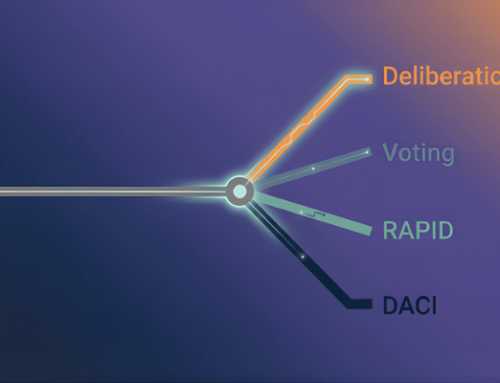
Weighted scorecards, voting, and AI clustering each win a different stage of one pipeline, and the strongest programs run all three in sequence.
Why Prioritization Breaks Down Before You Pick a Tool
The tool is almost never the real problem. Weak prioritization usually traces back to a missing process, not a missing feature.
You see it in the symptoms first. Ideas live in scattered spreadsheets, ownership is fuzzy, and the backlog swells until it loses all meaning.
Left unmanaged, teams fall into what one project prioritization guide calls the “everything is high priority” syndrome, which drains limited bandwidth.

A backlog stacked hundreds of ideas deep signals a stalled funnel. No one is making decisions, and the discipline has quietly collapsed.
The data on how teams actually spend their time confirms the pattern:
- Product managers spend 52% of their time on unplanned fire-fighting rather than deliberate prioritization.
- Only 28% believe they have a genuinely optimized product-development process.
Read those two numbers together and the picture is clear. Most teams are reacting, not deciding, and no tool fixes a reaction habit on its own.
Structure is what closes that gap. A method only works when it sits inside a process that assigns ownership, ties choices to strategy, and produces a record you can defend later.
That’s the lens for everything below. Every method gets judged by one question: which stage of the funnel does it actually belong in?
Weighted Scorecards: The Decision Layer
When a go/no-go call must be made, weighted scoring carries it. It runs every idea through the same criteria and yields a number you can trace to strategy.
The mechanics are simple enough to trust. You define custom criteria, assign each a weight totaling 100%, then score ideas against them so the model flexes to your strategy.
Several scoring approaches share this DNA. They differ mostly in speed and precision:
| Method | How It Works | Best For |
|---|---|---|
| RICE | Reach x Impact x Confidence divided by Effort (Intercom origin) | Balanced, evidence-backed prioritization across a mixed backlog |
| ICE | Impact x Confidence x Ease, a lighter three-factor score | Fast triage of experiments when precision matters less |
| Weighted Scoring | Custom criteria, each weighted to total 100% | Enterprise portfolios that must tie directly to strategy |
RICE is the most widely adopted single framework, used by 38% of teams in one 94-team survey.
For enterprise portfolios, though, weighted scoring and cost of delay tend to win, because they connect each decision to strategy, risk, and impact.

The number is only as good as the calibration behind it. Reviewers drift: some score strict, some lenient, and unmanaged that variance quietly corrupts the ranking.
The fix is procedural, not clever:
- Have people score independently, before any discussion.
- Anchor everyone to the same shared examples.
- Treat wide divergence as a signal to investigate, not an error to average away.
One technology team shows how much this matters. Facing more than 60 competing project requests, contributors scored each one against shared criteria before the executive team reviewed anything.
That narrowed the field to a defensible top three, without the loudest voice in the room deciding the outcome.
That’s the quiet strength of a scorecard. It makes the reasoning visible, and visible reasoning is what you can defend to a board six months later.
Voting: Good Signal, Bad Decision Engine
Voting feels like prioritization, which is exactly why it gets misused. A vote tells you what the crowd notices, and noticing isn’t the same as fitting your strategy.
The mechanics themselves are shaky. Dot voting and similar crowd methods carry well-documented failure modes:
- Persuaded voting, where people copy whoever voted first or loudest.
- Split voting, where similar ideas cannibalize each other’s support.
- Group think, where the room converges before it has actually deliberated.
Then there’s the visibility trap. High-vote ideas accumulate even more votes through social proof, while quieter but important ideas fall further behind.
That feedback loop distorts the signal at the source. Research shows visible vote counts even change what people submit and how they participate.

The more the crowd leans on those counts, the more the signal degrades. So don’t scrap voting; just place it correctly and give it the right job.
Voting is genuinely good at two things: early narrowing and engagement. It thins a big field fast and gives contributors real ownership of what advances.
You can also blunt its worst biases with structure. Give people research time, use anonymous ballots, and let juniors vote first so seniors don’t set the anchor.
So use voting to surface and to involve. Just don’t let it make the call.
AI Clustering: Volume Reduction, Not Judgment
Raw intake is where AI earns its place. When hundreds of submissions land in overlapping language, AI clusters them by similarity and collapses duplicates fast.
That’s real work, and it’s genuinely useful. It turns an unreadable pile into a structured, deduplicated shortlist that a team can actually reason about.
The limits show up the moment you ask AI to judge rather than sort. Studies find large language models default to conventional ideas and can’t reliably tell what’s truly original.
The split is clean enough to draw:
| What AI Sorts Well | What Still Needs Human Judgment |
|---|---|
| Clustering submissions by similarity | Judging which ideas fit the strategy |
| Collapsing duplicates at volume | Recognizing genuinely novel ideas |
| Fast, consistent first-pass triage | Calls that carry real ambiguity |
That gap matters most where the best ideas live. Harvard Business School research backs this up: human judgment stays essential for spotting the genuinely new.
This is why the durable pattern is hybrid. AI filters and clusters the volume; humans judge strategic fit and make the calls that carry ambiguity.

Inside a platform, that division of labor is exactly how AI should sit. Embedded AI clusters intake and surfaces patterns, so reviewers spend attention on decisions, not triage.
The reviewer stays on the go/no-go call. AI clears the clutter so human judgment lands on the right twenty ideas instead of drowning in three hundred.
Treated that way, AI’s an amplifier. It scales the parts that reward speed and consistency, and leaves the parts that reward taste to people.
How the Three Fit Together
None of these methods is a full prioritization system on its own. Sequenced correctly, though, each covers exactly the stage the others handle poorly.
The stack maps cleanly onto the funnel:
| Stage | Method | Why |
|---|---|---|
| Raw intake | AI clustering | Deduplicates and groups high volume before humans spend attention |
| Early narrowing | Voting | Thins the field and builds contributor engagement |
| Portfolio go/no-go | Weighted scoring | Ties each decision to strategy and produces an auditable score |
| High-ambiguity calls | Human review | Catches novel ideas that challenge the existing scoring logic |
Read top to bottom, that’s a pipeline with a clear division of labor. AI handles volume, voting handles engagement, scorecards handle the decision, and people handle the judgment.
The payoff of running it this way is real, not theoretical. Structured scoring with group decisions commits fewer resources to ideas that never fit strategy, where budgets quietly leak.
That’s really a statement about decision quality. Calibrate the go/no-go call and tie it to strategy, and you stop funding the wrong work early.
Structure is what makes that possible across the whole journey. It protects the creative front end too, because contributors trust a system that gives good ideas a fair hearing.
The Mistakes That Quietly Break the System
Even a well-sequenced stack fails when a few habits creep in. These patterns hollow out prioritization from the inside, whatever method you run.
Most look harmless at first, then quietly compound into real waste.
Four do the most damage:
- Priority inflation: when everything is labeled critical, nothing is truly prioritized, and the team chooses with zero guidance.
- Backlog as a dumping ground: good ideas get buried under “nice-to-haves” until the list stops meaning anything.
- Averaging away disagreement: wide score gaps get smoothed over instead of investigated.
- Escalation of commitment: teams keep funding a failing idea because of what they already spent.
That last one is the most expensive: the sunk cost fallacy at portfolio scale, where teams double down on a stalling initiative to avoid admitting the call was wrong.
The money already spent, which should be irrelevant, quietly drives the next decision. None of this is a tooling failure fixed by another framework.

They are governance failures, cured by the discipline the pipeline already runs on: independent scoring, visible reasoning, and a record you reopen when evidence turns.
That discipline matters most for sunk cost. A transparent, dated score turns a hard reversal into a routine review.
How to Tell If Prioritization Is Actually Working
A prioritization system is only as good as the decisions it produces. So it pays to measure the decisions, not just the ideas moving through.
Most organizations skip this. Only 20% of leaders say their organization is good at making decisions at all.
The waste hides inside the process. In the same research, 57% of C-level executives called the time they spend deciding poorly used.
A few metrics turn that black box into something you can manage:
| Metric | What It Reveals |
|---|---|
| Time to decision | How long an idea waits between intake and a go/no-go call |
| Funnel conversion rate | What share of submitted ideas reach an actual decision |
| Estimate accuracy | Whether shipped ideas hit the impact you scored them for |
| Calibration drift | How far individual reviewers pull from the group over time |
Watch time to decision first. A climbing number means the funnel is stalling, and stalling is where backlogs balloon.
Estimate accuracy is the honest one. New product forecasts run prone to overconfidence, so testing predicted impact against real results keeps scoring grounded.
This is also where AI earns quiet trust. Embedded scoring analytics surface calibration drift and flag a reviewer whose pattern has slipped, before it skews a quarter of rankings.
None of these numbers has to be perfect, just visible. A prioritization process you can measure is one you can defend and improve.
Match the Method to the Stage
The mistake is looking for one winner. There’s no single best prioritization tool, only a best tool for each stage of the funnel.
So give each method the stage it actually wins:
- AI clustering dedupes and groups the raw intake.
- Voting narrows the field and pulls people in.
- Weighted scorecards carry the go/no-go decision.
- Human judgment owns the calls that sit in real ambiguity.
Sequenced that way, prioritization stops being the place where good ideas go to stall. It turns into a repeatable process you can actually defend.
The real dividend is decision quality over idea quantity, because no single tool does everything: each method covers the stage where it performs best.
Download our ebook on idea evaluation and governance to see how disciplined scoring and stage-based decisions keep good ideas moving cleanly through the funnel.
Or book a demo to see how Accept Mission runs structured scorecards, calibrated scoring, and stage-based decisions as one connected pipeline, not three disconnected tools.








 English
 Dutch
 Portuguese
 Spanish
 French
 German
 Arabic