
When Good Ideas Go Bad: A Post-Mortem on Three Famous Innovation Failures14 min read

Innovation gets treated like a guaranteed path to success. The reality is far messier.
For every breakthrough that changes the world, dozens of ideas crash and burn. They consume millions in funding, attract brilliant teams, and generate massive hype. Then they fail spectacularly.
The most instructive failures aren’t quiet shutdowns of small startups. They’re the big, public disasters that everyone talked about. These are the ventures that promised to change everything but delivered nothing.
This article examines three cautionary tales: Google Glass, Juicero, and Quibi. Each had visionary leaders and enormous funding. Each failed fast and publicly.
Google Glass taught us that social acceptance matters more than technology. Juicero showed us what happens when you build solutions for problems that don’t exist. Quibi proved that even $1.75 billion can’t save a product built on incorrect assumptions.
These failures share a common thread. They all lost touch with actual human needs. They prioritized internal vision over external reality.
Google Glass: When Privacy Concerns Kill Innovation
Google Glass started inside Google X, the company’s secret lab for ambitious projects. The goal was to create a wearable computer that provided information directly in your field of vision.
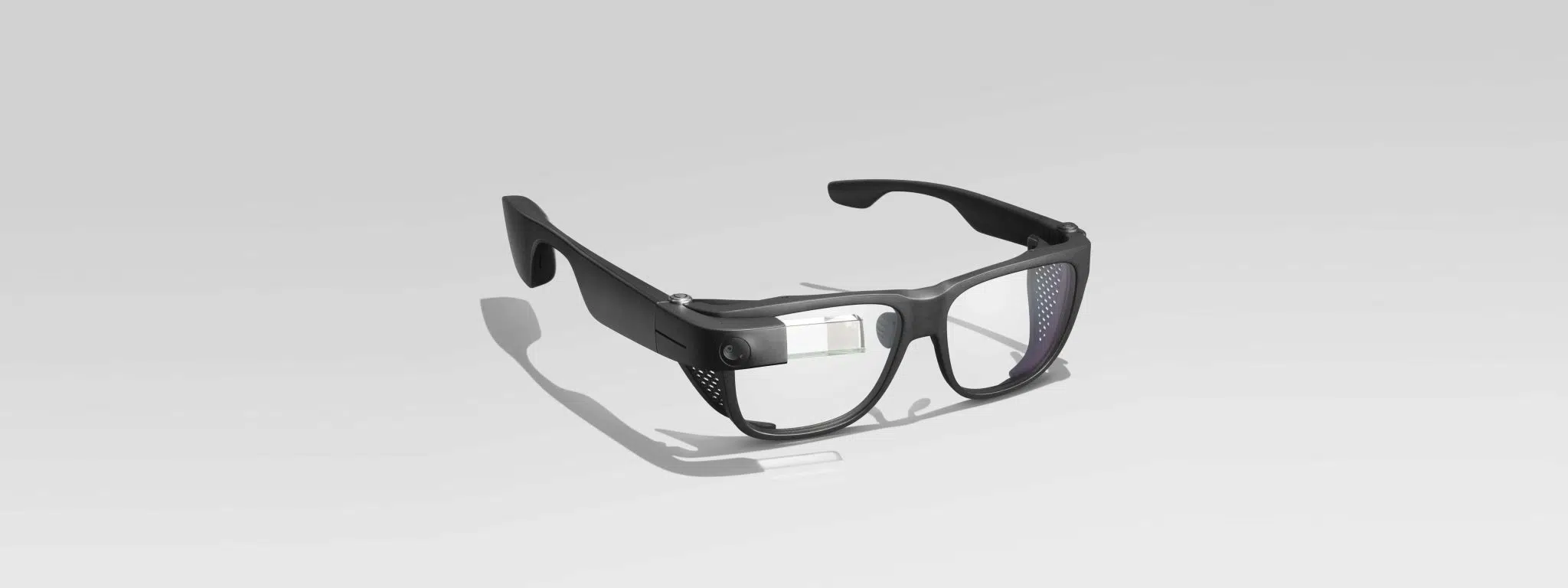
The team couldn’t decide what Glass should be. A fashionable all-day device or a specialized tool? Instead of answering this, Google released it early as a prototype and let the public figure it out.
The “Glass Explorer Program” launched in 2013. Google treated the $1,500 prototype like a luxury product. Celebrities wore it, fashion magazines featured it, and the hype was enormous.
This created a fatal mismatch. The public expected a revolutionary product. Early adopters got a buggy, unfinished device.
Why Google Glass Failed
The problems with Glass went far beyond technical issues. But the technical problems were bad enough to start.
The battery lasted less than an hour with active use. Recording a 10-15 minute video made the device overheat and shut down. The interface mixed voice commands, head gestures, and touchpad swipes in confusing ways.
Here’s what went wrong across three critical areas:
Technical Problems
- Battery died quickly (under 1 hour of active use)
- Device overheated during basic tasks like recording video
- Camera quality was worse than existing alternatives
- Interface was clunky and unintuitive
Strategic Failures
- No clear problem that smartphones didn’t already solve
- $1,500 price tag with unclear value
- Marketed as consumer product, delivered as broken prototype
Social Rejection
- Forward-facing camera created privacy fears
- People didn’t know when they were being recorded
- “Glasshole” became an insult for wearers
- Banned in bars, theaters, casinos, and gyms
The privacy issue killed Glass more than anything else. People couldn’t tell when the camera was recording. This created intense distrust and even aggressive confrontations.
The term “Glasshole” emerged quickly. It turned social pressure into a weapon against early adopters. Wearing Glass in public became an act of defiance, not convenience.
Google tried to position Glass as both a developer tool and a fashion statement. It failed at both. Developers got an overpriced, buggy product. Regular people got a clunky, socially offensive device.
The company lost $895 million on the consumer version. It shut down the Explorer Program in January 2015.
The Unexpected Happy Ending
The story didn’t end with failure. In 2017, Google quietly relaunched Glass as the Enterprise Edition.
In factories and warehouses, all consumer issues disappeared. Workers don’t care about fashion. Privacy isn’t an issue when recording is part of the job. Social stigma doesn’t exist in a controlled workplace.
Glass found its purpose in these environments. It provided hands-free access to instructions and checklists. Workers could see assembly steps while keeping their hands free. Remote experts could see what workers saw and provide guidance.
The enterprise version succeeded where the consumer version failed. It solved real problems for a specific audience. Efficiency improved, errors decreased, and nobody called anyone a “Glasshole.”
This pivot teaches the most important lesson in innovation. The technology wasn’t bad. It was just in the wrong place, for the wrong people, solving the wrong problems.
Juicero: The $120M Machine You Didn’t Need
Doug Evans co-founded Organic Avenue, an early cold-pressed juice chain. His pitch was compelling: his parents died young, his brother had health issues, and he dedicated his life to plant-based foods.
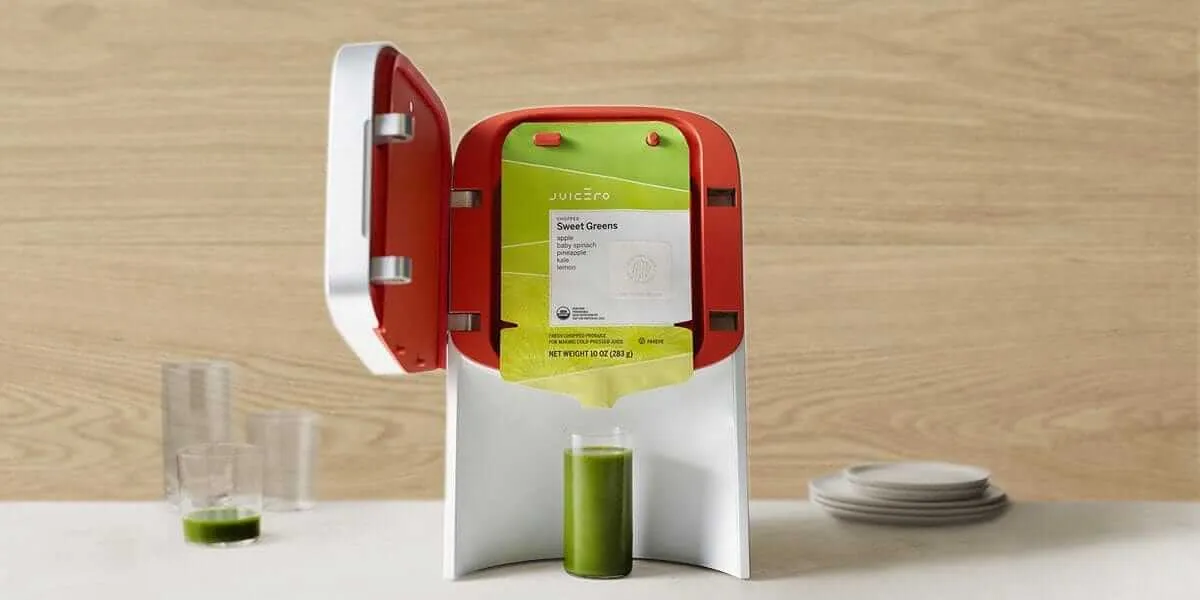
Evans compared himself to Steve Jobs. He called Juicero the “personal computer” of juicing. The business model looked perfect: sell expensive hardware once, earn recurring revenue from juice packs.
Juicero raised $120 million from top venture firms including Google Ventures and Kleiner Perkins. All this came before the company sold one unit. The fear of missing out drove decisions more than careful analysis.
The Bloomberg Video That Changed Everything
In April 2017, Bloomberg published a report that destroyed Juicero. A simple video showed a devastating truth: you could squeeze the juice packs with your hands.
The video went viral instantly. It showed that the $400 machine did nothing a person couldn’t do for free. The juice came out just as fast and in similar amounts.
This single revelation killed the company. The entire value proposition collapsed in one moment. Why pay hundreds of dollars for a machine when your hands work fine?
Public ridicule was swift and merciless. The company became a punchline. Trust evaporated completely. Sales cratered immediately.
Juicero tried damage control. They argued the machine read QR codes for freshness. They claimed it provided consistent pressure. None of it mattered. The perception had set in: customers paid for an unnecessary, glorified bag-squeezer.
Five months later, in September 2017, Juicero shut down. The company burned through $120 million in just 16 months of public operation. The juice ran out.
What Went Wrong: Over-Engineering Meets Non-Problems
The Juicero machine was a marvel of unnecessary complexity. Engineers who took it apart were stunned. The device contained custom power supplies, complex gearboxes, and expensive molded plastic parts.
The machine was designed to press the entire juice pack at once. This required thousands of pounds of force. Doug Evans claimed it could lift two Tesla cars.
Here’s the absurd part: a simple roller mechanism would have worked just as well. Think of squeezing a toothpaste tube. That approach would have cost a fraction of the price and achieved the same result.
The machine cost $750 to manufacture. The company sold it for $399 (down from an initial $699). Juicero lost money on each unit before even counting operating expenses. The company reportedly burned $4 million per month.
The business model was deeply flawed from the start:
The Proprietary Trap
- Machine only worked with Juicero’s packs ($5-8 each)
- Wi-Fi and QR scanner enforced this lock-in
- Connectivity was required, not optional
- DRM served the company, not the customer
The Cost Problem
- $750 production cost vs. $399 sale price
- Burning $4 million monthly
- Completely dependent on investor funding
- Unsustainable from day one
The over-engineering wasn’t an accident. It was necessary for the fundraising story. Investors wanted to back a high-tech, Apple-like disruption. A simple roller wouldn’t command a $120 million valuation.
The product served the fundraising pitch first and the customer last. This backwards priority doomed it from the start.
How mature is your innovation approach?
Benchmark your strategy, governance, culture and execution, then identify the improvements with the greatest potential impact.
Quibi: How to Burn $1.75 Billion in Six Months
Quibi had impressive leadership: Jeffrey Katzenberg (DreamWorks co-founder, former Disney Studios chairman) and Meg Whitman (former CEO of eBay and HP). Their vision was to create premium, Hollywood-quality content in 7-10 minute episodes for mobile viewing.
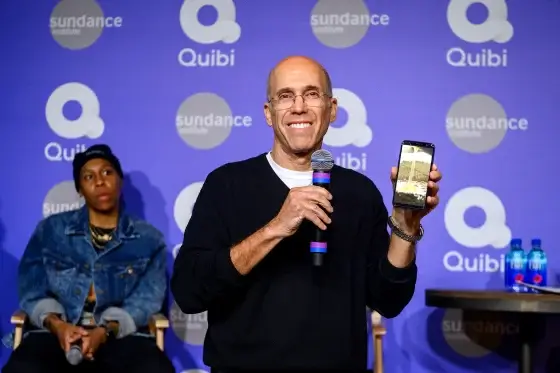
This wasn’t YouTube or TikTok. This was HBO for smartphones with high budgets and A-list talent.
The founders’ pedigrees attracted $1.75 billion before launch. Major studios, tech companies, and financial institutions all invested. This created enormous pressure and sky-high expectations.
Every Assumption Was Wrong
Quibi launched in April 2020. This timing alone would have been bad enough, but the problems went far deeper.
The core problem was simple: Quibi was built for people on the go. The service launched at the peak of COVID-19 lockdowns. Nobody was commuting. Nobody was waiting in line. Everyone was home with unlimited time.
The central use case vanished overnight. People at home wanted long-form content on big TVs. They already had Netflix, YouTube, and Disney+ for that.
But even without the pandemic, Quibi’s strategy was flawed:
The Content Problem
- Too polished to go viral, too shallow to be compelling
- Occupied awkward middle ground between TikTok and Netflix
- Lacked narrative depth of prestige TV
- Lacked authenticity of user-generated content
- No breakout shows to generate buzz
- Many projects were rejected movies chopped into chapters
The Platform Problem
- “Turnstyle” feature (switch between portrait and landscape) was a gimmick
- Blocked screenshots and sharing on social media
- Cut off from viral marketing and organic growth
- Pricing ($4.99-$7.99/month) too high for unproven content
- Free alternatives (YouTube, TikTok) offered superior variety
The decision to block sharing was particularly fatal. Modern media thrives on clips, memes, and viral moments. Quibi built a walled garden in an era that demands open sharing.
This showed a fundamental misunderstanding. Management thought audiences were passive consumers. In reality, people are active participants who create and share content.
Six Months from Launch to Shutdown
The market rejected Quibi immediately. After initial downloads driven by hype, engagement collapsed. Within a month, Quibi fell out of the top 100 free iPhone apps.
Jeffrey Katzenberg’s response was telling. In May 2020, he blamed 100% of Quibi’s problems on the pandemic. This showed zero self-awareness and a refusal to acknowledge fundamental flaws.
The leadership’s egos got in the way. They relied on past Hollywood success instead of current market data. They were out of touch with their younger target audience.
But management made a smart decision. Recognizing the venture wasn’t working, they shut it down quickly. In October 2020, six months after launch, Quibi closed its doors.
The company returned $350 million to investors. While the failure was colossal, this move was praised. It was a rare example of “failing fast” instead of throwing good money after bad.
Quibi tried to impose a 20th-century Hollywood mindset on 21st-century mobile internet. High production values and A-list stars don’t matter if nobody wants to watch.
Seven Deadly Sins of Innovation (Common Threads)
These three failures happened in different markets with different products. But they all fell victim to the same fundamental errors.
Here are the seven deadly sins that unite these cautionary tales:
1. Solving a Non-Problem
This is the most fundamental failure. All three created solutions, finding problems.
Glass struggled to answer what it did better than smartphones. Juicero built a $400 machine to solve a “problem” hands solved for free. Quibi offered premium on-the-go content when free alternatives already existed.
2. Ignoring the Social Contract
Products don’t exist in isolation. They must fit into social norms, ethics, and aesthetics.
Glass violated privacy expectations with its forward-facing camera and created the “Glasshole” stigma. Juicero became a symbol of Silicon Valley excess and invited public mockery. Quibi ignored the social nature of modern media and blocked sharing.
3. The Hubris of Hype
Marketing and founder narratives created expectations the products couldn’t meet.
Glass was marketed as revolutionary when it was a buggy prototype. Juicero’s founder compared himself to Steve Jobs while building an unnecessary juice press. Quibi’s $1.75 billion in funding created expectations the service couldn’t fulfill.
4. Pricing Out of Value
All three had fatal mismatches between price and delivered benefit.
Glass cost $1,500 with unclear utility. Juicero charged $699 (later $399) for something completely unnecessary. Quibi required subscription fees to compete with free alternatives.
5. Context Blindness
They all failed to design for how people actually live and behave.
Glass ignored face-to-face social interaction contexts. Juicero ignored that modern kitchens value simplicity and cost-effectiveness. Quibi launched a commuter product during a lockdown.
6. Engineering for Ego
They prioritized technical complexity over user-centric simplicity.
Juicero’s incredible complexity served the fundraising story, not the user’s need for juice. Glass focused on cramming technology onto a face while ignoring comfort and acceptability. Quibi’s Turnstyle feature solved a problem users didn’t have.
7. Walled Gardens in an Open World
They tried to lock users into closed systems when people expect openness.
Juicero used DRM to force purchases of proprietary packs. Quibi prevented content from being shared, cutting itself off from social media. Glass initially had a closed app ecosystem that limited creativity.
How to Avoid These Failures
These failures provide a practical framework for avoiding similar disasters. Use this checklist before investing time and money in your next big idea.
Start with the problem, not the solution. Clearly articulate the user’s pain point before building anything. Is this a genuine, significant problem for real people? All three cases fell in love with solutions before validating problems.
Validate early and often. Don’t wait until millions are spent to discover your product is unnecessary. Build a minimum viable product and test it with real users. Get feedback before scaling. Quibi and Juicero deployed massive capital on unproven assumptions.
Design for social context. Consider how your product affects human interaction and society. What are the implications for privacy, ethics, and social norms? Glass proved that technical functionality means nothing without social acceptance.
Align price with perceived value. Pricing must reflect tangible benefits relative to existing alternatives. All three are priced as premium while not offering premium value. The gap between cost and benefit killed them.
Build for virality and openness. In a connected world, products that can’t be shared can’t grow. Resist the urge to create walled gardens. Quibi’s failure to embrace sharing sealed its fate from the start.
Engineer the simplest solution. Challenge every layer of complexity. Does this feature solve the core problem, or does it serve ego and narrative? Juicero proved that over-engineering indicates lost focus on customers.
Be ready to pivot when wrong. Initial visions are often incorrect. Success requires flexibility to acknowledge flawed assumptions and courage to adapt. Blaming external factors (as Quibi did) leads to failure. Pivoting (as Glass eventually did) can lead to success.
From Moonshots to Ground Truth
These three stories challenge the mythology of disruption at all costs. Visionary ambition must be balanced with a humble understanding of human needs.
Innovation disconnected from reality always fails. Google Glass, Juicero, and Quibi weren’t undone by lack of funding, talent, or vision. They failed because they didn’t ask basic questions about the people they served.
Structured innovation management helps organizations avoid these exact pitfalls. The right system creates checkpoints that force validation before massive investment happens.
Accept Mission provides this structured approach through an innovation management platform. The software helps teams test assumptions, gather diverse feedback, and validate ideas before they become expensive failures.
Here’s how the platform addresses each common failure pattern:
- Problem validation through campaigns – Launch targeted missions to test whether problems are real before building solutions
- Scoring and prioritization tools – Use data-driven selection methods to identify which ideas genuinely solve user needs
- Cross-team collaboration – Break out of echo chambers by involving diverse perspectives from across your organization
- Stage-gate workflows – Move ideas through structured validation phases, with clear go/no-go decisions at each stage
- AI-powered insights – Analyze trends and patterns to spot potential failures before they consume resources
The platform turns innovation from a gamble into a process. Instead of betting everything on a founder’s vision, you validate assumptions at every step.
Accept Mission helps companies build what Google Glass, Juicero, and Quibi failed to achieve: innovations that connect with real human needs. The platform makes it harder to ignore warning signs and easier to pivot when assumptions prove wrong.
Prevent promising ideas from becoming expensive failures
Innovation failures often start with weak validation, unclear decision criteria and missing governance. Assess your current innovation capabilities or see how Accept Mission creates a more disciplined path from opportunity to impact.








 English
 Dutch
 Portuguese
 Spanish
 French
 German
 Arabic
