
Standardize innovation methodology and workflows
Create consistency, clarity and control across innovation work
Innovation efforts often develop in fragmented ways. Teams use different methods, follow separate workflows and make decisions with inconsistent criteria. Standardizing innovation methodology and workflows creates one shared way of working. With aligned stages, templates, governance and AI-supported guidance, teams move faster, collaborate more effectively and deliver higher-quality outcomes across the organization.
Guided tour and save time











Why standardizing innovation methodology and workflows matters
Innovation only scales when teams work in a consistent way. Standardized methodology and workflows create shared structure across stages, decisions and execution, so teams can move faster, collaborate better and deliver more reliable outcomes.
Without standardized methodology and workflows
- Teams use different templates, stages and ways of working
- Decisions are inconsistent across initiatives and business units
- Progress becomes hard to compare, manage and report on
- Innovation quality depends too much on individual teams
With standardized methodology and workflows
- Shared stages and templates create one clear way of working
- Governance and decision criteria stay aligned across initiatives
- Teams collaborate more effectively with better transparency
- Innovation becomes easier to scale with consistency and control
What you get
Standardizing innovation methodology and workflows gives you one clear, repeatable way of working across innovation initiatives, from intake and evaluation to execution and governance.
- Clear validation stages from idea to proven concept
- Structured experiment templates with defined learning goals
- Hypothesis and assumption tracking per initiative
- Defined decision gates with measurable success criteria
- Real-time visibility into validation progress and risks
- Documented learning history for governance and review
- Reduced innovation risk through early evidence-based decisions

Who it’s for
Primarily designed for innovation teams responsible for structure, decisions, and measurable progress. Secondarily for organizational stakeholders who guide strategy, allocate resources, and evaluate results.
Innovation Managers
Own the innovation process and require full visibility across funnels, governance, decisions, and portfolio impact.
Innovation Leaders
Align innovation with strategy and need clear portfolio steering based on value, risk, and evidence.
Innovation Specialists
Execute initiatives and need structured workflows for intake, validation, evaluation, and next-step clarity.
Strategy & Transformation Teams
Ensure innovation supports strategic priorities and require transparency into progress and expected outcomes.
Portfolio, PMO & Governance
Oversee decision frameworks and resource allocation, requiring structured criteria and stage visibility.
Business & Product Leaders
Make implementation decisions and need clarity on ownership, business cases, risks, and expected impact.
AI enhances standardized innovation methodology and workflows
AI helps teams apply innovation methodology and workflows more consistently. It supports preparation, improves quality across stages and makes it easier to follow shared processes, governance and decision logic at scale.
AI capabilities
- Recommend the right templates, canvases and workflow steps for each stage
- Guide teams with structured prompts and methodology-based next actions
- Draft consistent submissions, summaries and documentation across initiatives
- Check completeness of inputs before ideas move to the next stage
- Detect gaps, inconsistencies and missing evidence in workflow execution
- Summarize activity, progress and outputs for governance reviews
- Support standard scoring inputs with clearer rationale and context
- Make proven ways of working easier to reuse across teams and business units
Impact
- More consistent application of innovation methods across the organization
- Faster onboarding into shared workflows and ways of working
- Higher quality outputs with less variation between teams
- Better governance through clearer structure and traceable decisions
- Less manual effort in documentation, reviews and process follow-up
- Stronger scalability of innovation practices across functions and regions
Key features for standardizing innovation methodology and workflows
Innovation canvases
Design, test, and document ideas with clarity
Structure innovation work using standardized canvases that guide teams from early problem framing to validated evidence. Every canvas supports disciplined learning and consistent decision making.
- Problem and opportunity framing templates
- Hypothesis and assumption mapping
- Experiment design and learning documentation
- Evidence tracking linked to decision gates
AI assistants
Accelerate validation with guided AI assistance
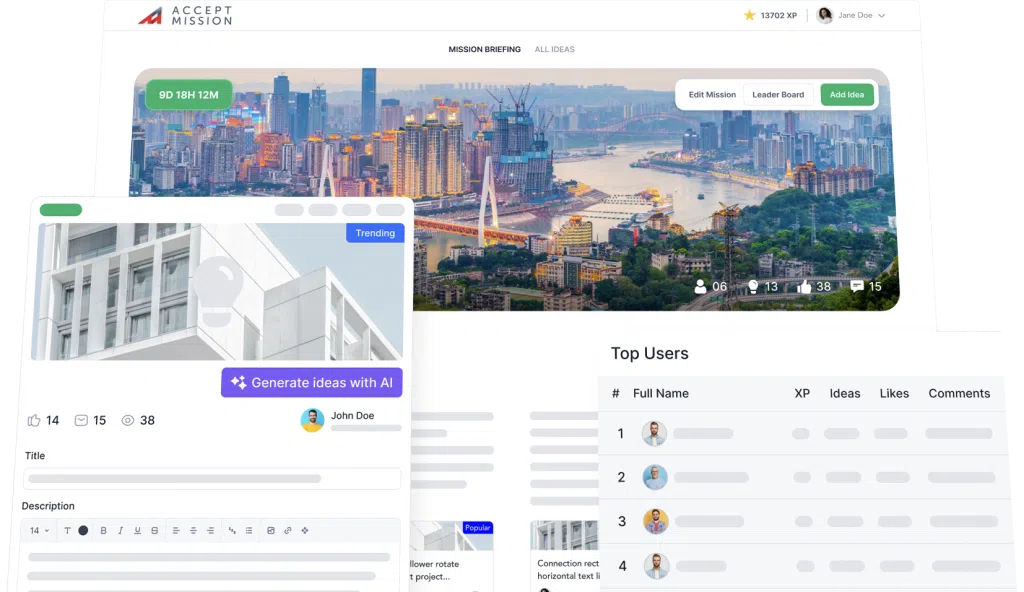
AI supports teams in applying the methodology consistently. It strengthens preparation, improves insight quality, and ensures structured documentation across stages.
- Draft hypotheses and validation statements
- Suggest experiments aligned with validation stage
- Summarize interviews and feedback into insights
- Recommend next best learning actions
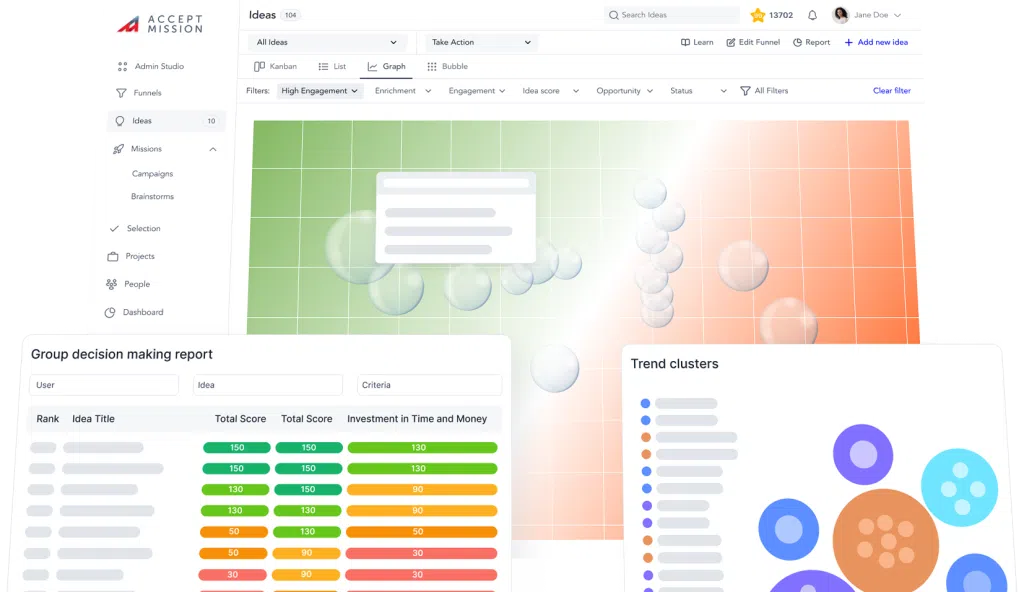
Campaign and scorecard templates
Evaluate initiatives with consistent criteria
Campaign and scorecard templates ensure innovation efforts align with strategy. Teams compare initiatives objectively and document clear decision logic.
- Strategic alignment scorecards
- Impact, feasibility, and risk criteria
- Weighted evaluation models
- Transparent decision documentation
End-to-end tooling
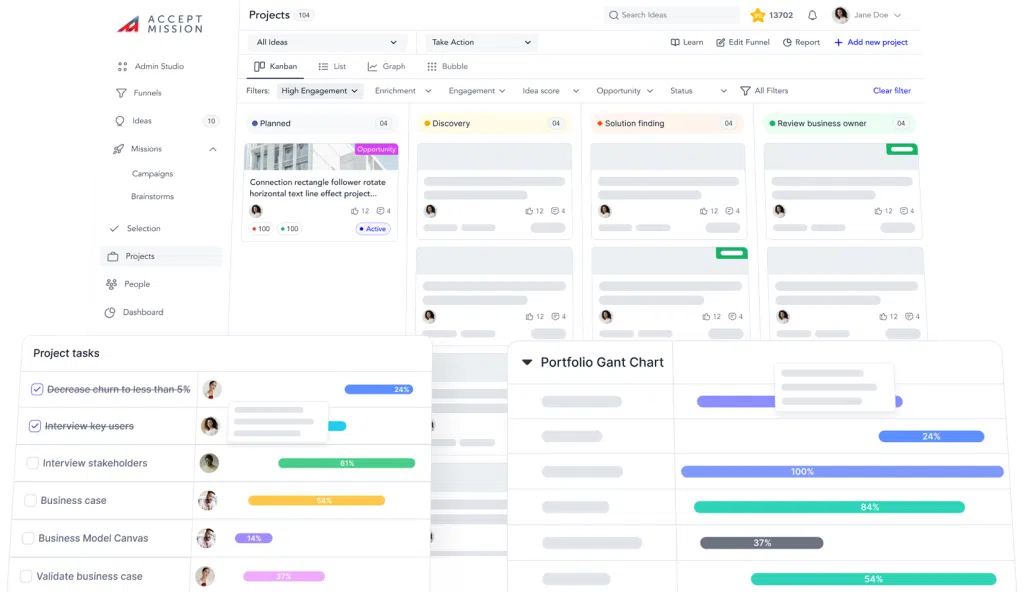
Connect validation to measurable outcomes
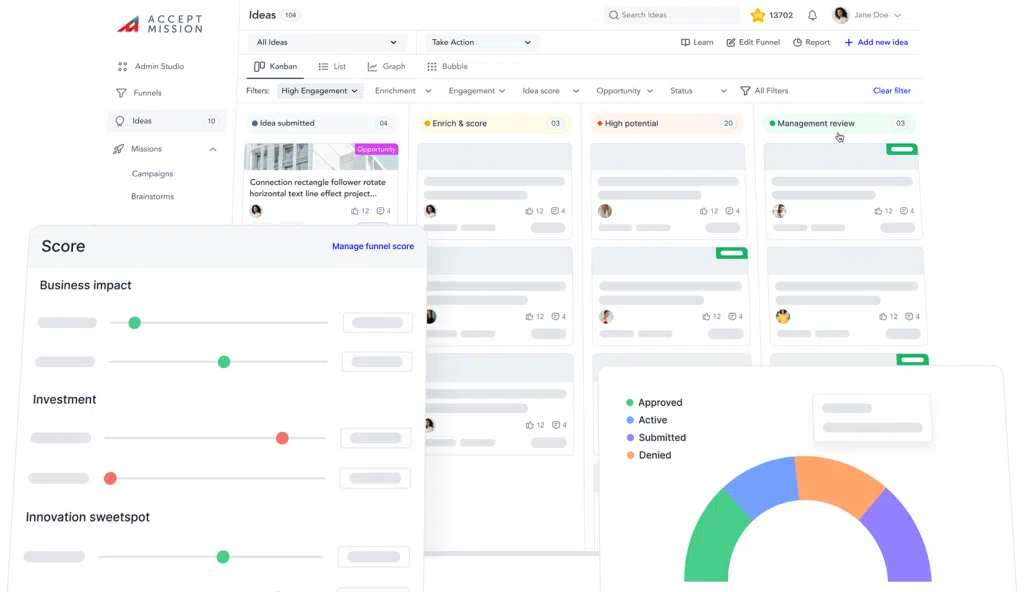
Boost innovation methodology links structured learning to execution. Teams move from intake to validated concept and into implementation tracking within one system.
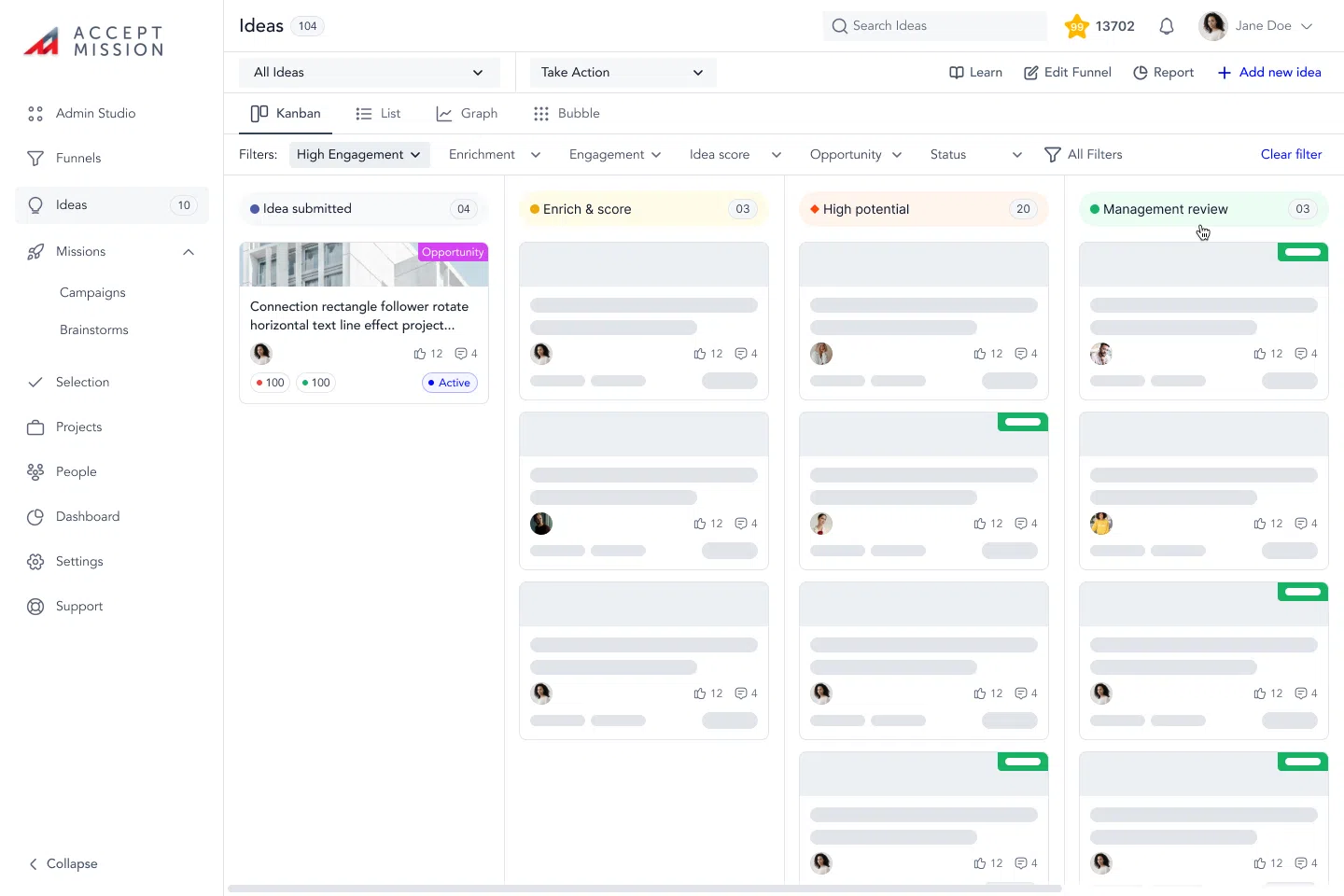
- Centralized idea intake and funnel stages
- Stage-based governance workflows
- Portfolio dashboards and reporting
- Traceability from idea to outcome
Key steps to success
Apply Boost innovation methodology with discipline and clarity. Move from structured idea framing to validated evidence and confident portfolio decisions.
Define the opportunity clearly
Frame the problem, target users, and value hypothesis using structured canvases aligned with strategic priorities.
Map assumptions and risks
Identify critical uncertainties and document the assumptions that must be validated before committing additional resources.
Run structured experiments
Execute experiments with defined success criteria and capture evidence in a consistent format for review.
Evaluate with decision gates
Compare validated learning against defined criteria and make transparent go, pivot, or stop decisions.
Key steps to success

View use cases
Explore practical examples of how teams structure innovation, evaluate initiatives, and align execution with strategic priorities.
Structure innovation with clear decision funnels
Structure ideas and initiatives into clear stages with governance, visibility, and measurable progress.
Make better innovation decisions with structured scoring
Evaluate initiatives with structured criteria and create transparent portfolio priorities.
Align innovation with strategic priorities
Connect initiatives to strategic themes so teams focus on what matters most for long term direction.
Explore all use cases
See how different teams use the platform to structure innovation and drive measurable results.
Ready to see it live?
A short walkthrough that shows how structure, transparency, and dashboards make progress visible and decisions easier.

See Accept Mission in action
Run your innovations with structure and transparency. In a short demo, see how idea management, project portfolio management, and idea collecting connect to funnels, scorecards, and dashboards so progress stays visible and decisions get easier.
- Structured funnels
- Transparent scoring
- Dashboards for progress
What you will see
- Idea collecting that feeds a structured funnel
- Transparent evaluation with scorecards and clear decisions
- Portfolio views and dashboards for leadership reporting


 English
 Dutch
 Portuguese
 Spanish
 French
 German
 Arabic
