
Validate real problems before ideation
Focus innovation on verified needs before generating solutions
Innovation creates more value when teams confirm the right problem before exploring ideas. By validating real problems first, organizations can gather evidence, understand needs more clearly, and avoid investing in solutions for the wrong challenge. This creates a stronger foundation for ideation, prioritization, and better innovation outcomes.
Guided tour and save time













Why validating real problems before ideation matters
Better innovation starts with a clearer understanding of the problem. Without structured validation, teams risk generating ideas for assumptions instead of verified needs.
Without problem validation
- Ideas are generated before the real need is understood
- Teams rely on assumptions instead of evidence
- Customer pain points remain vague or poorly defined
- Time and budget are spent on low value opportunities
With structured problem validation
- Teams focus on verified needs before exploring solutions
- Evidence supports stronger prioritization and decision making
- Insights from research and experiments are captured clearly
- Ideation starts from a stronger foundation for value creation
What you get
A structured way to identify real customer pain points, test assumptions, and validate opportunities before investing in ideas, solutions, and further development.
- Structured problem statements linked to strategic themes
- Centralized documentation of interviews and research insights
- Hypothesis tracking with measurable validation criteria
- Experiment management and learning capture
- Clear evidence before investment decisions
- Transparent overview of validated vs. unvalidated ideas
- Reduced innovation risk through early-stage testing
- Stronger alignment between discovery and execution
Who it’s for
Primarily designed for innovation teams responsible for structure, decisions, and measurable progress. Secondarily for organizational stakeholders who guide strategy, allocate resources, and evaluate results.
Innovation Managers
Own the innovation process and require full visibility across funnels, governance, decisions, and portfolio impact.
Innovation Leaders
Align innovation with strategy and need clear portfolio steering based on value, risk, and evidence.
Innovation Specialists
Execute initiatives and need structured workflows for intake, validation, evaluation, and next-step clarity.
Strategy & Transformation Teams
Ensure innovation supports strategic priorities and require transparency into progress and expected outcomes.
Portfolio, PMO & Governance
Oversee decision frameworks and resource allocation, requiring structured criteria and stage visibility.
Business & Product Leaders
Make implementation decisions and need clarity on ownership, business cases, risks, and expected impact.
AI enhances problem validation before ideation
AI helps teams identify patterns in feedback, surface hidden pain points, and interpret validation signals faster. This creates a stronger evidence base before moving into ideation and solution development.
AI capabilities
- Cluster interviews, feedback, and research inputs automatically
- Detect recurring pain points across data sources
- Summarize discovery findings into clearer problem statements
- Highlight validation gaps and unclear assumptions
- Identify stronger opportunity areas based on evidence patterns
- Support analysis of experiment results and learning signals
- Recommend next validation steps
- Improve consistency in early stage discovery work
Impact
- Faster identification of real customer needs
- Stronger evidence before investing in solutions
- Reduced bias in opportunity selection
- Shorter discovery and validation cycles
- Better starting point for ideation and prioritization
- Lower risk of solving the wrong problem
Key features for validating real problems before ideation
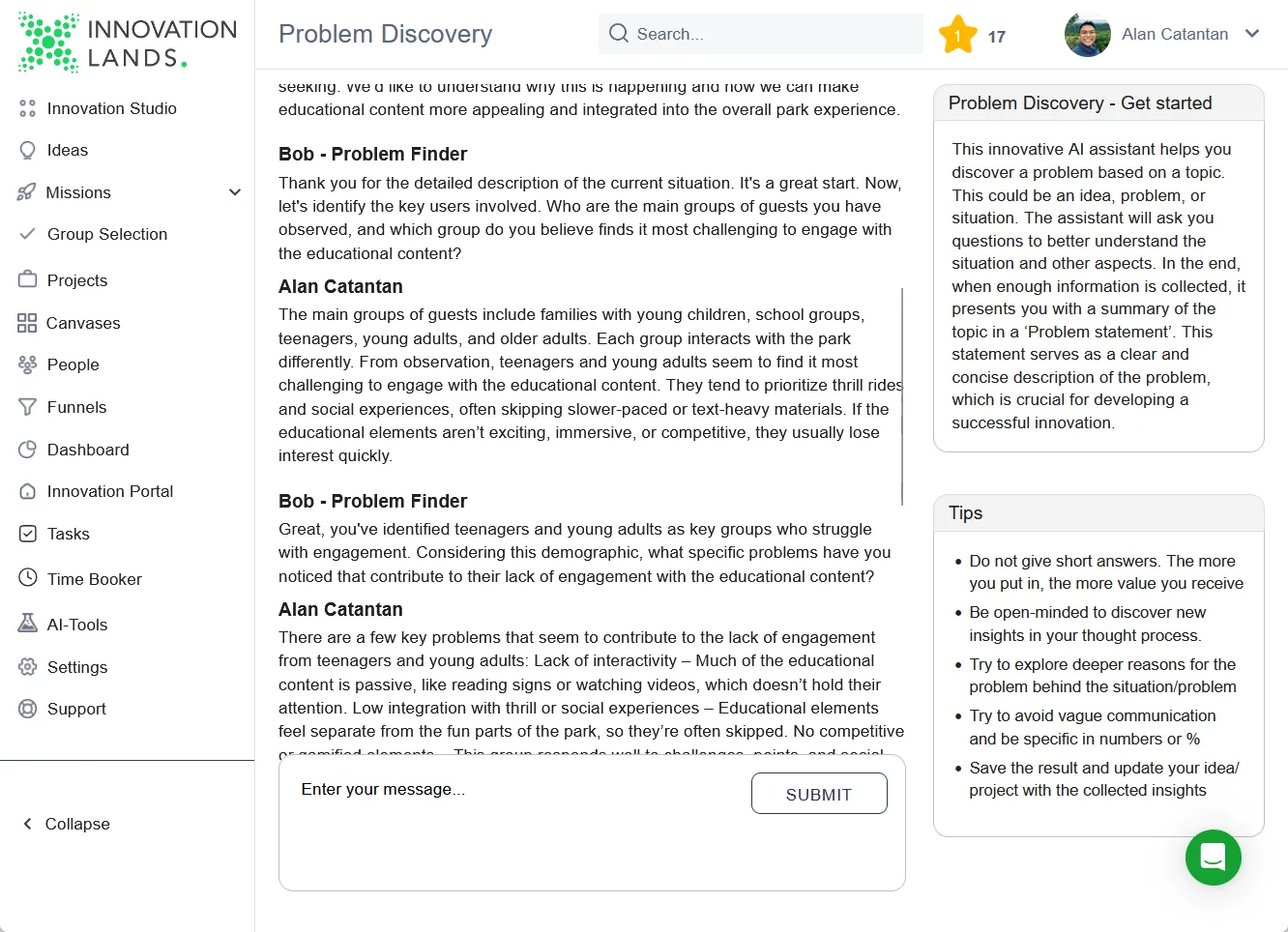
Problem discovery AI
Identify and frame the right problems
Use AI to uncover patterns, recurring challenges and unmet needs across feedback, ideas and operational data. Focus innovation efforts on validated problems that matter most to customers and the business.
- AI analysis of feedback and idea patterns
- Detection of recurring pain points
- Automatic clustering of related problems
- Structured problem statements for clarity
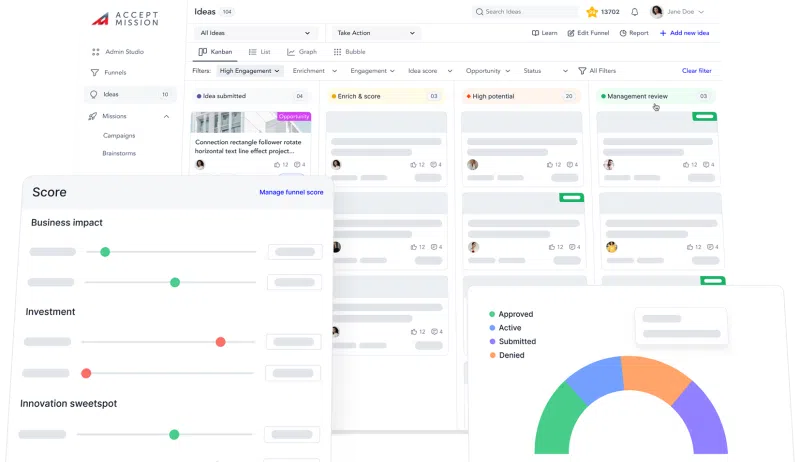
Structured canvases
Frame problems with consistency and depth
Guide teams through structured canvases to clearly define context, stakeholders and impact. Ensure every problem is documented in a comparable and decision-ready format.
- Standardized problem framing templates
- Clear articulation of customer impact
- Root cause and context documentation
- Comparable inputs across initiatives
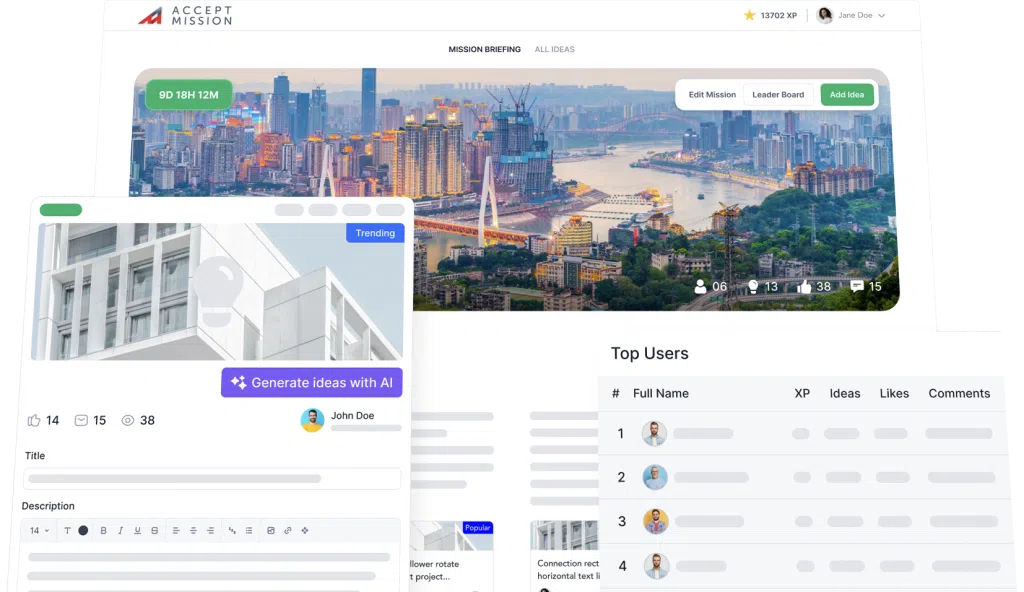
Collaborative validation
Validate problems with the right stakeholders
Engage experts, customers and internal teams to confirm assumptions and assess relevance. Build shared understanding before committing resources to solution development.
- Targeted stakeholder involvement
- Evidence collection and documentation
- Transparent validation history
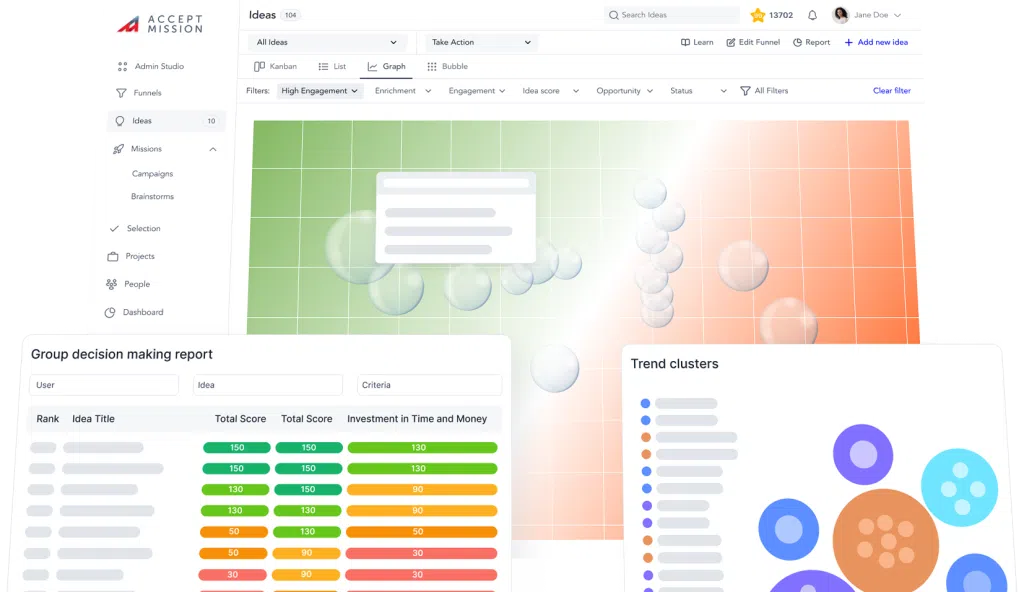
Campaign integration
Run focused discovery campaigns
Launch targeted campaigns to explore specific themes or strategic questions. Collect structured insights at scale and connect validated problems directly to your innovation funnel.
- Thematic discovery campaigns
- Targeted participant invitations
- Structured data capture at scale
- Direct transition to validated initiatives
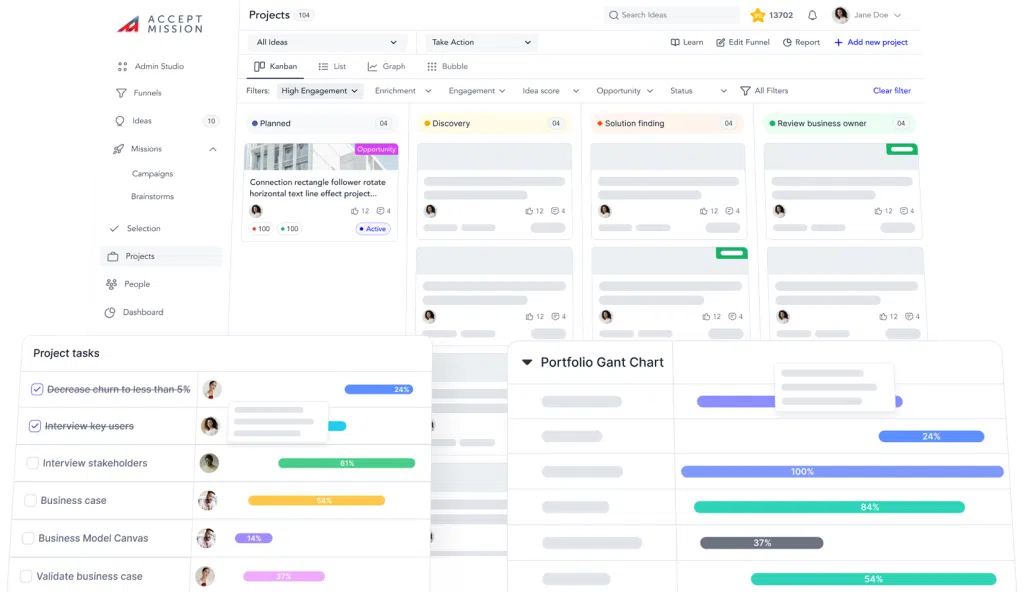
Key steps to success
Focus innovation on the right problems by combining structured discovery with evidence-based validation.
Explore and detect patterns
Analyze feedback, ideas and operational signals to identify recurring challenges and unmet needs.
Frame the problem clearly
Use structured canvases to define context, stakeholders and measurable impact.
Validate with stakeholders
Engage experts and customers to test assumptions and confirm relevance.
Transition to execution
Convert validated problems into prioritized initiatives within the innovation funnel.
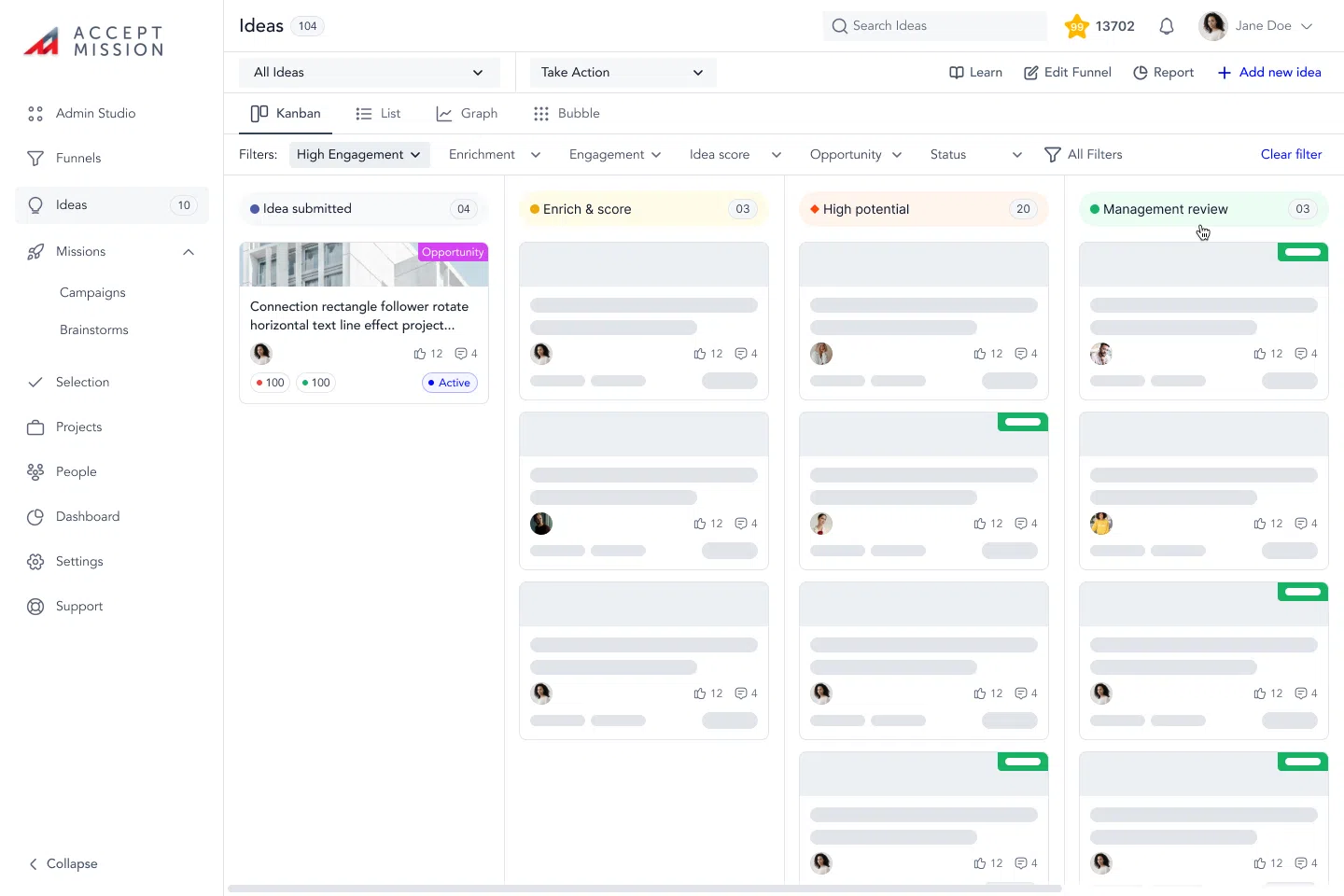
View use cases
Explore practical examples of how teams structure innovation, evaluate initiatives, and align execution with strategic priorities.
Structure innovation with clear decision funnels
Structure ideas and initiatives into clear stages with governance, visibility, and measurable progress.
Make better innovation decisions with structured scoring
Evaluate initiatives with structured criteria and create transparent portfolio priorities.
Align innovation with strategic priorities
Connect initiatives to strategic themes so teams focus on what matters most for long term direction.
Explore all use cases
See how different teams use the platform to structure innovation and drive measurable results.
Ready to see it live?
A short walkthrough that shows how structure, transparency, and dashboards make progress visible and decisions easier.

See Accept Mission in action
Run your innovations with structure and transparency. In a short demo, see how idea management, project portfolio management, and idea collecting connect to funnels, scorecards, and dashboards so progress stays visible and decisions get easier.
- Structured funnels
- Transparent scoring
- Dashboards for progress
What you will see
- Idea collecting that feeds a structured funnel
- Transparent evaluation with scorecards and clear decisions
- Portfolio views and dashboards for leadership reporting


 English
 Dutch
 Portuguese
 Spanish
 French
 German
 Arabic
