Accept Mission
Accept Mission
Align innovation with strategic priorities2026-03-11T16:32:29+01:00

Align innovation with strategic priorities

Ensure every initiative contributes to what matters most

Innovation delivers the most value when it clearly supports strategic priorities. By connecting ideas and initiatives to strategic themes and objectives, organizations ensure innovation efforts focus on what matters most. This creates clarity in decision making, improves prioritization, and ensures resources are invested in initiatives that strengthen long term business goals.

Book demo

Guided tour and save time

Why aligning innovation with strategic priorities matters

Innovation delivers the most value when initiatives clearly support strategic priorities. When ideas, projects and investments are linked to strategic themes, organizations can focus effort on the opportunities that strengthen long term business goals.

Without strategic alignment

  • Ideas move forward without a clear connection to strategy
  • Innovation initiatives compete without defined priorities
  • Resources are spread across too many unrelated initiatives
  • Leaders struggle to see how innovation contributes to business outcomes

With innovation aligned to strategy

  • Ideas and initiatives connect directly to strategic themes
  • Prioritization reflects long term organizational goals
  • Teams focus on initiatives with the strongest strategic impact
  • Leadership gains clear visibility into innovation progress and value
Aligning innovation with strategic priorities ensures that ideas, initiatives and investments consistently contribute to the organization’s long term direction and measurable results.

What you get

A clear framework for connecting innovation initiatives to strategic priorities, so teams can focus effort, investments and decisions on what matters most.

  • Strategic themes translated into clear innovation focus areas
  • Direct visibility into how ideas and initiatives support priorities
  • Prioritization based on strategic relevance and expected impact
  • Better alignment between leadership direction and team activity
  • More confident investment decisions across the innovation portfolio
  • Reduced duplication and less effort spent on low priority initiatives
  • Stronger accountability for innovation outcomes linked to strategy
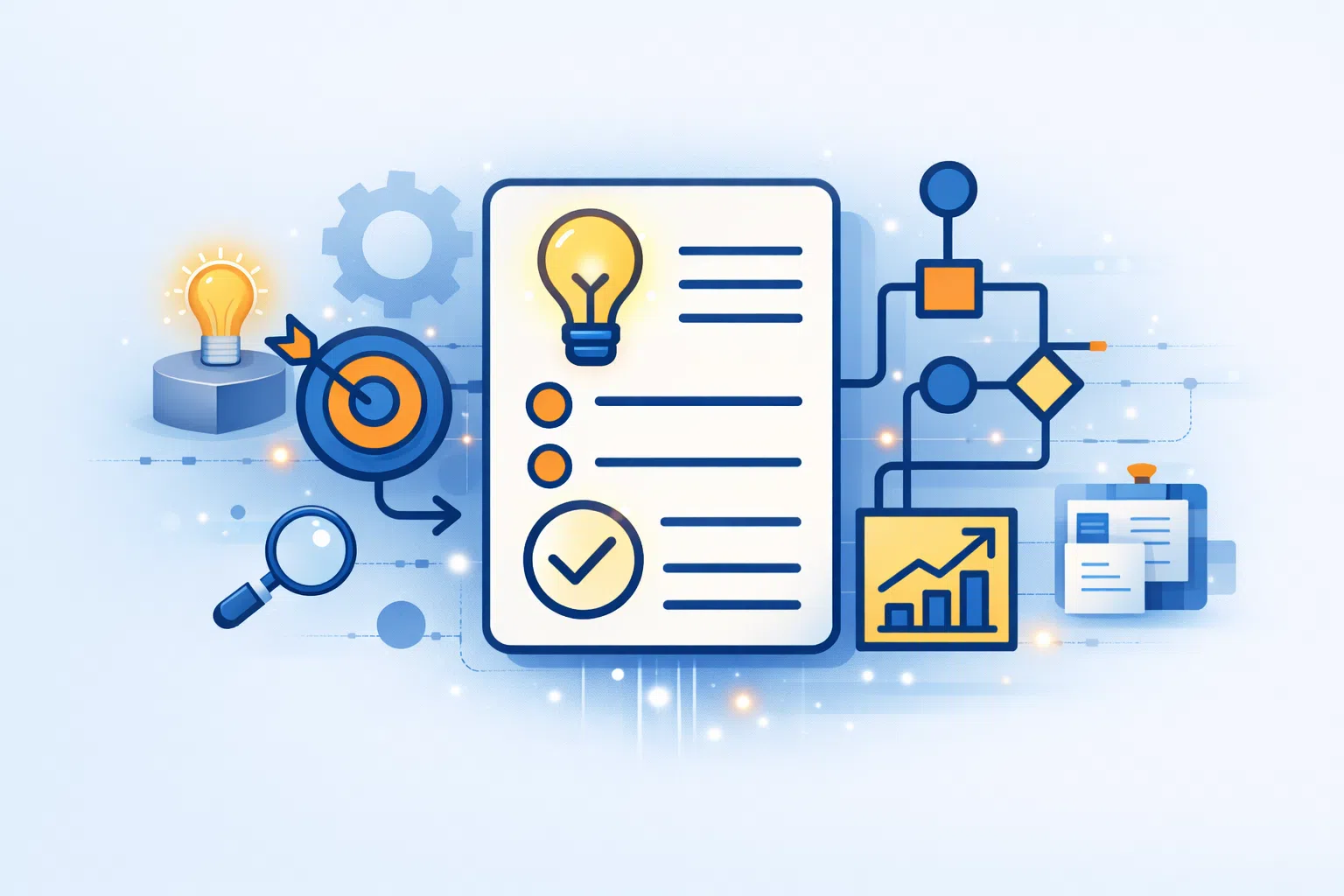
Strategic goals and innovation alignment overview

Who it’s for

Designed for organizations that need stronger alignment between strategic priorities and everyday innovation execution.

Innovation Managers

Own the innovation process and require full visibility across funnels, governance, decisions, and portfolio impact.

Innovation Leaders

Align innovation with strategy and need clear portfolio steering based on value, risk, and evidence.

Innovation Specialists

Execute initiatives and need structured workflows for intake, validation, evaluation, and next-step clarity.

Strategy & Transformation Teams

Ensure innovation supports strategic priorities and require transparency into progress and expected outcomes.

Portfolio, PMO & Governance

Oversee decision frameworks and resource allocation, requiring structured criteria and stage visibility.

Business & Product Leaders

Make implementation decisions and need clarity on ownership, business cases, risks, and expected impact.

AI strengthens strategic alignment

AI helps translate strategy into action by continuously analyzing initiatives, themes, and performance data. It ensures that innovation efforts remain aligned with long-term business objectives.

AI Capabilities

  • Automatic mapping of initiatives to strategic themes
  • Strategic fit scoring based on defined objectives
  • Gap detection across strategic priorities
  • Identification of misaligned initiatives
  • Impact forecasting linked to strategic KPIs
  • Portfolio balance analysis across themes
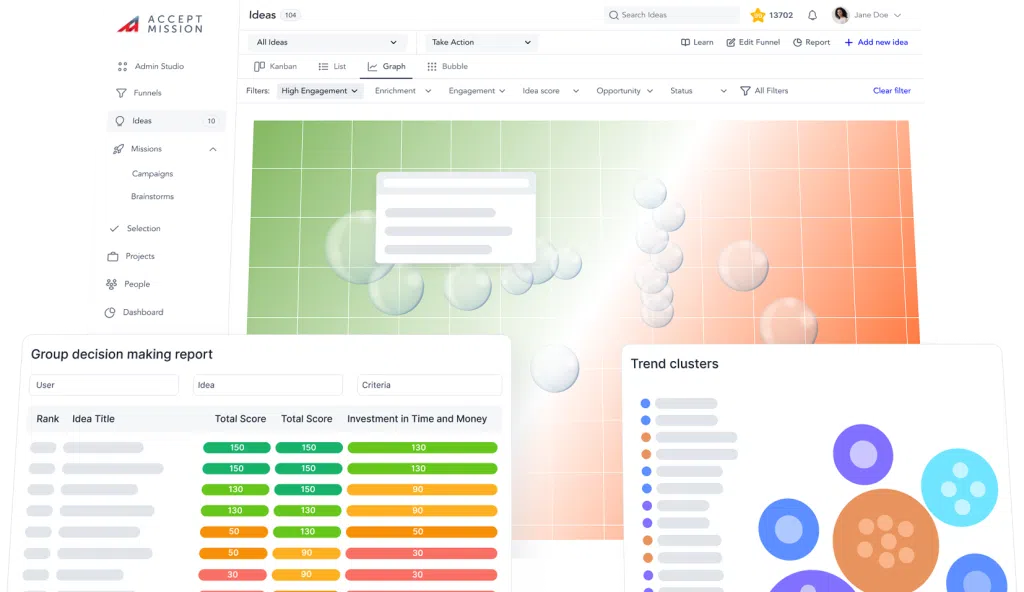
  • Real-time strategic alignment dashboards
  • Scenario modeling for strategic trade-offs

Impact

  • Stronger connection between strategy and execution
  • Reduced investment in low-impact initiatives
  • Clear visibility into strategic gaps
  • More focused allocation of resources
  • Improved cross-team alignment
  • Higher confidence in strategic decision making
AI ensures that innovation efforts consistently support strategic goals, helping leaders maintain focus, transparency, and measurable impact across the organization.

Key features for aligning innovation with strategic priorities

Key steps to success

Turn strategic priorities into aligned action across your organization.

Define strategic priorities

Create clear themes, categories, and goals that reflect your strategy. Make them visible across the platform to guide aligned contributions.

Launch focused campaigns

Use Campaign Builder AI to activate strategic goals through targeted challenges tailored to specific teams or departments.

Collect and route ideas

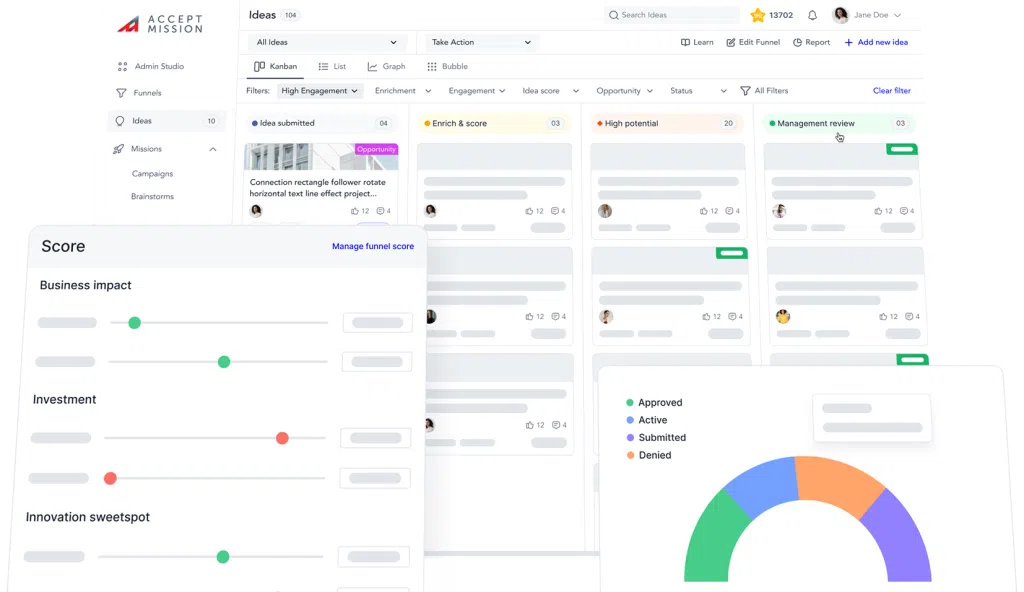
Automatically tag and direct ideas to the right funnels. Apply scorecards to evaluate strategic fit through structured workflows.

Enrich and select initiatives

Strengthen ideas, group related submissions, and use structured scoring supported by AI for faster, objective decision making.
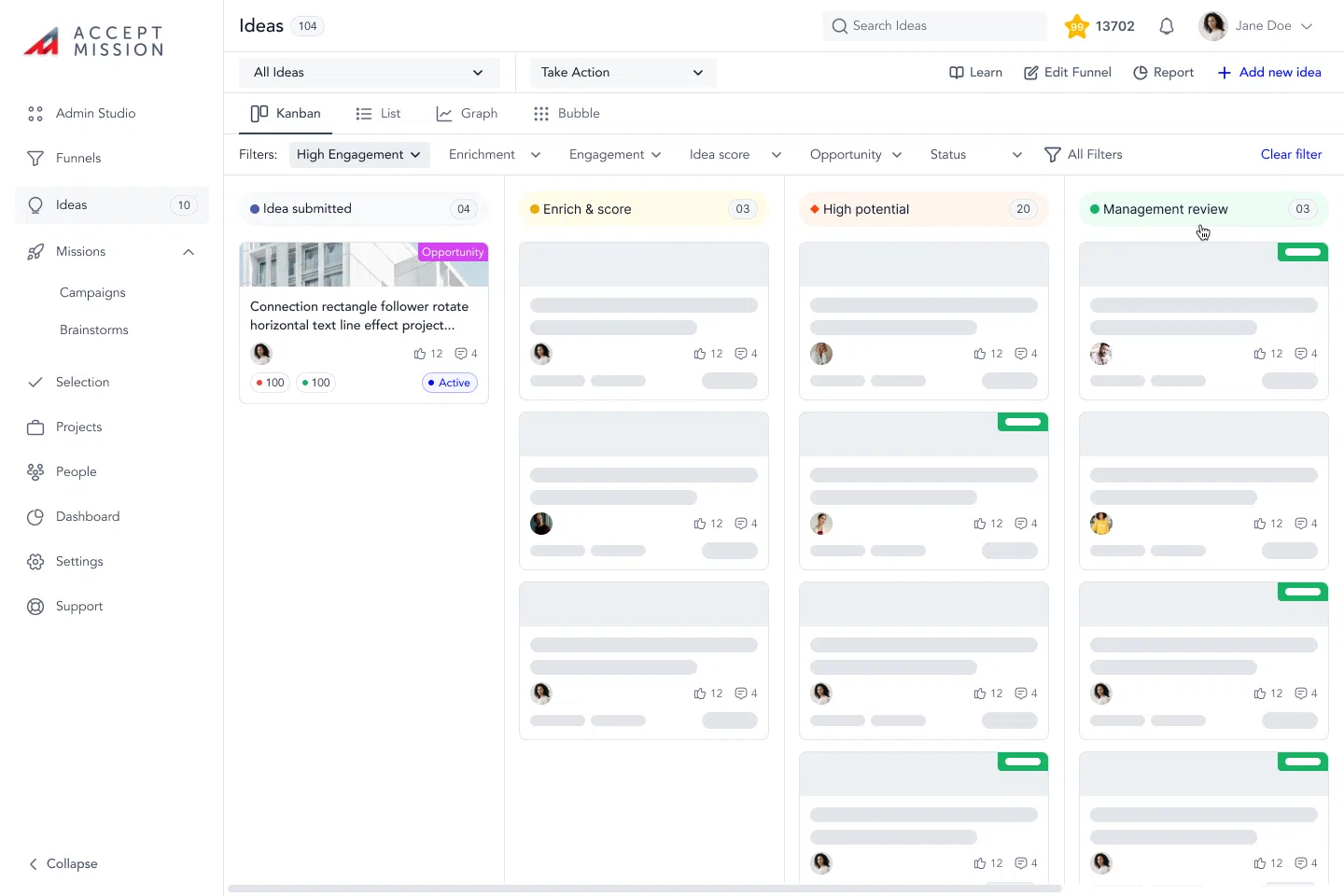
Idea funnel overview

Ready to see it live?

A short walkthrough that shows how structure, transparency, and dashboards make progress visible and decisions easier.

Accept Mission product interface preview
Explore idea management, project portfolio management, and idea collecting in one guided walkthrough.
Book a demo

See Accept Mission in action

Run your innovations with structure and transparency. In a short demo, see how idea management, project portfolio management, and idea collecting connect to funnels, scorecards, and dashboards so progress stays visible and decisions get easier.

  • Structured funnels
  • Transparent scoring
  • Dashboards for progress
Book a demo
Walk through your workflow, get clear next steps.

What you will see

  • Idea collecting that feeds a structured funnel
  • Transparent evaluation with scorecards and clear decisions
  • Portfolio views and dashboards for leadership reporting

Learn more about Collaboration on innovation ideas and projects

Collaboration means working together to create or achieve something. In the context of idea management, it means working together to improve on a certain idea.

By sharing thoughts and ideas, team members can come up with a better solutions than they could have on their own.

Idea management systems make it easy for teams to collaborate on ideas. These systems allow team members to share ideas, vote on them, and comment on them.

In other words, having one in place means ensuring that all team members have a voice in the process and that the best ideas emerge on top.

Collaborating on ideas is a great way to come up with innovative solutions. By working together, team members can brainstorm new ideas and refine them until they are ready for implementation.

Specifically, collaboration through idea systems means seven things:

  1. Working together to brainstorm at least 300 or more ideas on solving real-life problems as an organization for the betterment of the company and its customers
  2. Sharing ideas to voice out and discuss all the ways your group has thought about in terms of improving your products and services to address the difficulties that your target audience is facing
  3. Sharing extra info, like comments and other feedback to spark different viewpoints that could potentially lead to the ultimate solution
  4. Upvoting ideas to choose which ones to keep, pursue, or discard
  5. Scoring ideas with a set of criteria created to determine which among the ideas presented is best and most feasible to execute
  6. Sharing ideas again to further enhance the selected idea and decide on its accompanying details
  7. Tagging people either for updates or for accountability purposes on the progress of the concept

Ideally, collaboration should take place when the team is ready to discuss ideas and brainstorm possible solutions. This usually happens after the team has identified a problem or challenge that they need to address.

Likewise, it is important to set aside enough time for collaboration.

You need to view and treat innovation as a priority rather than an extra task at work, so a short meeting may not be enough time for all team members to gather and share their perspectives.

As it is crucial to ensure that all members of the team are able to participate in the collaboration process, you need to select an idea management system that fits your needs.

Setting an idea management system in place can help employees contribute their thoughts and ideas easily, especially when it’s something that they can access and work around readily.

An idea management system is a type of technology that speeds up the process of generating ideas. It manages an organization’s stream of insights and classifies them according to their feasibility level.

In particular, your organization can collaborate on three different levels:

  1. Innovation campaigns to find the right inspiration that leads to new and better ideas. An innovation campaign is an organized, time-limited approach to developing innovation.It is a method of collecting and selecting ideas from a certain group of people— particularly those within the organization or even other relevant parties as seen fit by the company.
  2. Idea management, in connecting multiple people together so they can work and collaborate on the improvement of a specific concept.
    With idea management, your team can generate, select, collaborate, and organize all your proposed ideas accordingly.
  3. Portfolio management, where everyone can work together on innovation projects, especially in implementing the best solution to a certain problem.
    Portfolio management refers to the method of managing, maintaining, and monitoring the company’s entire portfolio of products and services.

In the old days, there was a physical idea box where people could share their idea.

There was no room for collaboration on an idea or other techniques to work together other than in the traditional meetings and workshops performed in the company.

Nowadays, ideas can be shared in a simpler and more systematic manner. People are now able to work together on generating and enhancing ideas (raw and more complete), which at the same time, increases the quality of innovation.

With an idea management system, companies can now focus on getting more ideas that yield better results— simply by having the ability to score and select interesting concepts seamlessly.

Inspire others

When you collaborate, you inspire others to also do the same. You show that it’s okay to come up with an idea, even if it might not be the best one.

Create a space for new perspectives. When you collaborate, you create an opportunity for others to share their own ideas and perspectives.

You never know where the next great idea will come from, so it’s important to create an environment where everyone feels comfortable sharing their thoughts.

Plus, your ideas might spark the creativity of others, so new ideas might come to fruition, which may lead to more value.

Better problem-solving

Collaboration enables teams to tackle problems from different angles. You can also draw on the knowledge and expertise of others to come up with more creative solutions.

By working together, you can find the best possible solution to a problem, rather than just settling for something that sort of works.

Faster implementation

Collaborating on ideas means you can get feedback and input from others throughout the process. This can help you avoid potential issues down the road and make sure that everyone is on the same page.

As a result, you can implement your ideas more quickly and efficiently. What’s more, you’re more likely to get buy-in from others when they’ve had a chance to provide input and feedback.

Improved communication

Working on ideas together can help improve communication within your team.

When people are collaborating, they need to communicate effectively in order to move the project forward, which breaks down barriers and improves overall communication within the team.

Better ideas

Collaborating with others can lead your team to collectively generate more and better ideas. By yourself, you’re limited to your own knowledge, experience, and perspective.

However, once you collaborate with others, you can count on the viewpoints of others to grow your knowledge on addressing issues and establishing creative or innovative solutions.

More ideas

Collaboration leads to more ideas. If each person on your team comes up with just one idea, that’s already a significant increase in the number of ideas and opportunities that you can work with.

Better decision-making

When you involve others in the decision-making process, you’re more likely to make better decisions.

That’s because you can get different perspectives on an issue and identify potential problems that you may not have considered. Hence, you can make informed decisions that are more likely to lead to success.

Faster idea generation

Brainstorming with others can help you generate ideas more quickly. You can build on the ideas of others and come up with new ideas more rapidly than you could on your own.

Cross-functional collaboration

Collaboration helps you connect with people from other departments and functions who can provide valuable insights.

By working together, you can gain a better understanding of the company as a whole and how your team fits into the big picture.

When you choose to collaborate with your team, you open up channels of communication that break down any barriers or silos that might exist within your organization.

In addition, by working together on ideas, you can help to build trust and understanding between different teams and departments.

In order to encourage collaboration and innovation, it’s important to create an environment where people feel comfortable sharing their ideas. Here’s how you can do it effectively:

Innovation software

There are many software platforms that can help with collaboration and innovation. These tools can help you capture ideas, solicit feedback, and track progress.

One of these tools is Accept Mission, a software that helps you perform idea management seamlessly. This software also helps you with:

Different types of campaigns

The three most common ways to collaborate on ideas are through live collaboration, an idea box, or brainstorming. Here’s a look at the differences between them:

  • Live collaboration: In live collaboration, all participants are in the same virtual room and working together in real-time. This feature makes it possible even for remote employees to join the collaboration process regardless of the time and location difference.
  • Idea Box: An idea box is a virtual space where people can submit their ideas. Traditionally, this used to be a physical box that organizations use to solicit feedback and track progress. But now, setting up an all-accessible virtual idea box is easy with Accept Mission in hand. With just a few clicks, you can now accept thoughts, comments, and suggestions on any matter you’d wish to have some outside input in.
  • Brainstorming: Brainstorming is a method of generating ideas by allowing people to freely contribute their thoughts. It can be done online or in person. This is a good option for getting a lot of input from others.

Upvoting/liking comments

When an idea is liked or upvoted by others, it becomes more visible to the team.

The number of likes also serves as a good metric to show how popular an idea is, which encourages people to contribute more ideas as they see that their suggestions are being heard.

Commenting on ideas

Allowing people to comment on an idea shows how engaged the person is in the discussion and adds value to the conversation. By commenting, you can provide feedback, and suggestions, or ask questions.

Tagging other people

Tagging allows you to bring people into the discussion who may have something valuable to contribute. This is especially useful when you want to get input from people outside of the team.

Undercover/anonymous sharing

With Accept Mission, everyone in the organization can contribute their thoughts, ideas, and suggestions via anonymous sharing.

This ensures that there’s no fear of retribution or judgment and that all voices can be heard, which is important because it allows for honest feedback.

Using gamification to boost engagement and creativity

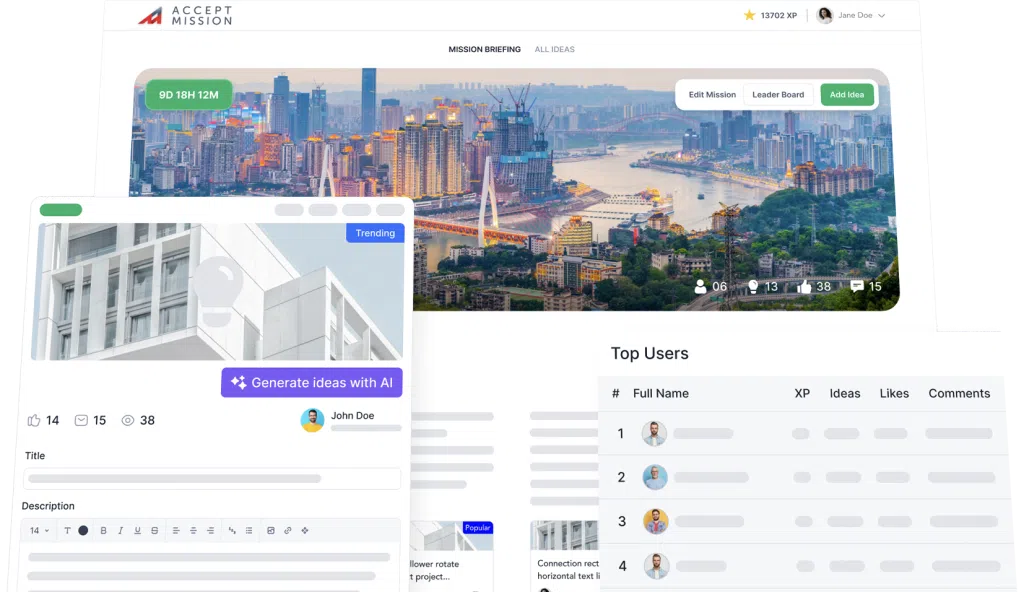
With the help of Accept Mission, you can now add game-like elements to your brainstorming or collaboration sessions to make them more fun and engaging for your employees.

By adding a bit of competition, you can stimulate people to come up with more creative ideas.

You can give points to your participants for every new idea they contribute, or you can have a leaderboard where the person with the most points at the end of the session wins a prize.

With gamification elements to boost engagement and creativity, the whole innovation and collaboration process becomes more fun and enjoyable.

Using advanced technologies and tools

Accept Mission integrates with popular tools that make work easier by seamlessly sharing files and ideas through different business applications, tools, and technologies such as:

  • Microsoft Team
  • Outlook
  • Office
  • Asher
  • Open ID 
  • SSO, and 
  • The BI platform
Go to Top