
Mission Brief Template: The 9 Fields That Separate Useful Submissions from Noise10 min read

Most organizations invest in the campaign and almost nothing in the brief that launches it.
A weak brief creates predictable noise:
- Off-scope submissions from contributors who had to guess at the boundaries
- Inconsistent scoring because evaluators had no shared baseline to work from
- Ideas that ignore constraints no one thought to communicate upfront
- Hours spent sorting entries that never should have entered the funnel
The instinct when results disappoint is to blame contributor creativity. The real cause sits in the brief, the one variable you control before the campaign opens.
Done well, the brief filters noise before submissions start arriving. This template breaks it into nine fields, each one doing specific work.
Together they turn a vague request into a structured mission contributors can actually answer. Apply it to your next campaign without changing anything else in your process.
Why the Brief Decides Everything
The brief is the only lever you control before the campaign opens. Once contributors submit, you can curate and evaluate, but you can’t reshape what they sent.
That makes the brief the point where you influence quality before a single submission arrives.
And the data supports it: task clarity, meaning clear goals and clear roles, correlates with both participation and contribution quality.
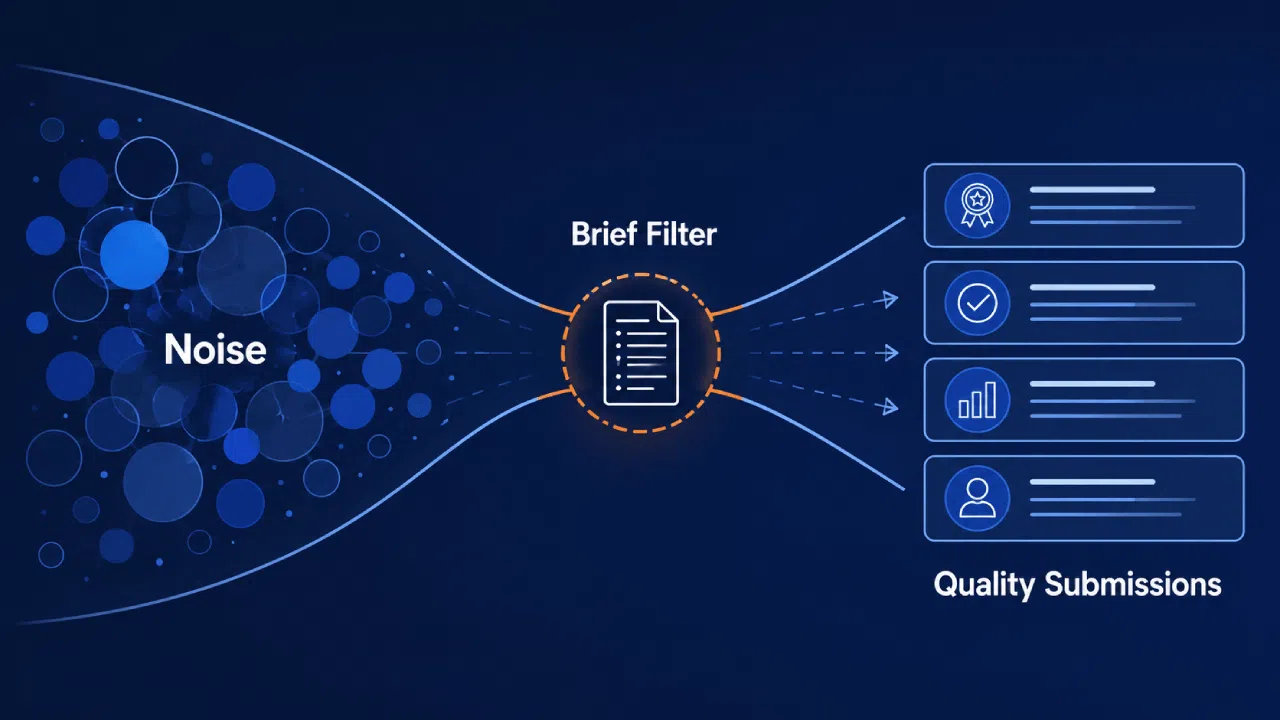
When the brief is precise, people know what to build and how their work gets judged. When it’s vague, they guess, and the guessing becomes noise.
There’s a downstream cost too. More than 88% of people who submit an idea receive no feedback at all, which erodes trust.
A strong brief is the fix that works before that problem starts. It narrows the field to evaluable ideas, so evaluators have more capacity to respond.
So what actually belongs in a brief?
Nine fields.
The 9 Fields
Each field below addresses a different failure mode. Leave any one of them blank and you know exactly what kind of noise to expect.
Field 1: Mission Title
The title is a signal about scope and ambition. A specific, energizing title tells contributors the organization cares and expects something real.
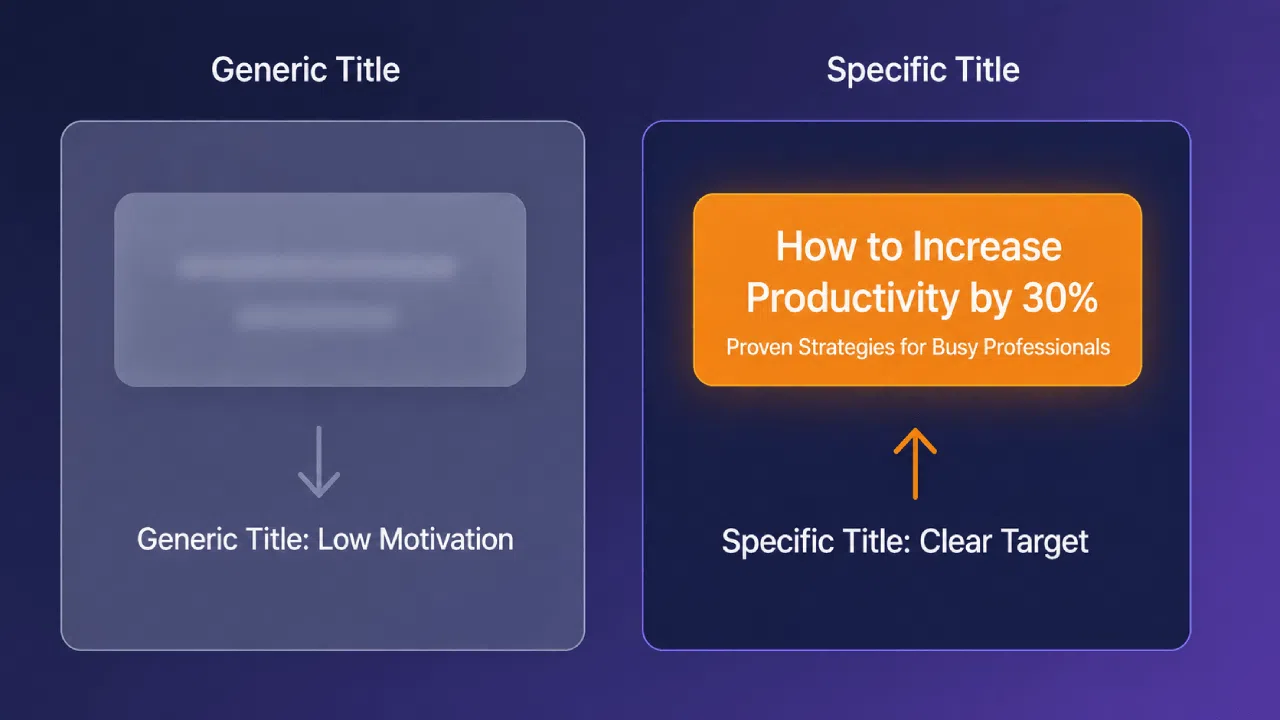
Generic titles do the opposite.
“Innovation Challenge Q3” signals routine box-ticking, and people calibrate their effort to match. Aim for a title that names the outcome or the domain.
“Cut Onboarding Time for New Hires in Half” gives people a target before they read a single word of context.
Field 2: Problem or Opportunity Statement
This is the heart of the brief: the specific challenge or opportunity the campaign exists to address. Specificity with measurable parameters is the standard.
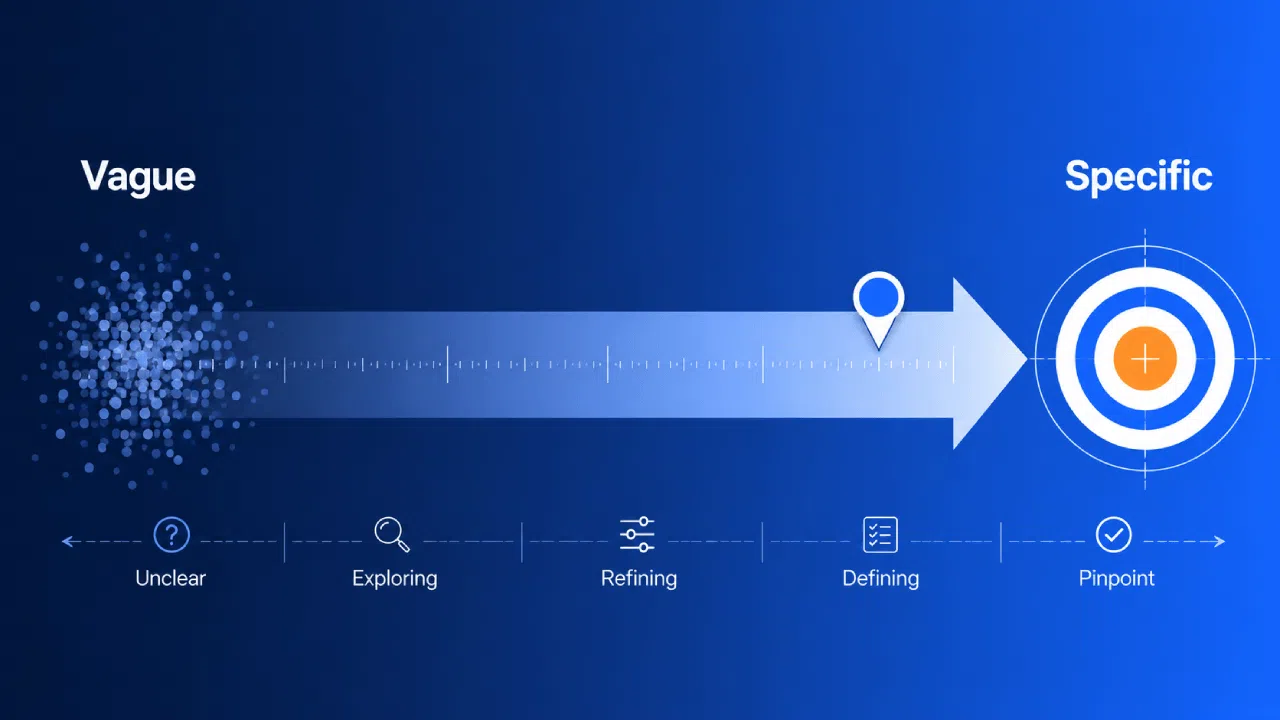
“Reduce energy use by 10% in our top three facilities” gives contributors a target, evaluators a metric, and the organization a benchmark.
Compare that to “be more green.” One produces focused proposals; the other produces a grab bag.
The risk runs in both directions. Too broad, and submissions become unevaluable; too narrow, and you constrain the solution space too early.
This is also where careful problem framing pays off. More than half of decision processes fail because people examined the problem too little before solving it.
Field 3: Strategic Linkage
Contributors need to know why this mission is a priority right now.
Strategic linkage connects the campaign to a clear organizational objective, so contributors understand why this mission matters.
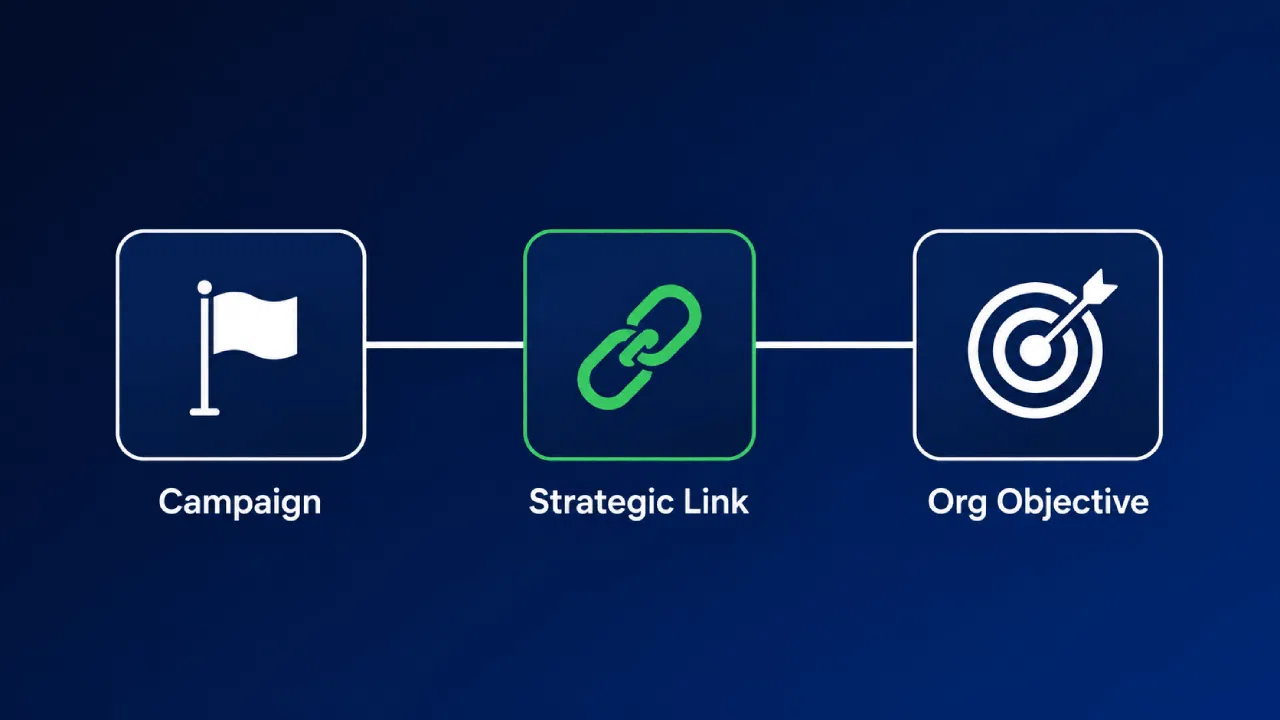
This field answers the first question any participant asks: why are we doing this? Without an answer, people put in less, and quality drops with the effort.
The Pepsi Refresh campaign showed the inverse failure.
The brief was well structured but disconnected from the company’s commercial purpose. The result was high participation alongside a sharp drop in brand equity and sales.
Field 4: Scope and Constraints
Spell out what’s in scope and what’s out of scope. A clear scope section typically covers:
- In scope: the specific problem areas, products, or processes open for ideas
- Out of scope: adjacent topics that belong to other teams or campaigns
- Constraints: budget ranges, technology limitations, and regulatory boundaries
- Known non-starters: approaches already tried or ruled out
Contributors can’t see the walls you already know about. Including the non-starters explicitly makes those limits visible before the first idea arrives.
The failure mode here is wasted effort. Without constraints, contributors invest hours in ideas that can never be implemented, and that disappointment costs you future participation.
Constraints feel limiting, but they sharpen submissions. A defined boundary tells people exactly where to aim, which raises the relevance of what comes back.
Field 5: Target Contributors
Decide who is invited and why. A broad open call suits exploratory missions; targeted selection suits problems that need specific expertise.
The brief should be written for the audience you choose. Technical language that experts expect will lose a generalist crowd, and plain framing can read as shallow to specialists.
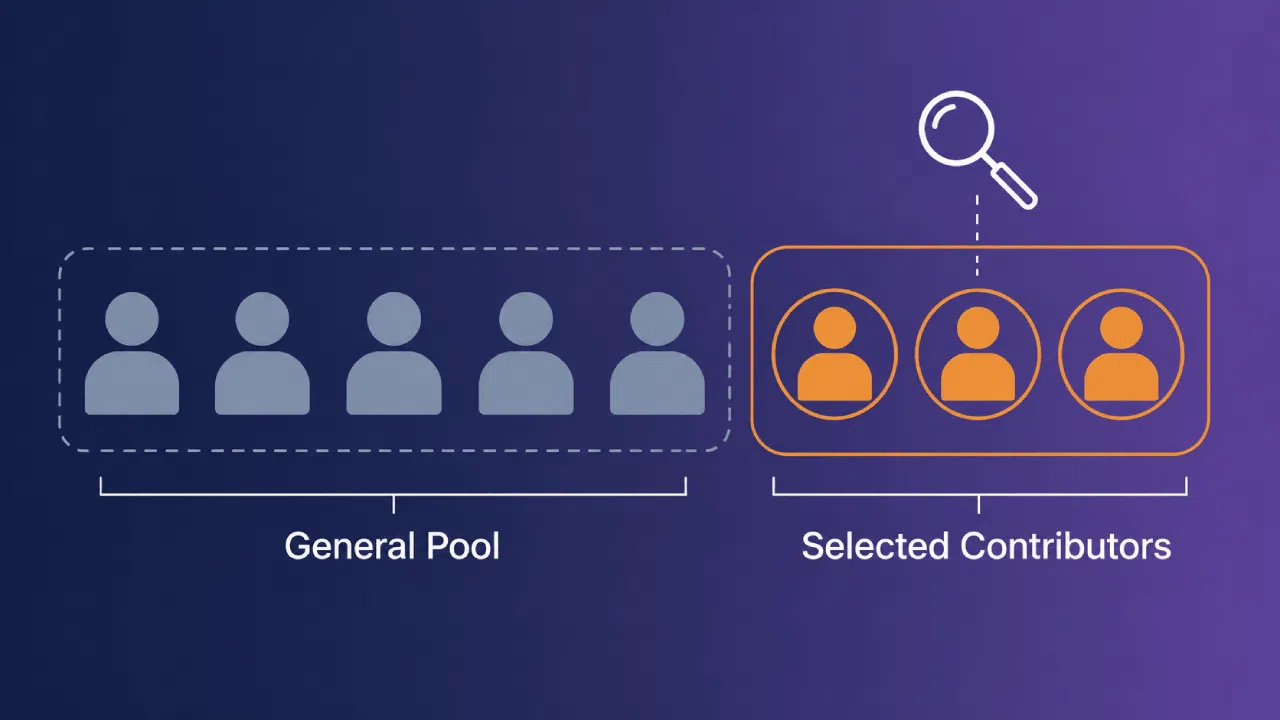
Ford’s Make it Driveable challenge scoped its crowd deliberately, inviting disability advocates, engineers, and designers for a vehicle accessibility problem.
The proximity of the crowd to the problem produced relevant, implementable ideas. Match the audience to the question, then write the brief in their language.
The wrong crowd, or the right crowd addressed in the wrong register, both lower the quality of what you get back.
Field 6: Submission Requirements
Tell contributors what a good submission looks like. Format, depth, and required elements all belong here, because clarity on the container improves the contents.
- A clear problem statement in the contributor’s own words
- The proposed solution and how it works
- Evidence or feasibility reasoning
- An estimate of expected impact
Without requirements, submissions range from one-sentence thoughts to ten-page documents, and neither extreme is easy to evaluate. Requirements pull everyone toward a comparable middle.
This field also does quiet work on quality. When people see the required elements, they self-select out of half-formed ideas and put more thought in.
Field 7: Evaluation Criteria
This is the most underused field and the one with the most downstream impact. Evaluation criteria tell evaluators how to score and tell contributors what to optimize for.
Publish the criteria in the brief, before a single submission arrives.
Upfront criteria help evaluators identify top contributions efficiently and direct participants to provide the right kind of solutions in the first place.
| Criterion | What It Measures | Weight |
|---|---|---|
| Strategic Fit | Alignment with the stated objective | 30% |
| Feasibility | Realism given constraints and resources | 25% |
| Impact | Size of the expected business outcome | 25% |
| Originality | Degree of new thinking versus existing approaches | 20% |
Weighting is optional, but naming the criteria isn’t. Contributors who can see how their work will be judged write toward those standards, which lifts the whole pool.
This is also where AI helps quietly. Platforms that generate evaluation scorecards keep criteria consistent across missions and ready before a campaign opens.
Field 8: Timeline and Decision Process
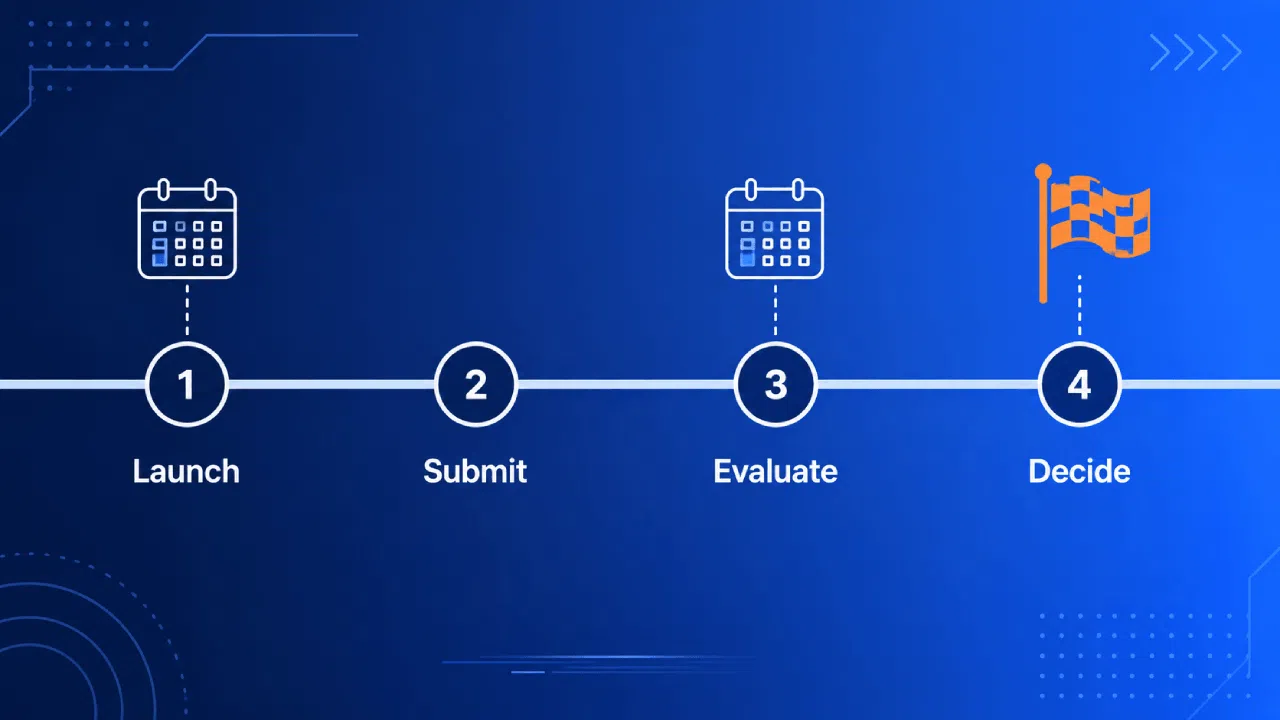
State the open and close dates, the evaluation period, and when contributors will hear back. Name who reviews submissions and who owns the final decision.
The Nokia IdeasProject collected thousands of ideas and developed almost none.
There was no communication about how ideas would be evaluated or moved forward, and contributors disengaged because they never heard back.
An undefined timeline creates the same uncertainty. People who don’t know when they’ll hear back assume the answer is never, and they stop contributing.
A clear timeline is a trust signal. It tells contributors their submissions enter a real process with real checkpoints, which keeps them engaged.
Field 9: Incentives and Recognition
Tell contributors what they stand to gain. Money is one lever, but recognition, visibility, career development, and a role in implementation often matter more for quality.

Many organizations struggle to connect their incentive programs to organizational goals, which leaves most contributors guessing at why their effort is worth it.
Monetary prizes tend to drive volume, while recognition and involvement drive quality. The connection is real elsewhere too.
Organizations with strong recognition programs see significantly lower voluntary turnover. Gallup finds well-recognized employees are 45% less likely to leave within two years.
Leave this field blank and contributors assume their submission will vanish into a queue. Naming the reward, financial or otherwise, tells them the effort is seen.
The Quick-Reference Table
Use this table as the operational summary of the template.
It maps each field to the work it does and the risk you take on when it’s missing.
| Field | Core Purpose | Risk Without It |
|---|---|---|
| Mission Title | Signals scope and ambition | Generic framing, low motivation |
| Problem or Opportunity Statement | Defines the specific target | Unevaluable or over-constrained ideas |
| Strategic Linkage | Connects mission to strategy | Low effort, unclear relevance |
| Scope and Constraints | Sets boundaries and non-starters | Wasted effort on unbuildable ideas |
| Target Contributors | Matches crowd to the problem | Low-relevance submissions |
| Submission Requirements | Standardizes what to include | Inconsistent, hard-to-compare entries |
| Evaluation Criteria | Guides scoring and contributor focus | Subjective scoring, misaimed ideas |
| Timeline and Decision Process | Creates trust and momentum | Disengagement and dropped participation |
| Incentives and Recognition | Names the reward for effort | Assumption that submissions disappear |
Read across any row and the pattern holds. Each missing field shows up later as a specific kind of noise in your funnel, and the brief is where you prevent it.
Treat the table as a pre-launch checklist. If a field is blank, you know exactly which problem you’re about to invite.
From One-Off Brief to Repeatable Spec
A single good brief helps one campaign. A standardized brief format helps every campaign that follows.
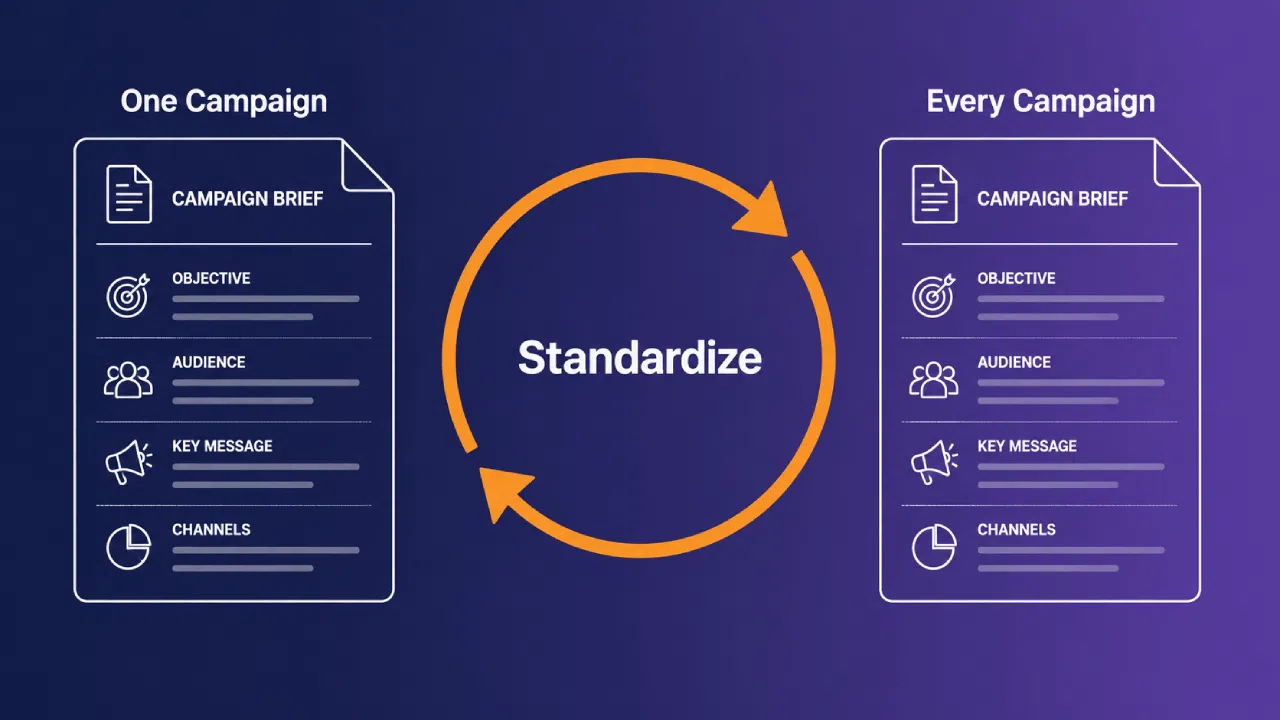
Organizations that fix the field set can spin up missions faster, train program managers more easily, and evaluate submissions on consistent criteria.
The brief stops being a creative writing exercise and becomes an operational capability. Dedicated campaign tools support this, with structured missions built on a repeatable set of fields.
The structure carries from one campaign to the next, so each launch starts from a tested format instead of a blank page.
The payoff is measurable. Structured workflows and centralized overviews can cut the time spent managing ideas, freeing capacity for evaluation and implementation.
That consistency is what structure and transparency look like in practice: the same clear standards applied across every mission, visible to everyone.
Put the Template to Work
The brief is a quality filter.
Fill in all nine fields and the return is consistent:
- Contributors know exactly what to build and where the boundaries are
- Evaluators share a baseline before scoring starts
- Program managers spend time reviewing real candidates, not sorting off-scope ideas
- Implementation teams inherit screened submissions instead of a stack of guesses
Standardize the field set and campaigns become faster to launch and easier to evaluate. The brief stops being a one-off document and becomes an operational capability.
Build it once, refine it as you learn. Every mission that follows starts from a tested format instead of a blank page.
Download the free guide Idea Collecting: From Organizational Signals to Ideas and learn to build a process where every brief sets contributors up to succeed.
Request a demo to see how Accept Mission gives you structured mission templates, AI-supported evaluation criteria, and full transparency across every campaign you run.








 English
 Dutch
Dutch Portuguese
 Spanish
 French
 German
 Arabic