
Beyond the Suggestion Box: How to Operationalize Idea Management for Real ROI7 min read

For years, the suggestion box has been a familiar symbol of a company’s willingness to listen. But for the managers who have to manage them, these boxes are often a paradox.
They’re a well-intentioned tool that ends up stifling innovation, creating administrative work, and disengaging the very employees they’re meant to empower.
The traditional suggestion box isn’t just broken. It’s a system designed to fail.
The Modern Alternative
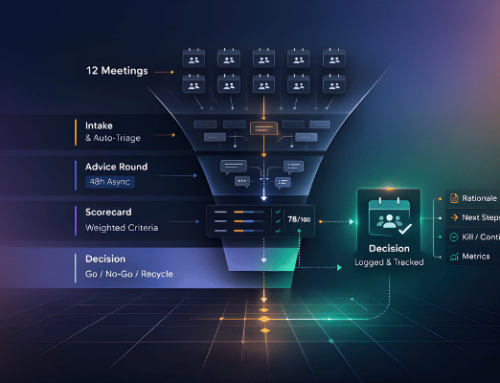
The alternative to the suggestion box isn’t a better box, but a structured, end-to-end business process. Think of it as an active funnel, not a passive container.
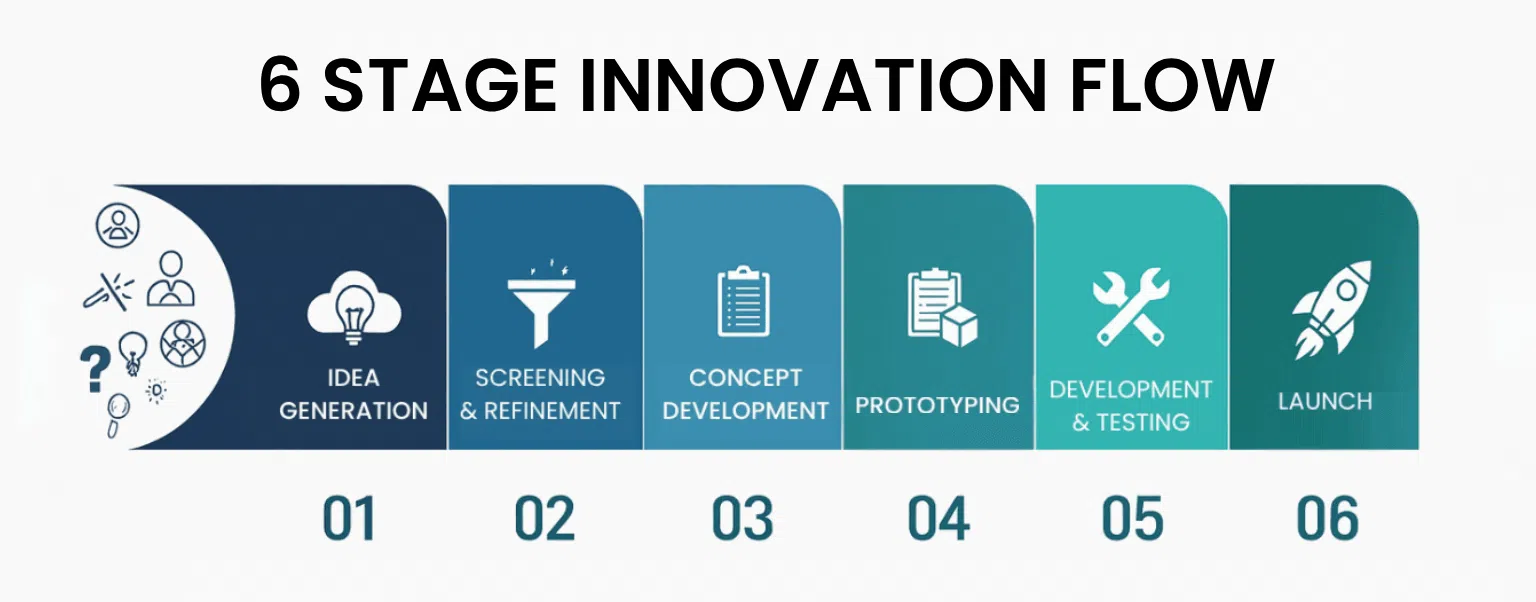
This system is designed to:
- Capture raw ideas
- Enrich them through team collaboration
- Systematically filter them against business goals
- Track them all the way through implementation
At the end of the process, you measure the final impact. This approach transforms the chaos of an open inbox into a predictable workflow.
It also ensures the best ideas aren’t only heard but are methodically developed into assets that deliver real value to the business.
How to Build a System that Actually Works
Building a successful idea management program requires a solid operational framework.
This playbook is broken into three parts: laying the groundwork, building an evaluation engine, and driving long-term engagement.
Part 1: Laying the Foundation for Success
Before you ask for a single idea, you must set the stage for success, which involves getting the right people on board and aligning the program with business needs.
Your foundational work should focus on three key actions:
- Secure executive buy-in
- Anchor to company strategy
- Build psychological safety
Getting executive buy-in is more than just a budget approval. You must frame your pitch as a solution to a specific business problem, showing how it will help leaders hit their own KPIs.
The program must be directly tied to the company’s strategic goals and provide employees with the necessary context to submit relevant, high-impact ideas.
To encourage bold ideas, leaders must foster a culture where experimentation is valued and failures are seen as learning experiences, not reasons for criticism.
Part 2: Building Your Evaluation Engine
A scalable, objective, fair, and transparent system is important for managing a high volume of ideas while maintaining employee trust and program credibility.
Your evaluation engine should be built on these core components:
- Define clear scoring criteria
- Use a prioritization framework
- Leverage crowdsourced feedback
Before launch, establish a simple, public scorecard to evaluate ideas based on strategic fit, customer impact, and potential ROI.
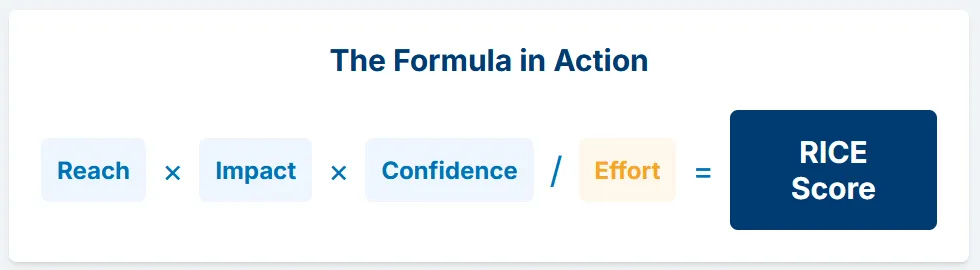
Use a structured model like RICE or cost-benefit analysis to compare ideas, rather than relying on gut feelings to compare different ideas.
Let your employees help you with the initial evaluation phase, and allow people to vote and comment on submissions, so top concepts emerge naturally.
Part 3: Keeping Your Team Engaged for the Long Haul
Launching a program is easy, but sustaining program momentum requires deliberate strategy: motivation, communication, and recognition.
Here are a few examples on how to keep your team engaged for the long haul:
- Use gamification with purpose
- Vary rewards and recognition
- Communicate relentlessly
Go beyond just adding points for submissions by using leaderboards to create friendly competition. Use this data to pinpoint top innovators and hidden experts.
Recognition is often more powerful than money, so don’t underestimate non-monetary rewards. Well, public recognition or extra PTO can be strong motivators.
In addition, real-time idea status updates and regular celebration of implemented ideas and their impact are important for success and closing the feedback loop.
From Proactive Strategy to the Right Platform
Innovation challenges, focused and time-bound campaigns, are the most strategic use of an idea program, which enhances continuous improvement from an “always-on” platform.
This structured approach transforms your program into a proactive, problem-solving engine, as a successful challenge requires proper organization.
Follow these steps to design a high-impact campaign:
- Define objective: Clearly state the problem (e.g., cut costs by 10%, improve customer satisfaction, develop new product).
- Secure sponsor: Get a senior leader to champion the initiative, ensuring ideas receive support.
- Provide context: Give participants necessary information like customer data or market research.
- Set constraints: Outline boundaries (budget, technical) and judging criteria.
Focused challenges lead to real business outcomes.
For example, Delta Cafés used a challenge to source new product ideas, leading directly to two successful products that have sold over 10 million units.
As your program grows and you run more challenges, spreadsheets and email will fail.
A dedicated idea management platform becomes the central hub for all innovation activity, and when evaluating software, look for these core features:
| Feature | Why It Matters |
|---|---|
| Idea collection portals | Provides a user-friendly, central place for employees to submit ideas 24/7. |
| Collaboration tools | Allows employees to comment, vote, and build on each other’s ideas. |
| Automated workflows | Streamlines the evaluation process with stage-gates and objective scoring. |
| Gamification and engagement | Drives sustained participation with points, badges, and leaderboards. |
| Analytics and dashboards | Lets you track KPIs, measure engagement, and calculate the program’s ROI. |
| Integrations | Connects with tools you already use, like Slack, Microsoft Teams, and Jira. |
How to Measure Your Program’s ROI
To justify your program and secure ongoing support, you have to demonstrate its value.
This requires a balanced approach that combines financial metrics with measures of engagement and cultural impact.
To get a full picture of your program’s health and impact, use a mix of metrics like those in the balanced scorecard below:
| Category | KPI Name | Example Metric | What It Tells You |
|---|---|---|---|
| Input | Participation rate | % of employees submitting an idea per quarter | The level of employee engagement |
| Process | Pipeline conversion rate | % of ideas advancing from evaluation to implementation | The efficiency of your evaluation process |
| Output | Implementation rate | % of approved ideas that are successfully launched | Your organization’s ability to execute |
| Outcome | Cost savings | $ documented savings from process improvements | The program’s direct contribution to the bottom line |
For a clear quantitative measure, use the classic financial ROI formula:
ROI = (Financial Gain – Investment Cost) / Investment Cost
Financial gain is the sum of all tangible returns, including new revenue or cost savings. Investment cost includes all program expenses, like software fees and employee time.
Beyond the numbers, many of the biggest benefits aren’t immediately financial but are critical for long-term health.
You can measure intangible returns via employee net promoter score (eNPS), turnover rates, and employee surveys on psychological safety and value.
The Future of Idea Management
Idea management, enhanced by AI and open innovation, is evolving. AI identifies trends and creates concepts, making prompt-guiding a vital management skill.
But innovation extends beyond company walls, requiring systems to manage ideas from external partners like customers, suppliers, and startups.
Understanding trends is one thing, and acting on them is another. Accept Mission provides the platform to address modern innovation challenges.
Here’s how our platform helps you stay ahead:
- Launch targeted innovation challenges
- Engage internal and external stakeholders
- Leverage powerful evaluation tools
- Integrate AI to enrich the ideation process
Our platform is designed for both open and internal innovation, allowing you to manage ideas from employees, customers, and partners in one central place.
This breaks down silos and ensures you capture the best ideas, no matter where they come from.
AI features and customizable workflows automate admin. This frees up your time to focus on what matters: developing high-impact ideas.
Turn ideas into assets. Book a free demo with Accept Mission today to see how our platform can transform your innovation process.










 English
 Dutch
Dutch Portuguese
 Spanish
 French
 German
 Arabic