
Three Rules That End “Waiting on Someone” in Your Innovation Funnel10 min read

An idea enters your funnel in good shape. Three weeks later it sits in the same stage, with no decision and no feedback.
Three things are usually missing:
- A named person accountable for moving the idea forward at each stage
- A time limit on how long any single stage can hold an idea
- An automatic trigger when the silence runs past that limit
Each gap has a direct fix: clear ownership per stage, SLAs with defined windows and default actions, and escalation paths that trigger automatically.
This article walks through all three, including the setup mistakes that undermine them and the metrics that confirm they are holding.
Why Innovation Funnels Get Stuck
Stalls almost always happen at the seams of the funnel, the handoffs where it stops being clear who acts next.
BCG’s 2024 survey found that only 3% of companies qualify as “innovation ready,” down from 20% in 2022. Yet 83% rank innovation a top-three priority.
The same research traces the breakdown to two structural problems:
- 28% of innovation leaders cite weak governance as a top-three challenge
- 32% point to siloed innovation across teams
Decision rights make it worse. McKinsey found that in 30% of activities, the critical decision sits above where the work happens.
So the person closest to the idea waits for someone above them to weigh in. That person is busy, and the idea drifts.
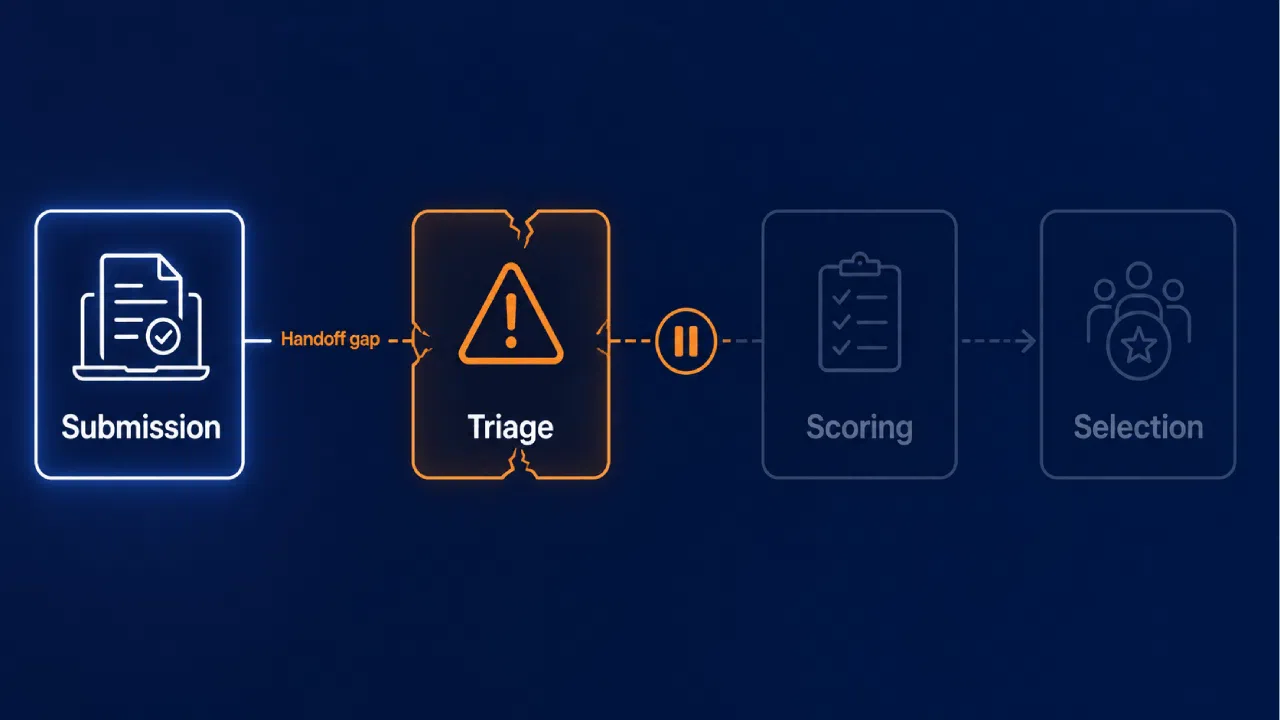
Multiply that across every stage and you get a funnel that looks active but moves slowly.
Rule 1: One Owner Per Stage
Single ownership means one named person is accountable for every stage: a specific individual, not a team or a committee.
The distinction matters because shared ownership tends to become no ownership. When three people can approve something, each assumes one of the others will.
The fix is to apply a RACI logic. Every stage gets one Accountable owner and a hard cap on who gets consulted. That cap matters more than it looks.
Here’s what it looks like applied to a four-stage funnel:
| Stage | Owner Role | Decision Right | Max Consulted |
|---|---|---|---|
| Submission | Innovation Coordinator | Accept into funnel or return for detail | 0 |
| Triage | Domain Lead | Route to scoring or reject with reason | 2 |
| Scoring | Evaluation Owner | Assign score and advance or hold | 3 |
| Selection | Portfolio Manager | Fund, park, or decline | 3 |
Notice that the decision right is explicit at every stage. The owner isn’t asked to “review” the idea. They’re asked to make a specific call: accept, route, score, or fund.
When the right is vague, the owner defaults to caution and the idea sits. When it’s named, the work has an obvious next action.
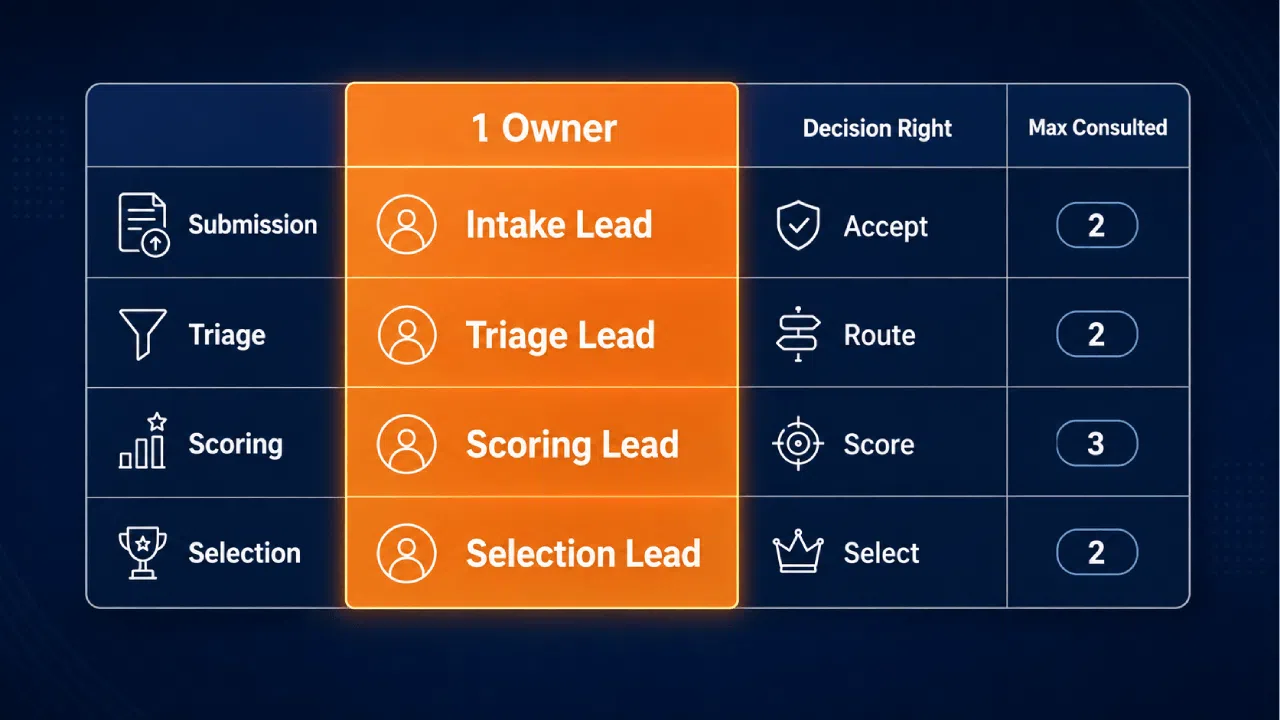
One person per stage also gives you a place to look when something stalls. You know exactly whose queue an idea is sitting in, which makes the next two rules possible.
Rule 2: Stage-Level SLAs
Ownership tells you who acts. An SLA tells you when. Without the second, the first is just a name on an org chart.
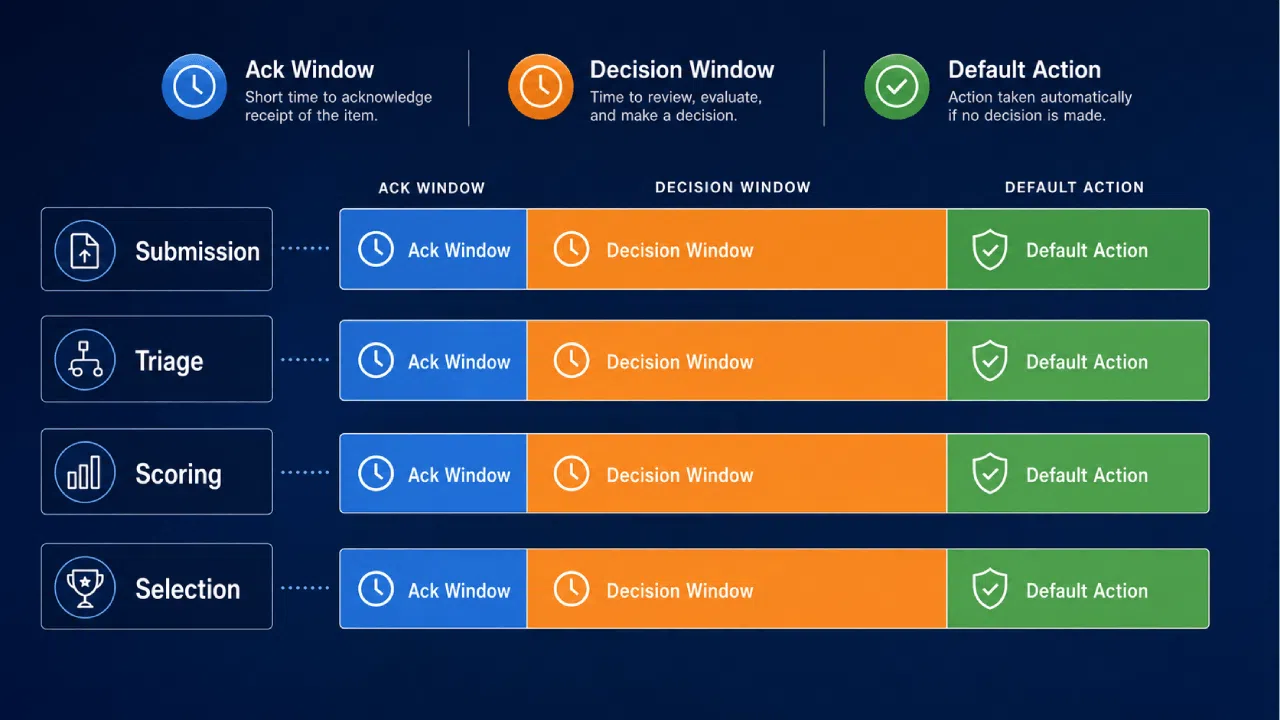
A stage-level SLA is an internal time commitment for moving an idea through a stage. It has three components:
- Acknowledgment window: how long the owner has to confirm they have the idea.
- Decision window: how long they have to make the actual call.
- Default action on expiry: what happens if the window closes with no decision.
The clock starts at stage entry, not when the owner happens to notice. That single choice removes most disputes about whether something is late.
Here’s a worked example for the same funnel:
| Stage | SLA Clock Starts | Acknowledgment Window | Decision Window | Default Action |
|---|---|---|---|---|
| Submission | On submission | 1 business day | 3 business days | Auto-advance to Triage |
| Triage | On entry to Triage | 1 business day | 5 business days | Escalate to Domain Lead’s manager |
| Scoring | On entry to Scoring | 2 business days | 7 business days | Flag and notify program lead |
| Selection | On entry to Selection | 2 business days | 10 business days | Hold for next portfolio review |
The default action is the part teams skip, and it’s the part that does the work.
A window with no consequence stays a suggestion. A window that auto-advances or escalates becomes a rule.
SLAs make expectations visible, so a slow stage shows up as data rather than a vague feeling. This matters more now than it used to.
Gallup’s 2026 report found manager engagement fell from 27% to 22% in a single year, and notes the decline is stalling innovation.
When the managers who own stages are stretched thin, informal follow-through is the first thing to go. An SLA surfaces the delay on its own.
Rule 3: Escalation Paths That Trigger
An SLA breach with no consequence teaches everyone that the SLA is optional. Escalation gives the time limit teeth.
The cleanest model is a three-tier path. Tier 1 is the immediate owner, Tier 2 is cross-functional leadership, Tier 3 is the executive level.
The trigger between tiers has to be measurable and time-bound.
A line like “five business days past the decision window, notify the program director” works because anyone can check it against the clock.
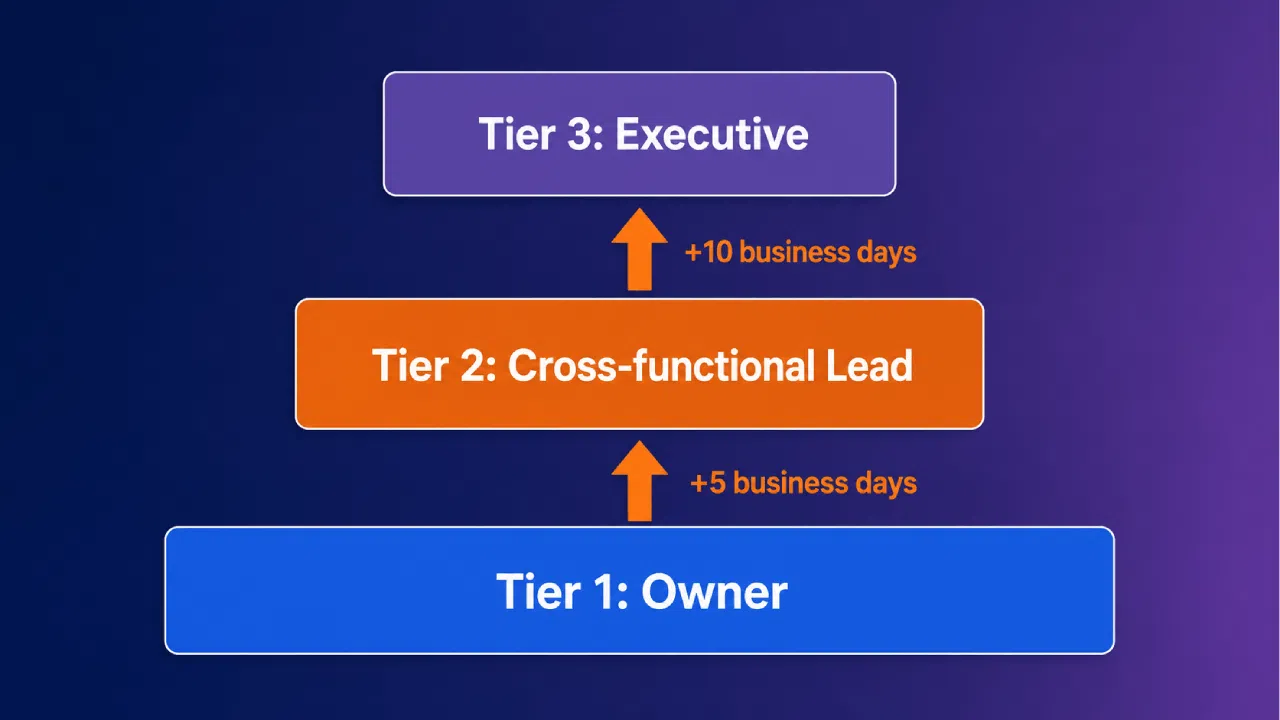
Vague triggers get treated as suggestions and ignored. Specific ones run on their own.
When escalation runs constantly, it usually means the tiers below aren’t empowered to decide.
That tells you Rule 1 needs work, that ownership at the lower tiers is less defined than you thought.
This is also why escalation has to be routine and blame-free. People don’t escalate when they expect to be punished for it.
BCG’s 2024 survey found that 38% of innovation executives cite a risk-averse culture as a top-three challenge.
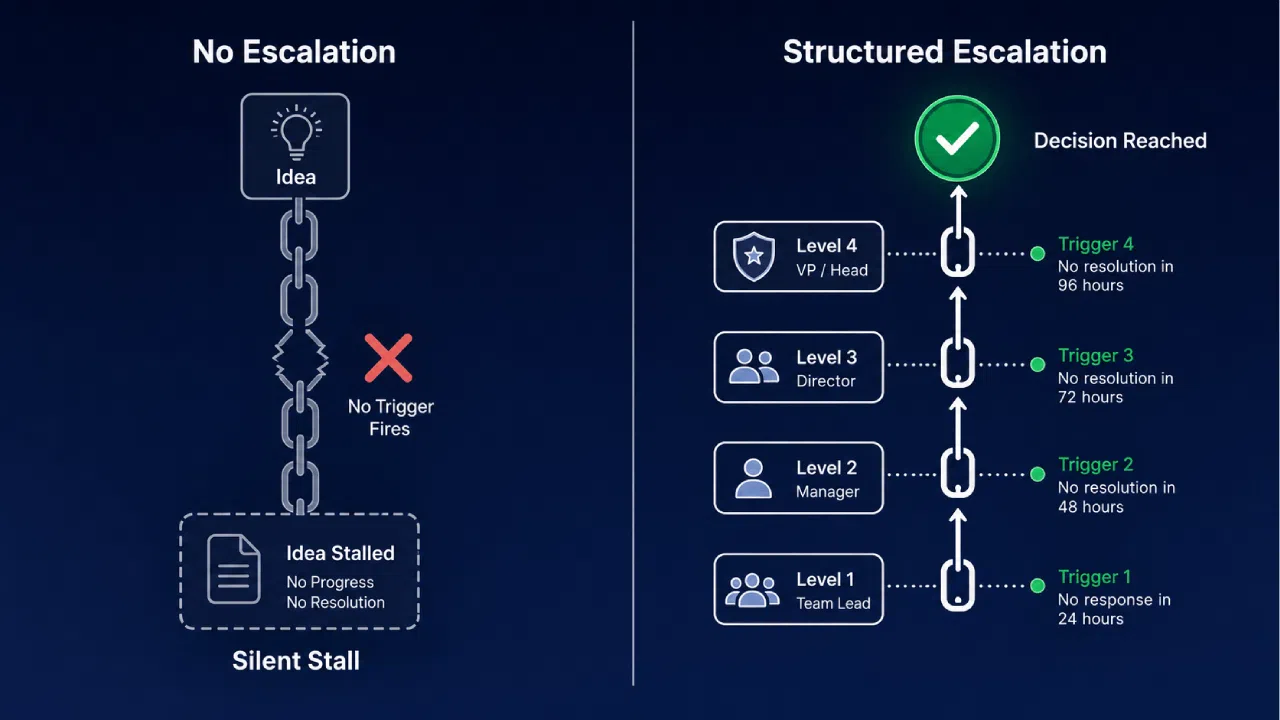
Frame the audit trail as a system signal. An entry like “Stage 3 breached SLA twice this quarter” points at a workflow, not a person.
When teams trust that escalation is about the process, they actually use it. The breaches surface early, while they’re still cheap to resolve.
The System Has to Surface Problems Automatically
Run all three rules together and the funnel starts correcting itself.
Ownership names the actor, SLAs name the deadline, and escalation names the consequence. No gap is left for an idea to disappear into.
This is where the right platform earns its place. Accept Mission’s workflow module assigns one owner per stage and triggers escalations when a window closes.
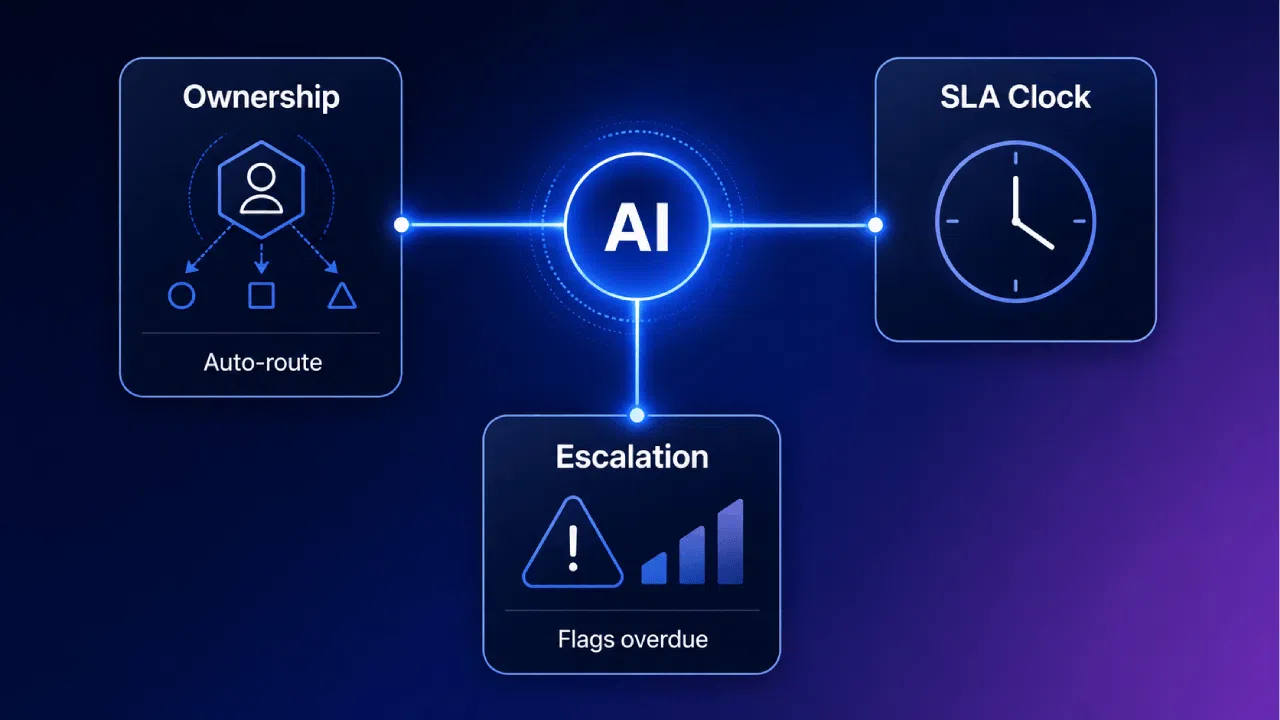
AI sits quietly underneath, flagging overdue items and surfacing the stages where ideas keep stacking up. It makes the three rules harder to miss.
The visibility it creates is the point: every idea has a location, an owner, and a clock, so nothing waits in silence.
There’s a quieter benefit too. When a submitter can see where their idea sits and who holds it, the silence that kills engagement stops.
Transparency that surfaces problems also builds trust with the people feeding the funnel.
Common Mistakes When Setting Up Ownership and SLAs
Four setup errors account for most of the funnels that stall despite good intentions:
- Assigning ownership to a role or team, not a named person. “The innovation team owns Triage” sounds reasonable until nobody specific has to act.
- Setting windows too tight. Owners learn to game the pressure: they acknowledge early and let the decision expire.
- Skipping the default action. Without a defined consequence, the window is optional, and teams treat it that way.
- Confusing “consulted” with “approver.” When several people are listed as consulted, each assumes someone else will catch the problem.
All four are design errors with the same fix: specify the person, the window, the consequence, and the decision right before any stage goes live.
The pattern underneath them is the same. Vagueness anywhere in the setup gives an idea somewhere to stall.
Closing the Loop With Idea Submitters
The three rules govern movement inside the funnel. They don’t cover what submitters experience while waiting.
Most submitters check the portal a few times, and when nothing updates, they stop. By Selection, most have already moved on, and that silence costs more than it looks.
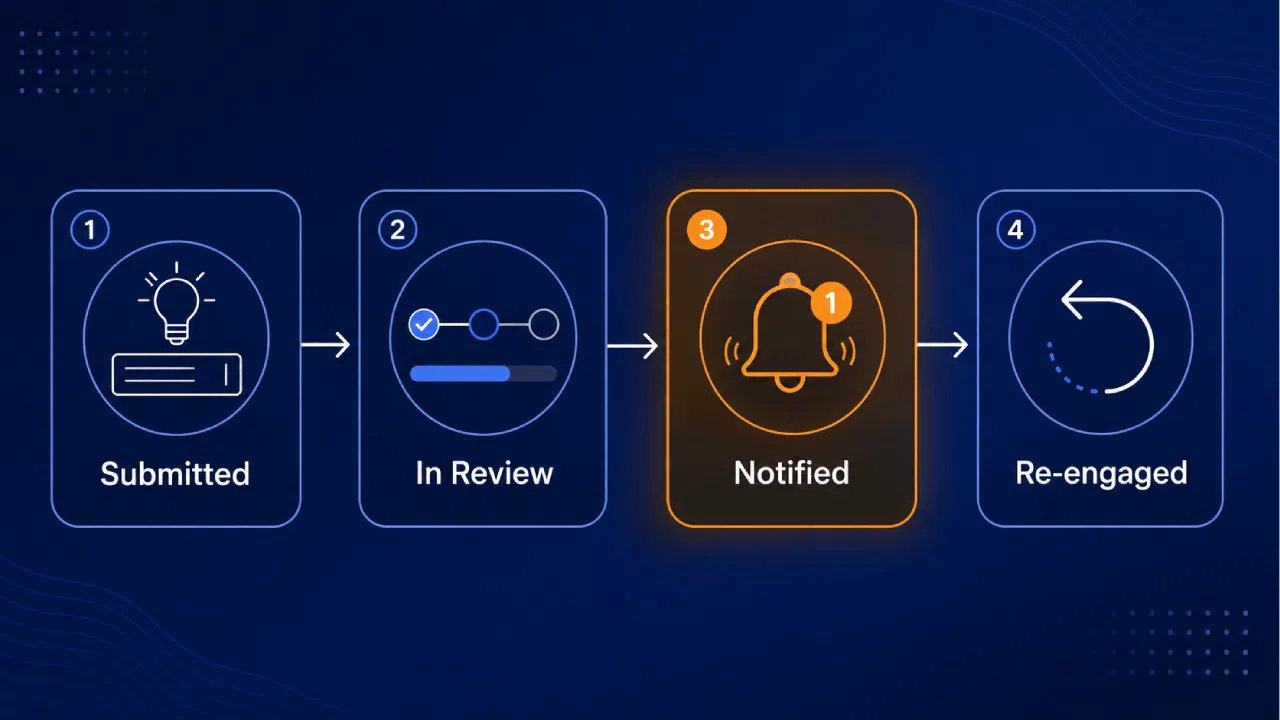
Submitters who never hear back rarely resubmit. The governance tightens while the idea pool quietly shrinks.
The fix is to automate stage-change notifications. When an idea moves stages, the submitter gets a message, with a reason on any decline.
Three things every submitter should know: where their idea sits, who holds it, and when to expect the next update.
None of it requires manual effort, since it runs on the same triggers as the rest of the funnel.
Metrics That Tell You the Rules Are Working
Three numbers cover most of what matters.
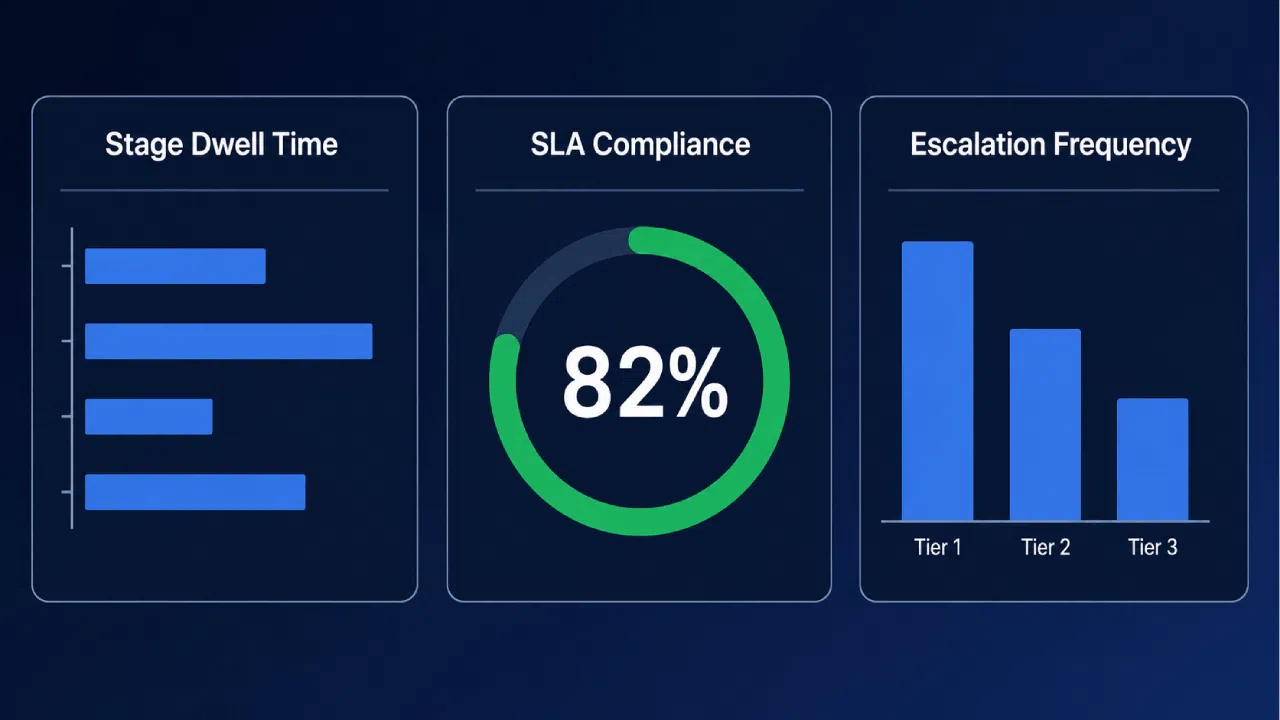
Stage dwell time is the median time ideas sit in each stage. Any stage running more than 50% over the SLA window is a signal.
SLA compliance rate is the share of ideas clearing each stage in time. Below 70% is a flag; below 50% means it’s aspirational.
Escalation frequency by tier counts how often each tier triggers per quarter. Constant upper-tier escalations usually mean the lower tiers lack the authority to decide.
Together, these go beyond tracking idea volume. They show where the system holds and where it leaks.
Review them quarterly in the first year. The windows you set at launch will need adjustment once you have real cycle-time data.
Set the Rules Before You Set Up the Platform
Software enforces rules but doesn’t invent them. Teams that configure first, before agreeing on ownership, just build a faster version of the same problem.
Do the design work first:
- Assign one named person as Accountable owner for each stage in your funnel
- Set SLA windows for each stage, including a defined default action for when the window closes without a decision
- Map the three escalation tiers and specify the exact trigger that moves an issue from one tier to the next
When the structure is in place, the funnel runs without anyone having to remember to follow up. Ideas move because the rules require it.
“Waiting on someone” is a system failure, and the only durable fix is a funnel built on rules that force the next move.
Download our guide to governance-driven idea management, or book a demo to see how Accept Mission handles automated routing, escalation workflows, and audit trails.










 English
 Dutch
Dutch Portuguese
 Spanish
 French
 German
 Arabic