
Decision Logs: How to Stop Relitigating Settled Decisions9 min read

An idea gets approved in a steering meeting and everyone nods. Three weeks later someone reopens it, because nobody wrote down why it was approved.
The pattern is always the same:
- The same objections resurface.
- The same evidence gets re-explained.
- The decision that felt final quietly comes undone.
Innovation teams pour real energy into generating ideas and debating them. What they rarely do is record the decisions those debates actually produce.
That gap is why settled decisions keep reopening. Most teams over-invest in idea volume and under-invest in decision memory, so closed questions keep coming back.
The fix isn’t more debate or better meetings. It’s a plain record of what was decided and why, and the sections below show how it works.
Why Settled Decisions Keep Reopening
The instinctive explanation for lost alignment is disagreement, so the group supposedly drifts because people want different things.
In practice the drift is quieter. Nobody remembers the reasoning behind what was already decided, so call it decision amnesia.
The waste is well documented. A typical Fortune 500 company loses on three fronts:
- Around 530,000 manager-days a year to inefficient decision-making.
- Roughly $250 million of that time in labor cost.
- 61% of executives calling most of their deciding time poorly spent.
Part of the problem is structural, because most organizations never build a process for this. Nearly three-quarters of companies have no formal approach to making major decisions.
So the reasoning lives in people’s heads, and heads are fragile storage. Research found that 42% of institutional knowledge sits with only one person.
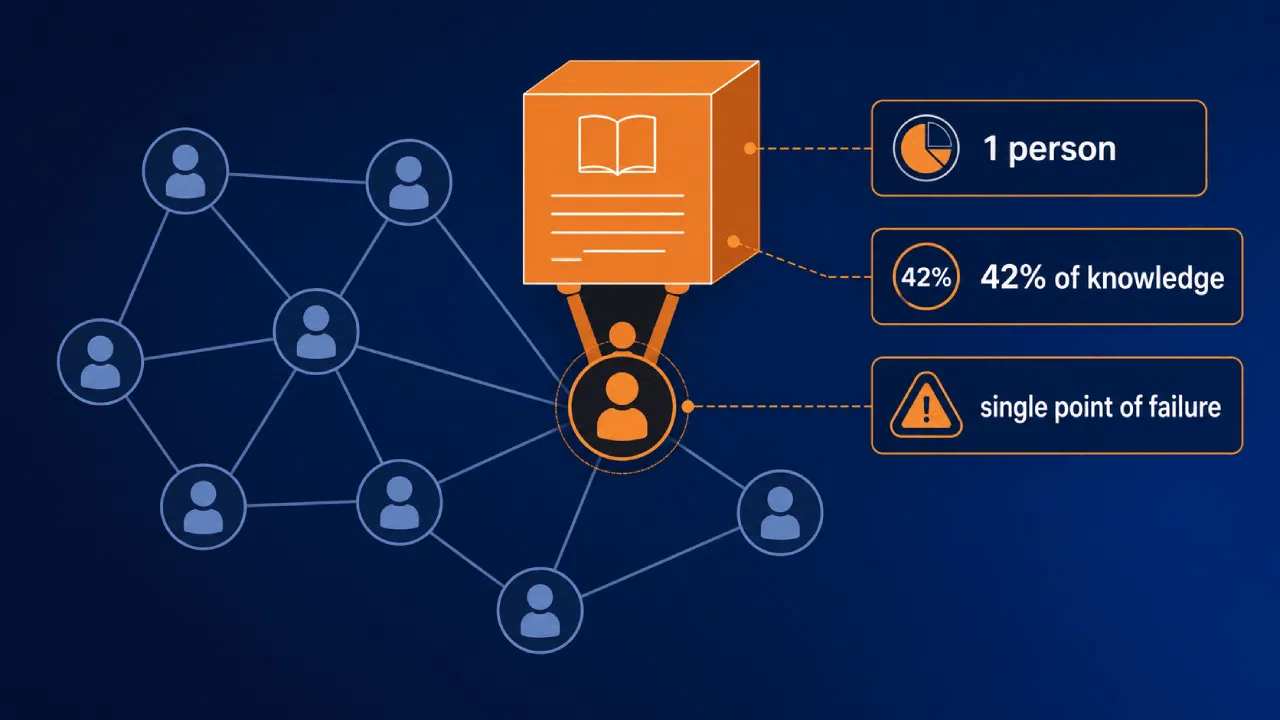
When that person is away or forgets, the decision loses its anchor. The group reconstructs the argument from memory, and memories rarely agree.
That’s what makes alignment feel slippery. The team isn’t fighting twice for the love of conflict; it fights because the first outcome was never captured durably.
What a Decision Log Actually Is
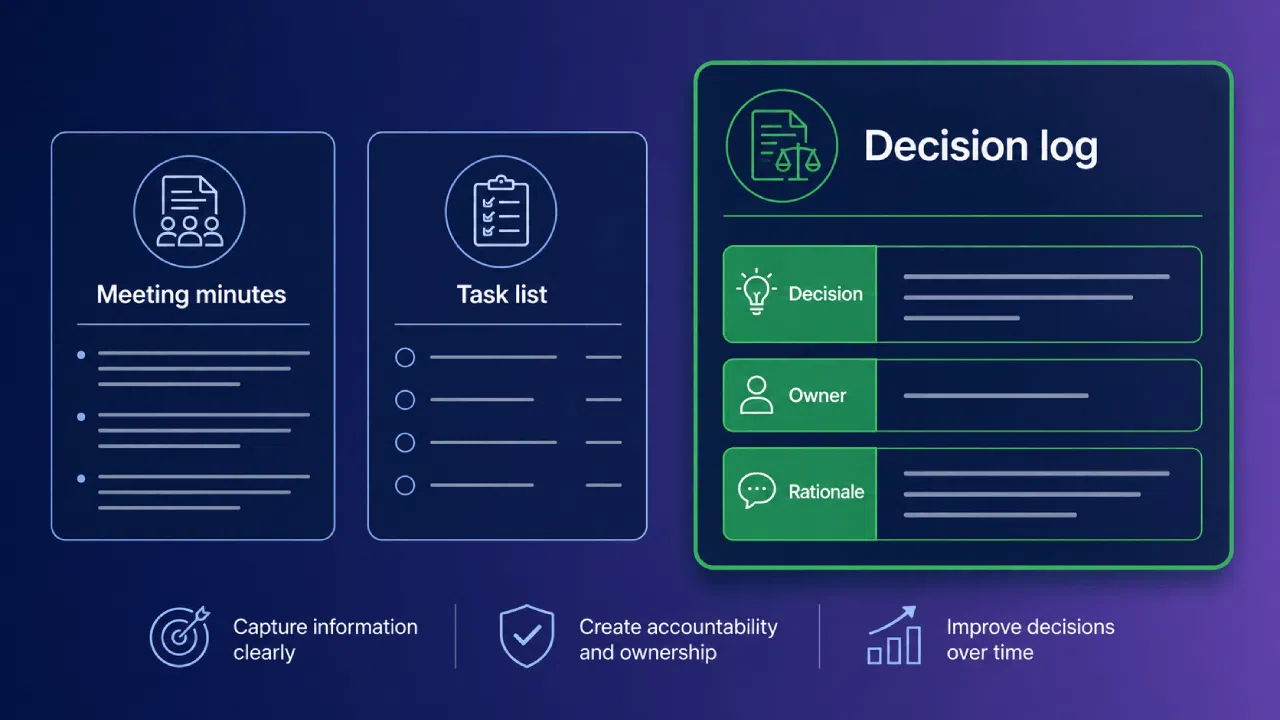
A decision log is a running record of the choices a program makes, structured so anyone can see what was decided, who decided it, and why.
It’s not meeting minutes and it’s not a task list. It captures decisions as first-class objects, traceable back to the evidence and the owner behind them.
The idea has deep lineage. Software teams formalized it as Architecture Decision Records, Michael Nygard’s 2011 pattern for logging consequential technical choices.
Project managers know the same instinct through the RAID log, where the “D” can stand for Decisions. Frameworks like DACI and RAPID pin down who actually holds the call.
The specific tool matters less than the fields. A good decision log entry carries a consistent set:
| Field | What It Captures | Why It Matters |
|---|---|---|
| ID | A unique reference for the decision | Lets people cite it precisely instead of paraphrasing |
| Date | When the decision was made | Anchors it in context and shows how current it is |
| Decision | What was actually decided, in plain terms | Removes ambiguity about what “yes” meant |
| Owner | Who made the call | Gives the decision a single accountable name |
| Rationale | Why, and on what evidence | Preserves the reasoning that debate produced |
| Alternatives | What was considered and rejected | Stops the group from re-proposing dead options |
| Status | Proposed, accepted, or superseded | Signals whether the decision still holds |
| Revisit trigger | The condition that would reopen it | Defines when reopening is legitimate, not random |
The last two fields do quiet, heavy work. Status shows whether a decision still holds, and the revisit trigger flags a real reason to reopen versus simple forgetting.
Together, these fields turn scattered conversations into a structure the whole group can read the same way.
How a Decision Log Keeps Decisions From Reopening
A log helps in three concrete ways. Each one attacks a different source of the churn that slows innovation programs down.
It Stops Re-Litigation
Once a decision and its rationale are written down, reopening it requires a reason, not just a lingering doubt.
Amazon built its culture on this. Its narrative memos and PR-FAQ documents force the reasoning onto the page, so teams stop re-arguing settled ground.
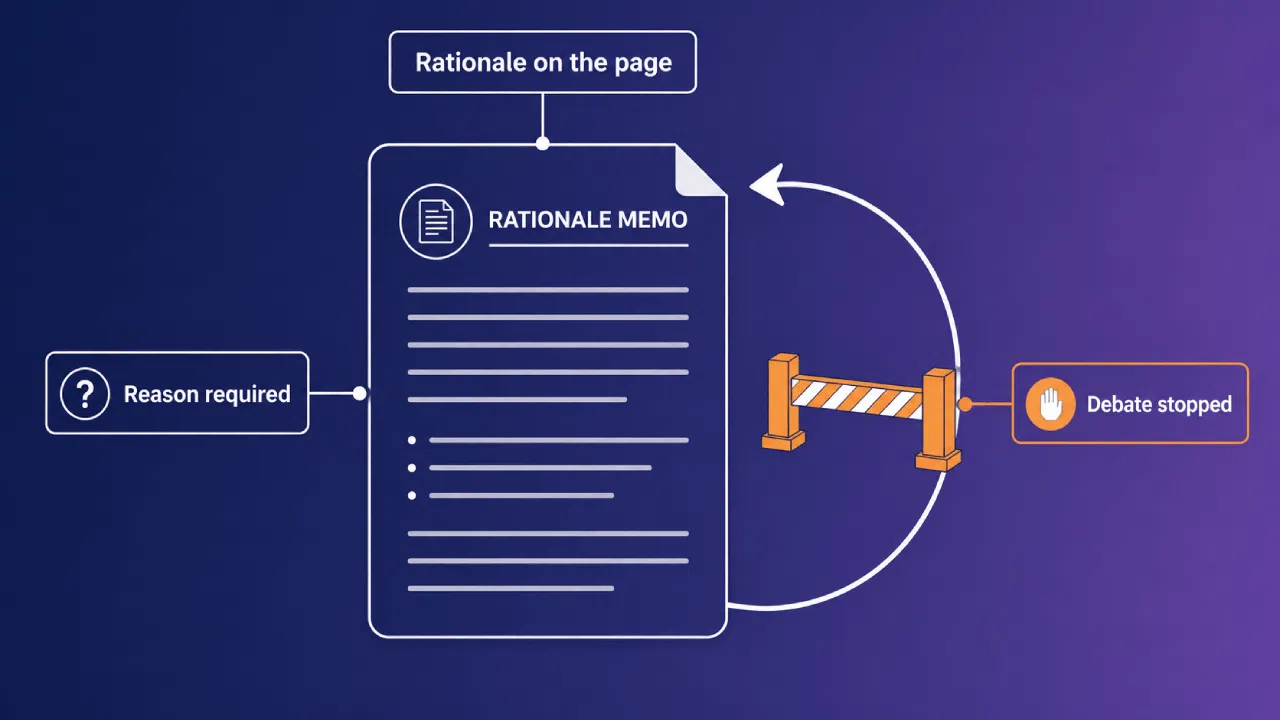
Engineering teams report the same effect. AWS frames decision records as a way to prevent repeated discussions, because the answer and its logic are already on record.
That single shift, from “let’s rethink this” to “here’s why we decided,” is what protects a program from endless re-opening.
It Makes Async Alignment Possible
When rationale is captured, people don’t need to be in the room to align.
A team at Spotify adopted another team’s decision asynchronously. One group in Stockholm inherited a New York choice without a shared call.
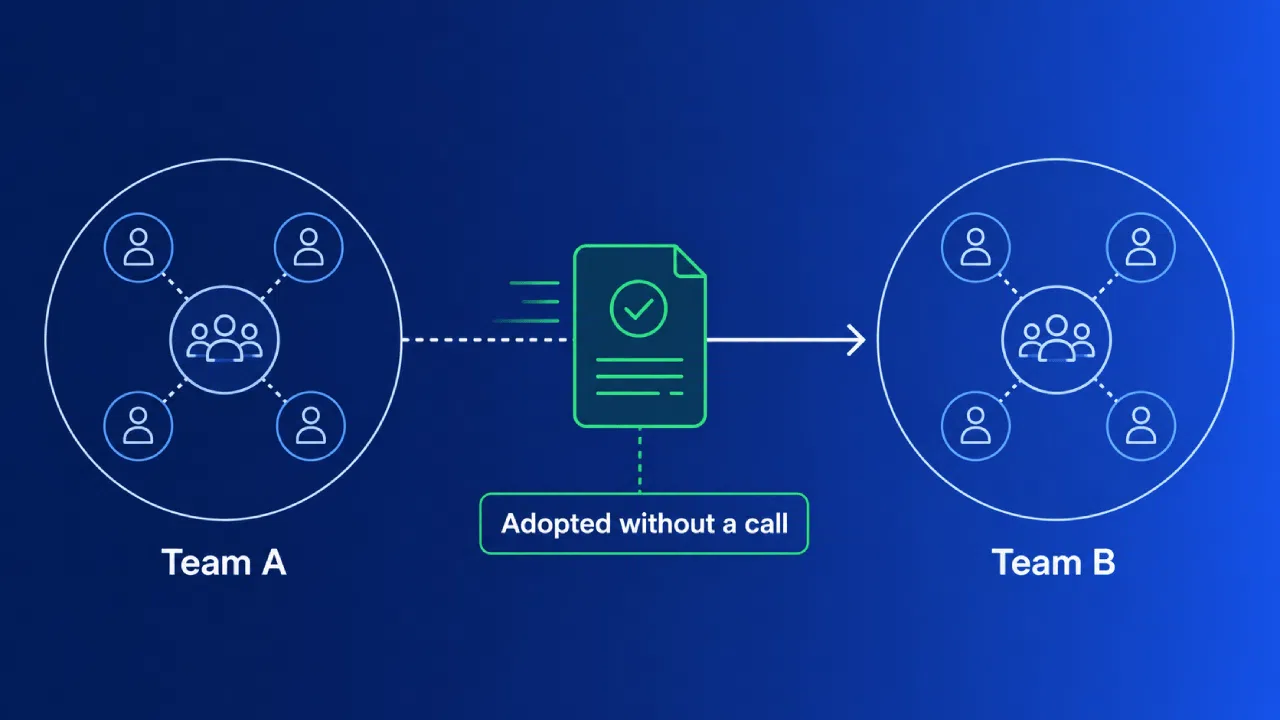
GitHub found that written records removed the need to hop on a Zoom call just to explain why something was done. The reasoning travels on its own.
That matters because meetings are where alignment gets expensive. Executives spend around 23 hours a week in meetings, and the average load costs roughly $29,129 a year per employee.
Every alignment that happens on the page is one that didn’t need a calendar invite.
It Turns Rationale Into Institutional Memory
A decision log is also a memory system, keeping reasoning available long after the people who made it move on. That’s where most organizations bleed value.
Inefficient knowledge sharing costs large US firms around $47 million a year, with employees spending 5.3 hours a week just waiting for information others already have.

A written record of decisions closes part of that gap directly.
There’s a quality dimension too. Structured procedures reduce what Kahneman and Sibony call system noise: valuations on identical data varied by 44%.
Forcing the rationale into a consistent format makes that variation visible and, over time, smaller.
Institutional memory, in other words, isn’t just recall. It’s a way to make the group’s future decisions more consistent than its past ones.
Where Decision Logs Go Wrong
A decision log is a tool, and like any tool it can be misused. The most common failure is logging everything.
When every trivial choice gets a full record, the log becomes bureaucratic shelf-ware: thick, unread, and quietly ignored.
The signal drowns in the noise, and people stop trusting that the important entries are even there.
The test for what deserves an entry comes from Martin Fowler and Grady Booch. Record the decisions that are costly to reverse or hard to make.
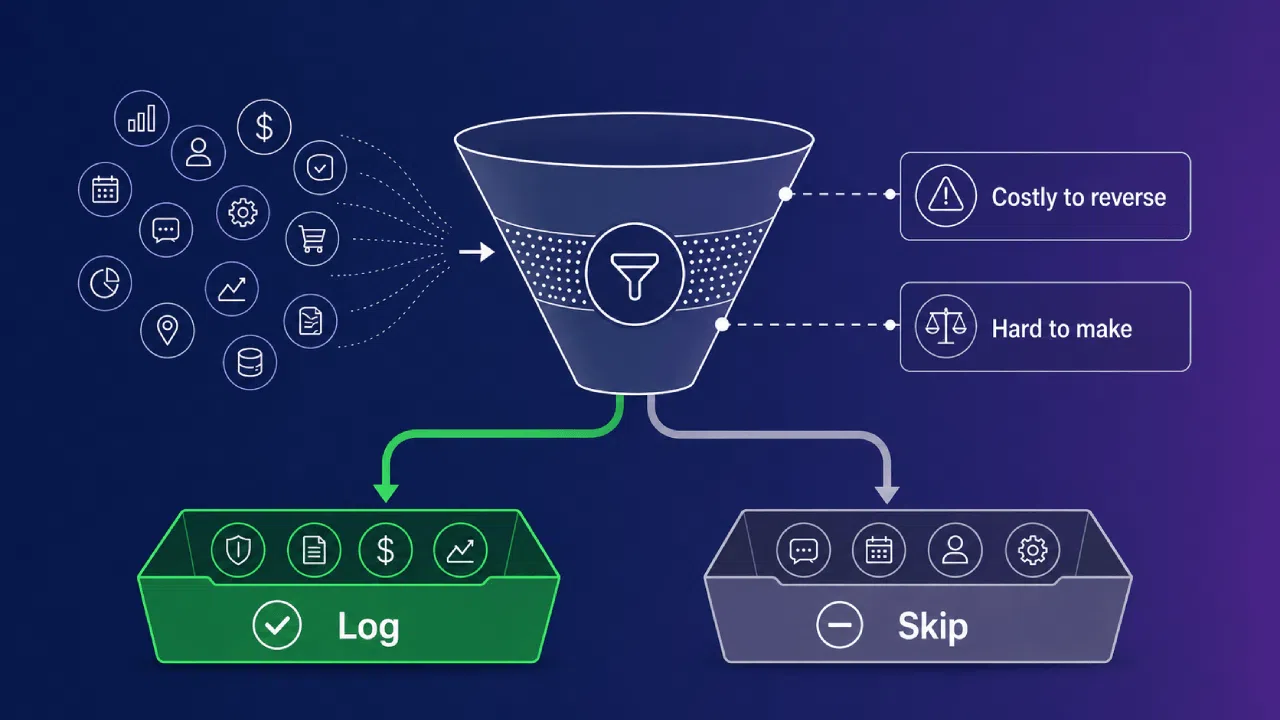
Everything else can stay in the ordinary flow of work. A rough filter helps:
- Log these: decisions that are expensive to undo, choices where you rejected a serious alternative, calls that will confuse a newcomer, and anything a stakeholder is likely to reopen.
- Skip these: reversible tweaks, obvious calls with no real alternative, and routine operational choices that explain themselves.
The second failure is subtler and more dangerous. A log that nobody maintains goes stale, and a stale log carries false authority.
People trust it because it looks official, then act on reasoning that no longer holds.
An unmaintained log is worse than none, because it converts old assumptions into current-looking facts.
The fix isn’t more discipline in the abstract. It’s a named owner and a review cadence, where the real work of keeping a log honest happens.
Making Decision Logs Stick
The teams that keep a decision log alive rarely do it through willpower. They embed logging into rituals that already exist.
Capturing a decision becomes part of the meeting, not homework after it.
Gate reviews and steering committees are natural hosts. Record the decision the moment it’s made, while the rationale is fresh and everyone who shaped it is present.
A few practices separate logs that survive from logs that rot:
- Give every decision one named owner, so accountability never diffuses across a committee.
- Set a revisit trigger at the time of the decision, not later, so reopening has a rule.
- Link each decision to the evidence that produced it, so the reasoning stays inspectable.
- Assign a single owner to the log itself, responsible for its review cadence.
Manual capture is where good intentions die, because logs go stale without an owner and a rhythm. This is where an innovation management platform earns its place.
In a structured idea-management workflow, decisions, owners, scores, and rationale live with the idea itself. Nothing scatters across meeting notes and inboxes.

Scorecards capture why an idea advanced, while the funnel records who moved it and when.
AI-assisted evaluation gives every decision a consistent, evidence-based score, so the rationale you capture is sharper because the input was.
The payoff shows up in the work itself. When data-driven scoring and group decision-making are built into the workflow, decisions stop getting relitigated and start staying decided.
Write the Decision Down Before the Debate Restarts
The most underused tool in innovation management is also the least glamorous. Not a bigger funnel or slicker workshop, just a record of what was decided and why.
A durable record does three things:
- Names the one person who owned the call.
- Captures why, and on what evidence.
- Sets the trigger that would legitimately reopen it.
Execution and follow-through are where innovation actually pays off, and both depend on decisions that hold their shape over time.
Write the decision down while the reasoning is fresh, name the person who owns it, and a reopened debate has far less room to take hold.
That’s the whole payoff. Decisions settled once stay settled, and the group moves forward instead of circling back.
Want the full playbook? Our ebook on idea evaluation and governance shows how to score, route, and record decisions without losing the rationale.
Or book a demo to see how Accept Mission builds automated routing, ownership, and audit trails into every decision your team makes.









 English
 Dutch
Dutch Portuguese
 Spanish
 French
 German
 Arabic