
The “Definition of Done” for Each Stage of the Innovation Funnel10 min read

Most innovation funnels have well-labeled stages and almost no written rules for moving between them. The names suggest rigor; the gates rarely deliver it.
When exit criteria don’t exist, a few predictable things take their place at every gate:
- The loudest or most senior voice in the room sets the bar for that meeting.
- Projects advance because the presenter was confident, or because killing the idea felt socially awkward.
- The same evidence gets judged differently depending on who is sponsoring the work.
None of this looks like a problem in the moment. Each review feels like a reasonable conversation among smart people doing their best.
The damage shows up downstream: zombie projects that never die, strong ideas starved of budget, and launches that fail for reasons that were visible two stages earlier.
When Gates Have No Teeth
Agile teams borrowed a useful idea from manufacturing: a task isn’t finished until it meets an explicit, shared standard.
A “definition of done” removes the argument about whether work is complete. Innovation funnels rarely enforce that discipline: the stages exist, but the exit criteria don’t.
The table below separates what looks like progress from what actually counts as it:
| What Looks Like Progress (Activity) | What Actually Counts (Evidence) |
|---|---|
| “We interviewed 30 customers.” | “Customers confirmed this problem is urgent enough to pay for.” |
| “The prototype is built.” | “Users completed the core task without help.” |
| “The financial model is finished.” | “ROI assumptions trace back to validated demand.” |
| “The project is on schedule.” | “The riskiest assumption has been tested and held up.” |
| “Everyone is excited about it.” | “It passed the strategic-fit knockout test.” |
The result is what some practitioners call “update theater”. Teams present activity, leadership nods along, and no project actually gets killed.
A project can be perfectly “on track” against its timeline while validating zero assumptions. Activity masquerades as progress, and nobody calls it out.
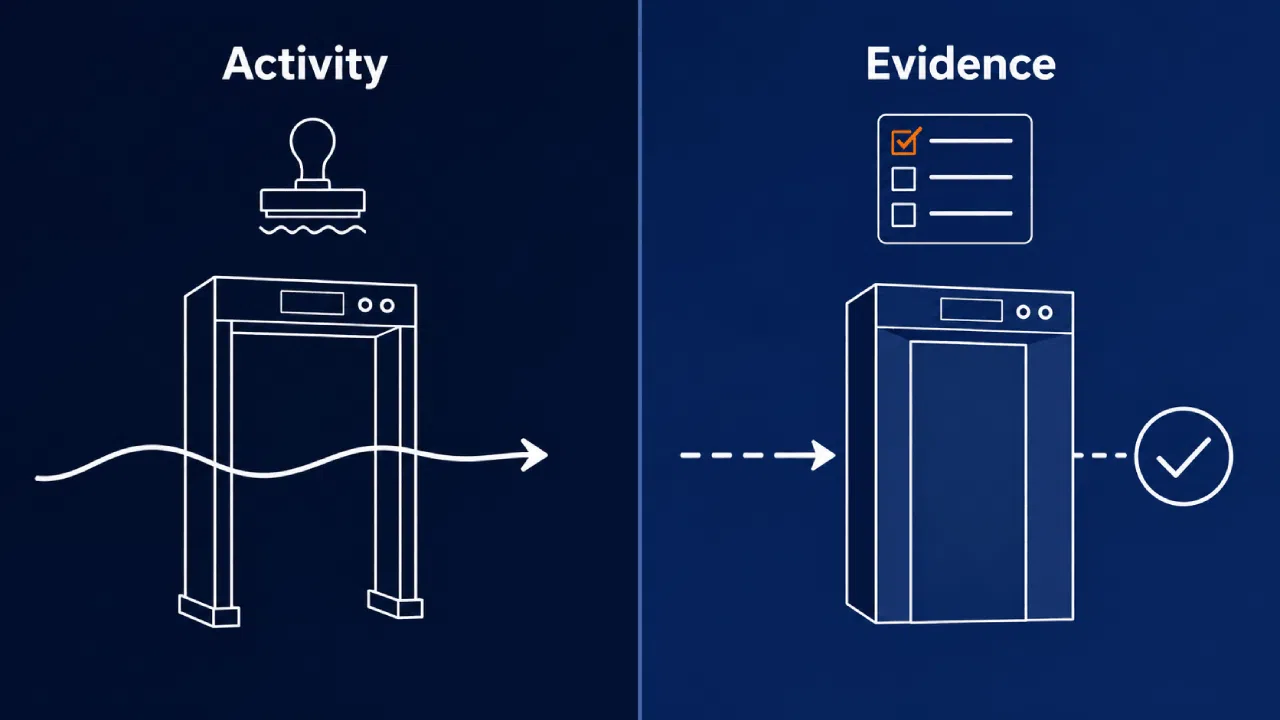
Part of the problem is measurement. When you reward the number of active projects, you inflate the portfolio with work that should have stopped.
The numbers make this clear. Companies with enforced gates reach 63 to 78 percent success rates, 2.5 times the 24 percent achieved by weak performers.
Evidence is harder to fake than activity. That’s why a clear definition of done belongs at every gate.
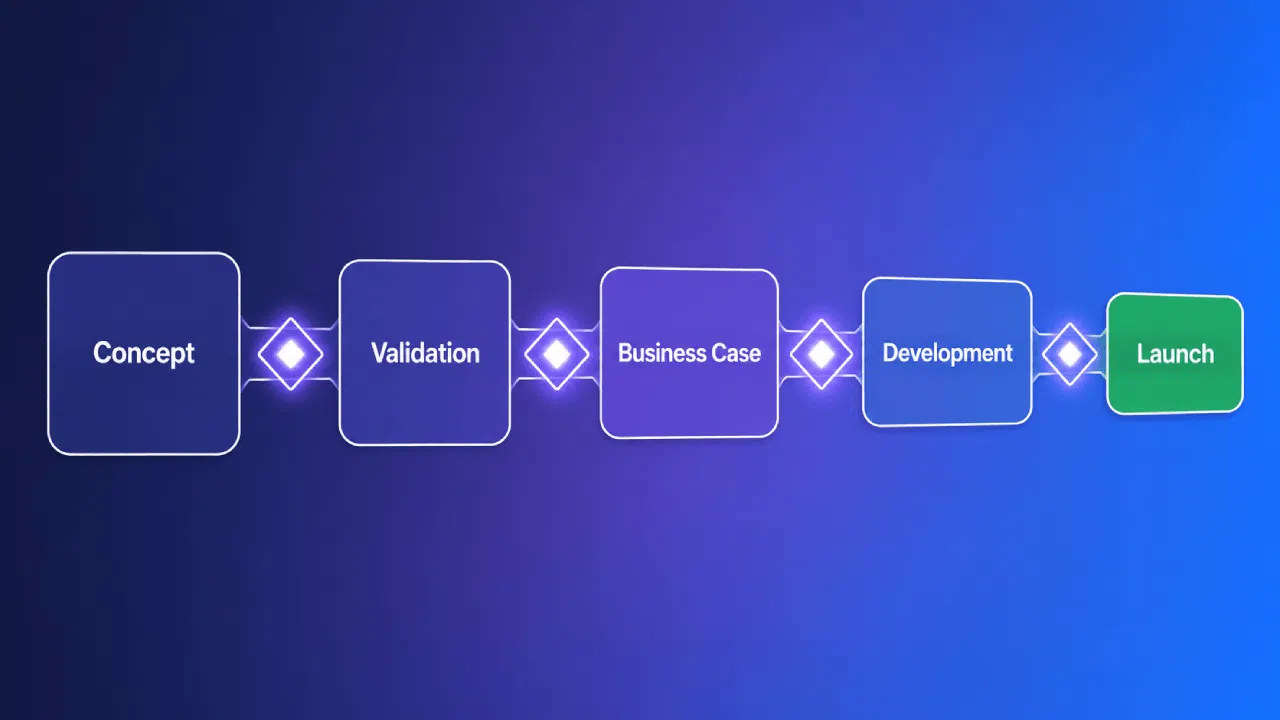
The “Definition of Done” at Each Stage of the Innovation Funnel
A working definition of done answers one question per stage: what must be true before this project earns the next round of investment?
The criteria should be explicit, written down, and the same for every project of similar size.
Robert Cooper’s framework distinguishes two types: must-meet criteria are binary knockout questions where failing any one auto-kills the project, and should-meet criteria are weighted scores that rank the survivors.
The quick-reference table below covers all five stages. Each detailed subsection follows.
| Stage | Key Question | Done When… |
|---|---|---|
| 1. Concept | Does this fit our mandate? | Strategic fit confirmed, problem defined, no fatal flaws |
| 2. Validation | Is the problem real and urgent? | Riskiest assumption tested, customer evidence gathered, conclusion reached |
| 3. Business Case | Does the math hold up? | Model documented, ROI grounded in evidence, resources signed off |
| 4. Development | Does it work? | MVP complete, internal testing passed, feedback incorporated |
| 5. Launch / Scale | Are we ready to commit? | All readiness dimensions cleared, go-to-market governance in place |
These criteria aren’t bureaucracy for its own sake. Each one prevents a specific, expensive failure mode, as the stages below make clear.
Stage 1: Concept
The concept gate is the cheapest place to say no, so it should be the most ruthless. At this stage, the only question that matters is strategic fit.
Done means four things are true:
- Strategic fit is confirmed.
- The problem is clearly defined.
- The market opportunity is articulated.
- No fatal flaws are visible.
The decisive must-meet question is simple: is this within our business mandate? If the answer is no, kill it now, before anyone falls in love with it.
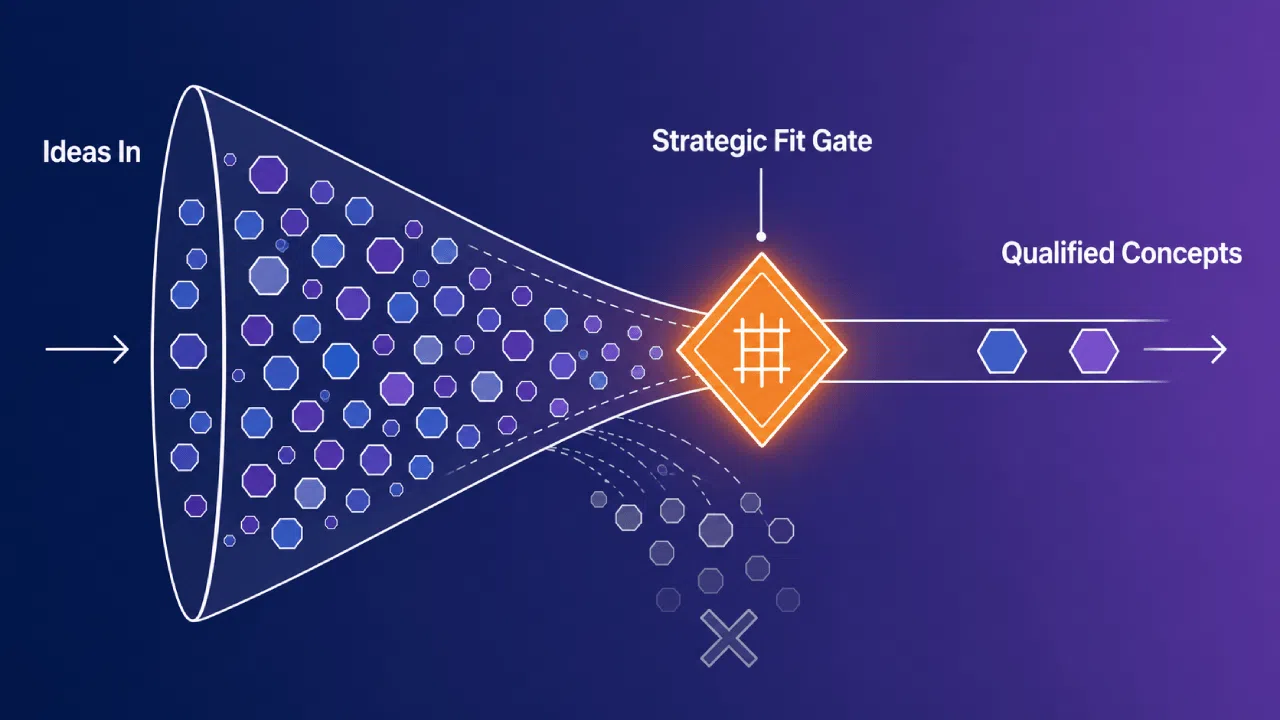
The common failure is advancing concepts because they’re exciting rather than because they fit, filling the funnel with projects that should never have entered.
Stage 2: Validation
Validation is where most projects should die, and where the discipline pays off most. The deliverable is evidence.
Done means three things are true:
- The riskiest assumption has been identified and tested.
- The evidence comes from real customers through interviews, experiments, or direct observation.
- A conclusion has been reached: validated, invalidated, or genuinely inconclusive.
“Let’s keep going and see” isn’t an allowed outcome.
Bosch shows what enforced validation looks like. Each team gets roughly three months and 120,000 euros to gather customer evidence before any further investment is approved.
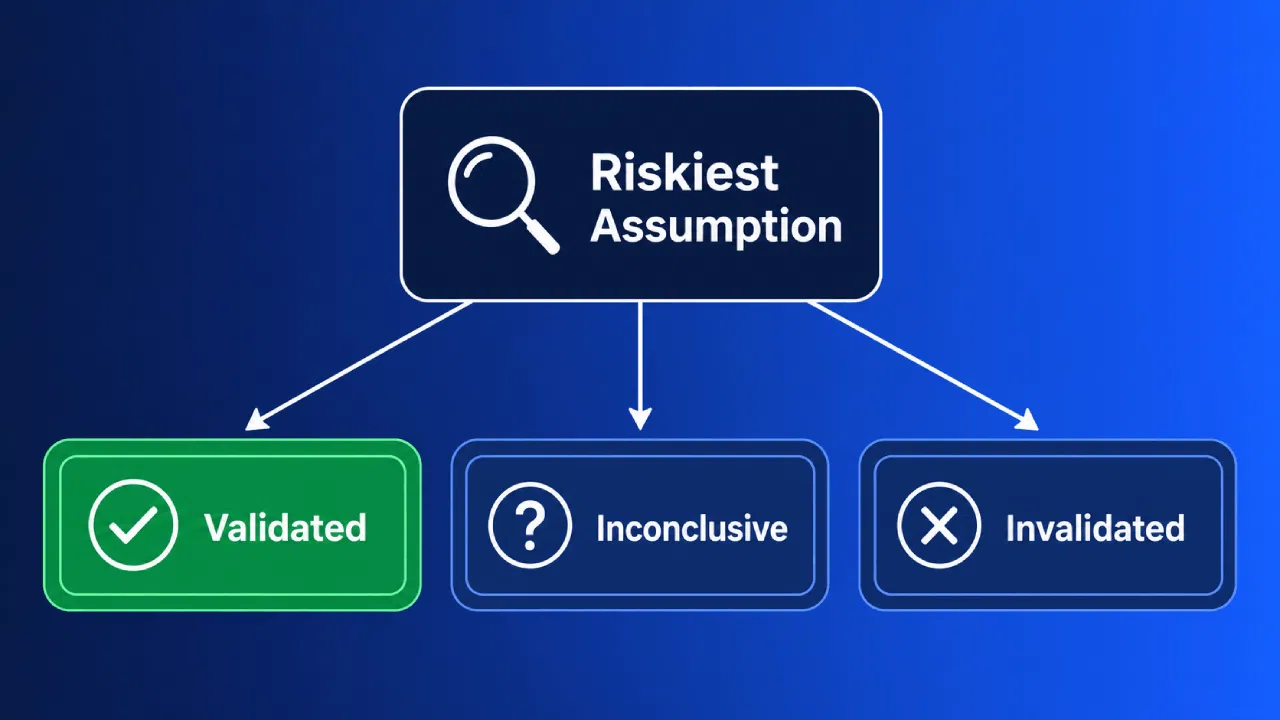
Bosch retired nearly 70 percent of its ideas at this evidence-gathering stage, and the culture treats those kills as wins rather than failures.
That only works because the gate has a real bar. Without one, validation becomes a formality that everyone passes.
Stage 3: Business Case
By Stage 3, the question shifts from “is the problem real?” to “does the math hold up?”
The business case turns validated demand into a fundable plan. Done means four things are in place:
- The business model is documented.
- ROI is grounded in validation data.
- Resource requirements are signed off.
- Stakeholders are aligned.
The grounding matters more than the polish. Numbers should trace back to the evidence gathered in Stage 2, not to optimistic extrapolation in a spreadsheet.
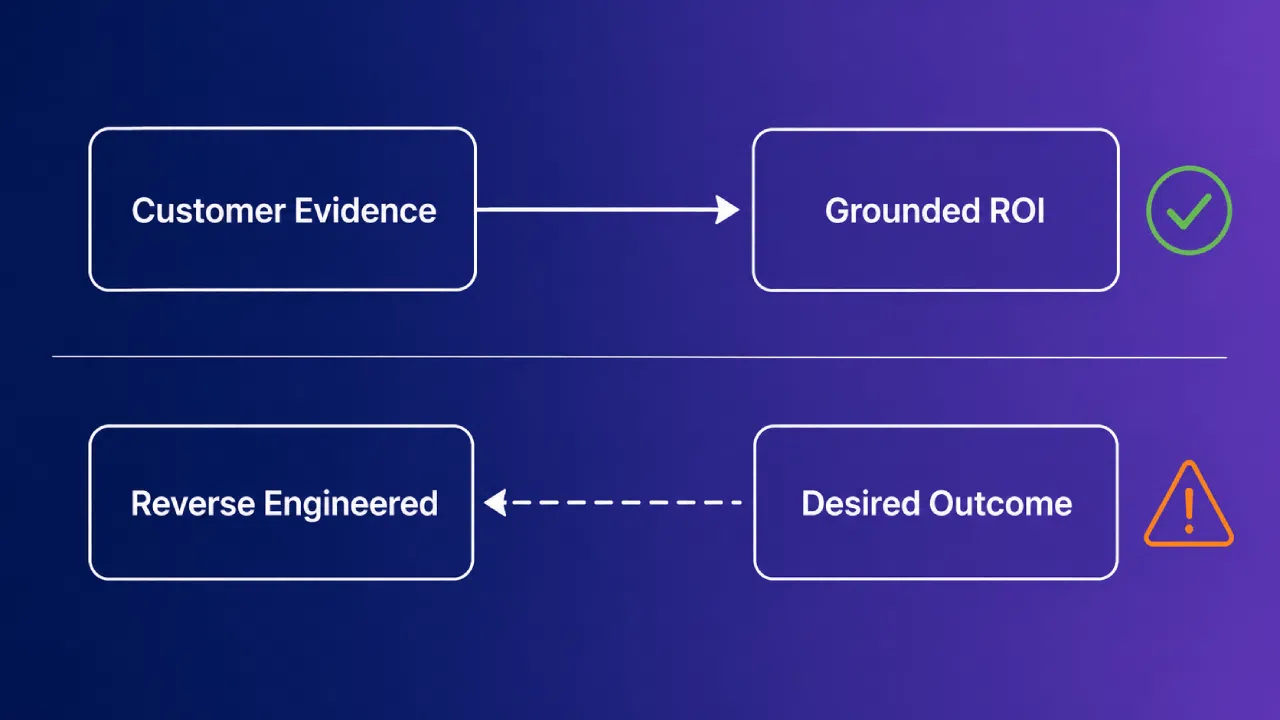
The classic failure is reverse-engineering. Teams decide they want the project, then build financials backward to justify it, and the model looks rigorous while resting on nothing.
A business case without an evidence base is just a confident guess. The gate exists to catch exactly that.
Stage 4: Development and Execution
Development is where money starts to flow seriously, so the definition of done gets concrete. The work either functions or it doesn’t.
Done means four things are checkable rather than subjective:
- The MVP or primary deliverable is complete.
- Internal testing has passed.
- Dependencies are resolved.
- User feedback has been incorporated.
This stage suits an Agile-Stage-Gate hybrid. Sprint-level definitions of done act as mini-gates inside the stage, while the formal gate evaluates the cumulative result.
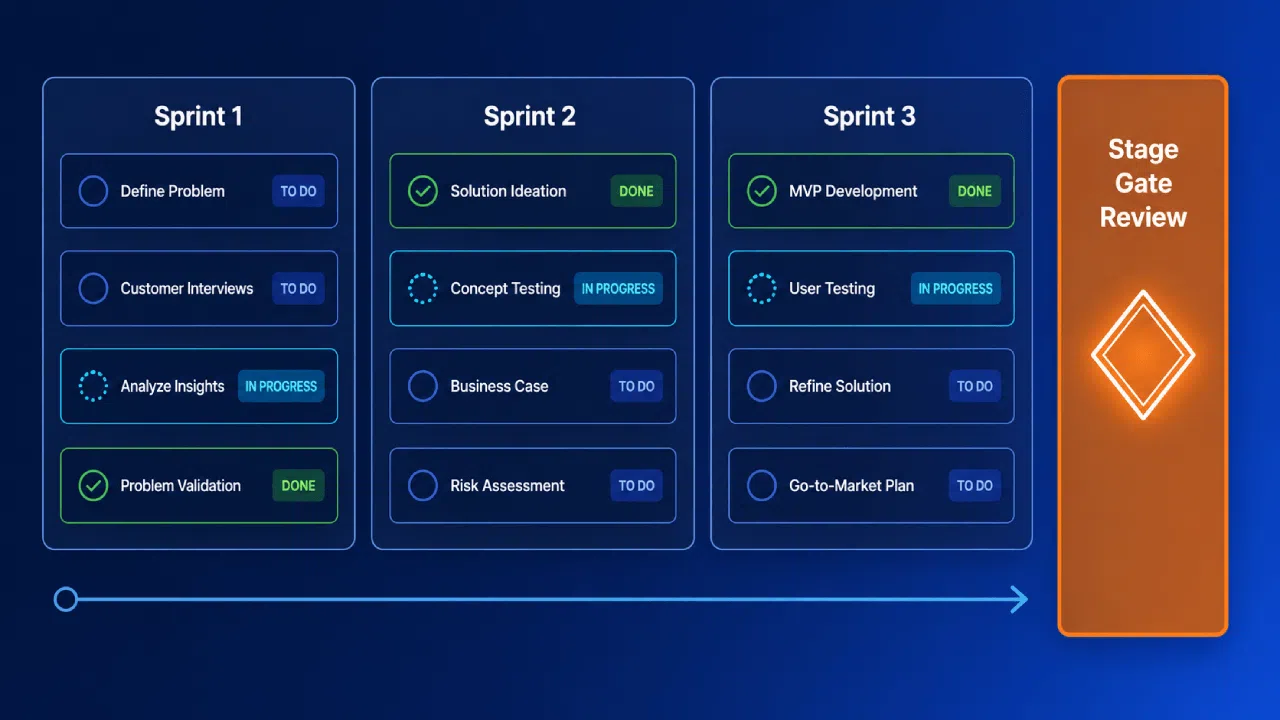
Cooper’s point is worth holding onto here. The product shouldn’t be fully specified up front; its definition emerges through sprints, and the gate judges what actually got built.
So the criteria reward working software and tested assumptions over detailed plans. In practice, that keeps development honest.
Stage 5: Launch and Scale
The launch gate is the most expensive to get wrong, which is why it carries the longest checklist. This is the commitment gate.
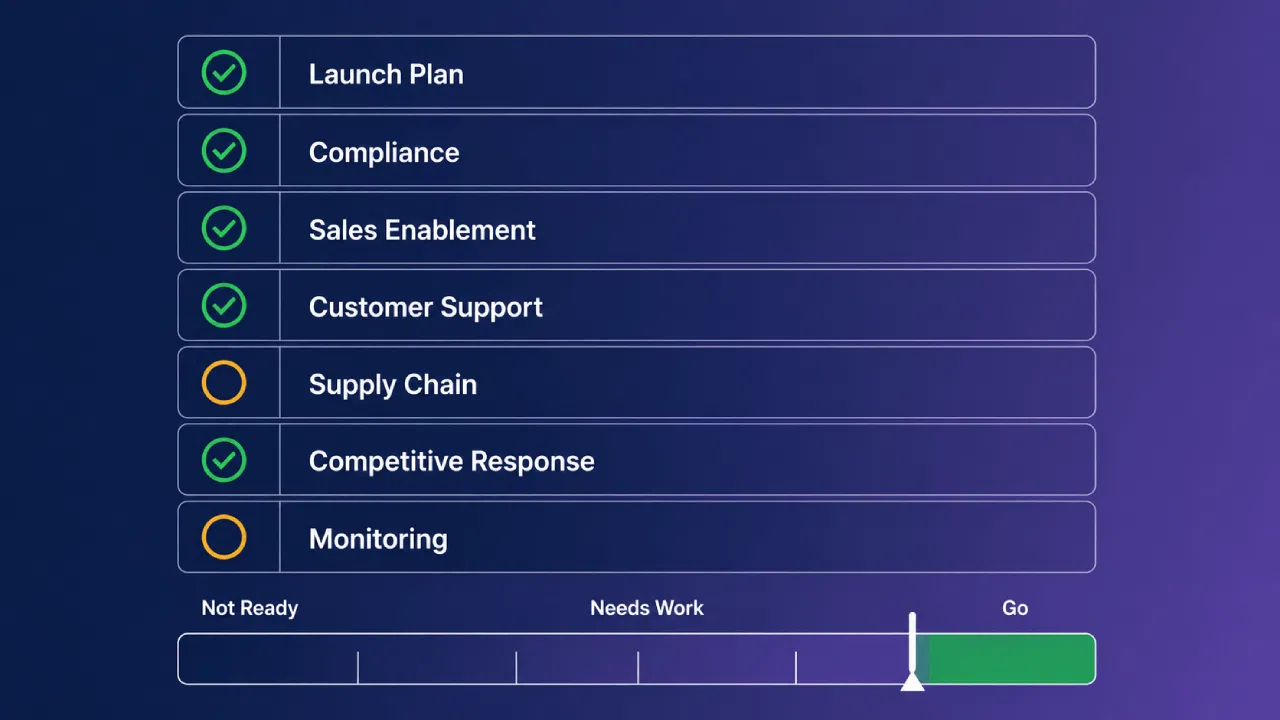
A thorough launch-readiness review covers seven dimensions:
- Launch plan governance
- Marketing and regulatory compliance
- Sales enablement
- Customer support readiness
- Supply and distribution
- Competitive response
- Post-launch monitoring
Any gap here surfaces in the market.
The framing is sobering. As one practitioner puts it, launch failures are typically governance failures that originated 18 to 36 months earlier in development.
The cost curve explains the urgency. Early customer research runs around 50,000 dollars, a prototype around 500,000, and commercial scale-up 5 million or more.
That escalation is the whole argument for earlier discipline. The sooner you validate, the cheaper it is to be wrong at the launch gate.
The Traps That Undermine Gate Criteria
Even teams that write down criteria can watch them quietly erode. The failure modes are predictable, which means they’re avoidable.
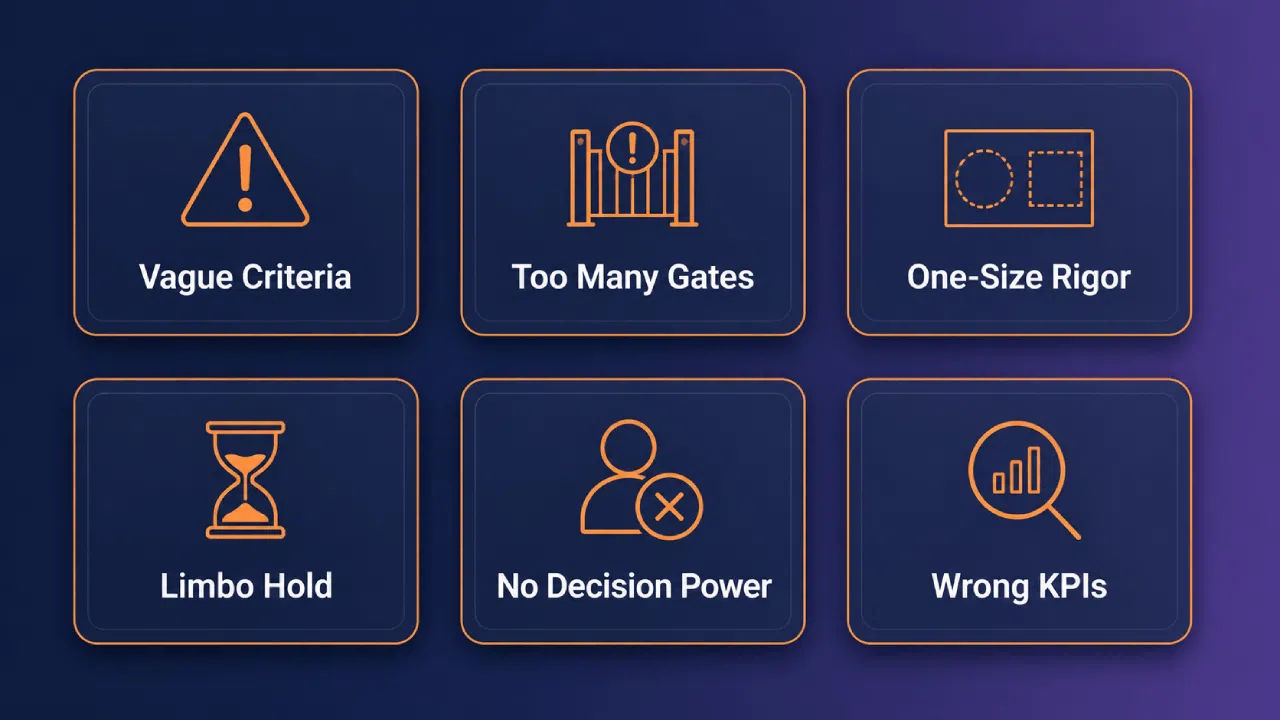
Here are the traps that most often hollow out a gate process:
- Vague criteria. “Is this aligned with strategy?” invites politics; it has no testable answer.
- Too many gates. Over-elaboration after a failure creates process bloat that slows everything down.
- One-size-fits-all rigor. Applying a heavy process to a small exploratory project wastes effort and breeds resentment.
- “Hold” as permanent limbo. A hold must be time-boxed with an explicit decision deadline, not an indefinite parking spot.
- Reviewers who can’t decide. One 14-member review board couldn’t reach decisions in four-hour meetings; cutting it to five fixed that immediately.
- KPIs that reward the wrong thing. Counting active projects inflates the portfolio and punishes the discipline of killing.
Several of these traps share a root cause. A failure happens, a new gate gets added, and the process slowly calcifies under its own weight.
The fix is scaled structure: lightweight gates for exploratory bets, rigorous ones for major commitments.
Scaled gates keep the criteria meaningful without strangling early-stage exploration. That balance is what makes a definition of done stick rather than become theater.
From Criteria to Decisions
Criteria are useless if the people in the room can’t act on them. Governance is where written standards become real decisions.
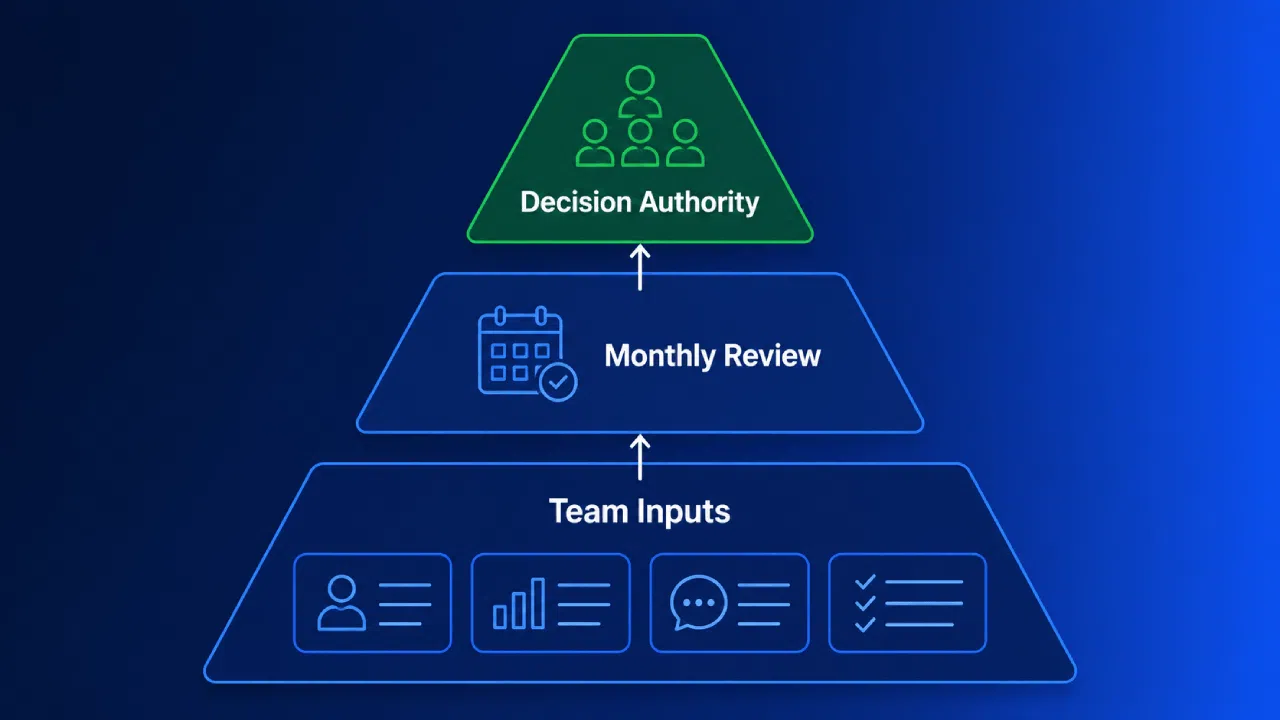
Start with who sits at the table. Gate reviewers need genuine authority over budget and resources.
A good governance board typically includes:
- CEO or COO
- Head of innovation or R&D
- A commercial leader
- CFO
Anyone who needs to “check with their boss” before making a call doesn’t belong there.
The review rhythm matters as much as the roster. A monthly evidence review asks each team for four things:
- The riskiest assumption they tested
- The experiment they ran
- Their conclusion: validated, invalidated, or inconclusive
- The decision they need from the board
There’s also a distinction worth keeping sharp.
Project-level gate decisions ask whether this project deserves to continue. Portfolio-level decisions ask whether it remains the best use of the total budget.
Both happen on a governance rhythm: monthly evidence reviews, quarterly allocation decisions, annual strategic rebalancing.
Structured scoring and AI-assisted evaluation can sharpen the ranking, but they support the decision rather than replace the decision-makers.
The non-negotiable is the output. Every gate review ends with a documented decision, never with “interesting, let’s check back next quarter.”
Invest Better, Not Just Less
Fuzzy gates feel protective, but they protect the wrong projects. They keep weak work alive by making it hard to say no with any authority.
Explicit exit criteria change three things about how a portfolio behaves:
- They move failure earlier, so a project dies at Stage 2 for a few thousand dollars instead of at Stage 5 for millions.
- They recover resources, freeing time, budget, and attention for the ideas that have genuinely earned the next round.
- They raise decision quality, replacing personality and politics with evidence the whole room can see and challenge.
A clear definition of done gives everyone in the room the same standard to judge against. That’s what changes the conversation.
The funnel stops being a place where opinions compete, and becomes a filter that sorts projects by what they have actually proven.
Download our free ebook Project Portfolio: From Opportunities to Value to learn how to establish clear gate exit criteria across your full innovation portfolio.
Request a demo to see how Accept Mission gives you structured stage definitions, real-time portfolio visibility, and one unified source across your innovation projects.






 English
 Dutch
Dutch Portuguese
 Spanish
 French
 German
 Arabic