
Governance Anti-Patterns: 7 Ways Companies Accidentally Kill Innovation10 min read

Innovation has never been higher on the executive agenda. In 2024, 83% of senior executives ranked it among their top-three priorities, a record high.
Yet only 3% of companies now qualify as “innovation ready,” down sharply from 20% just two years earlier, and that gap is where governance usually lives.
Most programs don’t fail for lack of process. They fail because the process quietly works against the ideas it was meant to protect.
You have probably seen a few of these patterns up close:
- Too many gates, and nothing ever gets killed
- No clear owner for the decision at each stage
- One heavy process applied to every idea, regardless of size
- Silence after someone submits an idea
This piece is a diagnostic checklist, not a manifesto. Seven anti-patterns, each one common, each one self-inflicted, and each one fixable without adding a single new committee.
Read them as a way to audit your own funnel this week. If two or three feel uncomfortably familiar, that’s the point.
Why Governance Backfires Even When The Intent Is Right
Governance almost always starts with good intentions. Someone wants to protect scarce resources, keep quality high, and stop the portfolio filling up with pet projects.
The trouble shows up in how it fails:
- Ideas get delayed instead of decided
- Reviews repeat without ever resolving anything
- Good concepts get starved until the person who raised them gives up
None of this looks dramatic from the inside. Ideas are rarely rejected outright; they lose momentum review by review until nobody bothers to defend them.
BCG has a name for companies stuck in this state: “zombie organizations,” going through the motions of innovation without a clear strategy behind it.
The data backs the diagnosis. 52% of executives point to unclear or overly broad strategy as their top challenge, and that vacuum is where these seven patterns grow.
1. Gates Without Teeth
A gate is supposed to be a Go/Kill decision. In a lot of organizations, it’s a status update with a slide deck.
The symptom is easy to spot: projects advance, budgets get renewed, but nothing is ever actually killed. Everything’s “still promising,” so the funnel becomes a holding pen.
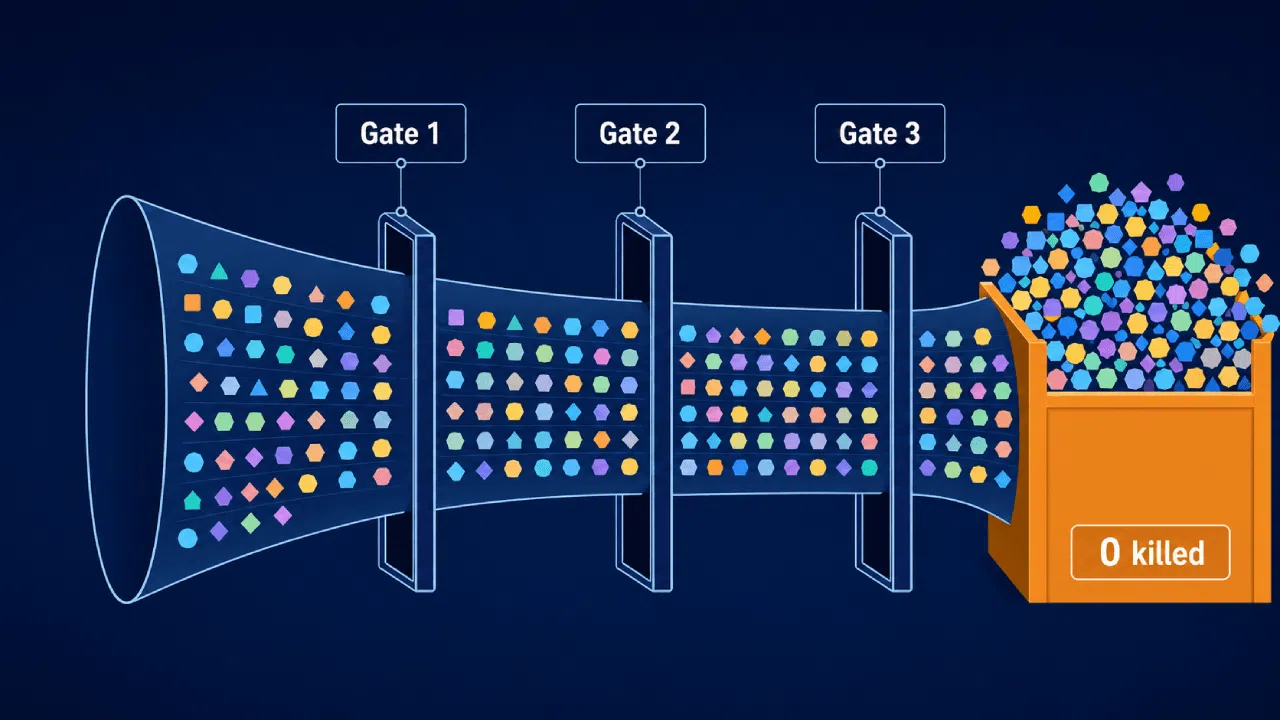
Stage-Gate’s own literature is blunt about this. Without what it calls “Gates with Teeth,” the process decays into theater: reviews happen, but no real resource decisions get made.
A gate has teeth when three things are true:
- The criteria are explicit (strategic fit, feasibility, financial risk, competitive advantage)
- The decision-maker actually controls the resources being allocated
- Kill is a real, expected outcome, not a failure of nerve
The trade-off here is uncomfortable, and worth naming. Disciplined Stage-Gate execution correlates with success rates 2.5x higher than poor performers, roughly 63 to 78% versus 24%.
That discipline only shows when someone will say no and mean it, so check your last four gate meetings: if every project passed, you have a queue, not gates.
2. No Clear Decision Owner
Ask who decides whether an idea moves from concept to funded pilot. If you get three names, or none, that’s the anti-pattern.
Governance without named decision rights tends to fail in one of two ways:
- It stalls, because everyone assumes someone else will make the call
- It spreads thin, because a committee of eight shares accountability so diffusely that no one owns it
Committees feel safe. They also make it nearly impossible to trace a bad call back to a decision-maker, which is exactly why weak calls survive in them.
The fix isn’t a bigger committee. It’s a named owner at each stage, with the authority to advance or kill and the accountability that comes with it.
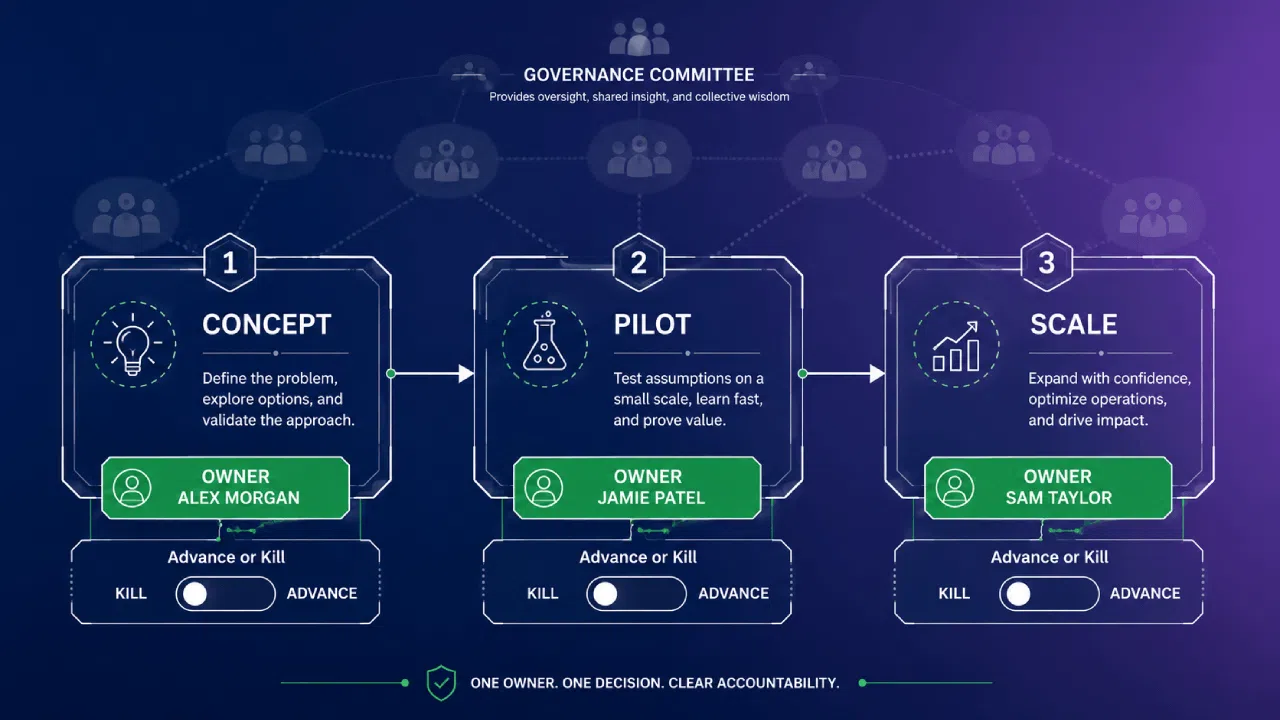
That’s the difference between guardrails and a gauntlet. Guardrails remove ambiguity about who decides; a gauntlet just adds people to get past.
Structure here means clarity of ownership, not more sign-offs. One accountable name per stage beats five advisory ones every time.
3. One-Size-Fits-All Governance
Forcing a $10,000 experiment through the same approval process as a $10 million bet is one of the most common ways good programs slow themselves down.
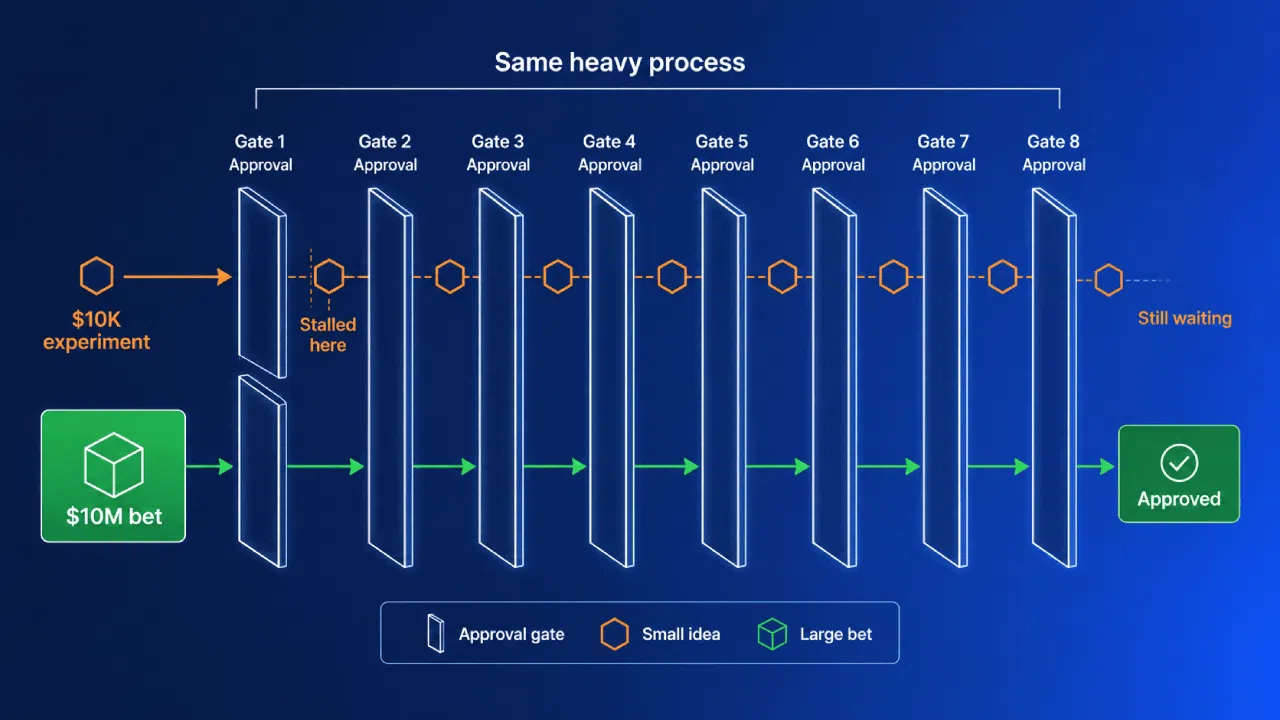
The small idea dies of paperwork before it ever gets a fair test.
Right-sizing governance to risk is the fix, and it’s well established in current practice. Match the weight of the process to the size and risk of the decision:
| Risk Tier | Process Weight | Approvals | Review Cadence |
|---|---|---|---|
| Low (small spend, reversible) | Lightweight, self-serve | Single owner | Async, as needed |
| Medium (moderate spend, some lock-in) | Standard stage review | Owner + one sponsor | Monthly checkpoint |
| High (major spend, strategic bet) | Full governance, evidence-based | Committee with resource authority | Milestone gates |
The point isn’t to abandon rigor on big bets. High-risk, high-spend decisions genuinely need the full weight of governance, evidence, sponsors, and hard gates included.
The point is to stop taxing small, reversible experiments with process built for irreversible ones.
When a low-risk test needs six approvals, people stop proposing tests. They route around the system, or they stop bothering.
Tiered governance protects speed where speed is cheap and protects rigor where mistakes are expensive. That balance is the whole job.
4. Criteria Nobody Can See
Here’s the quiet trust-killer. Decisions can be sound and the governance body can still lose credibility, simply because no one sees the criteria being applied.
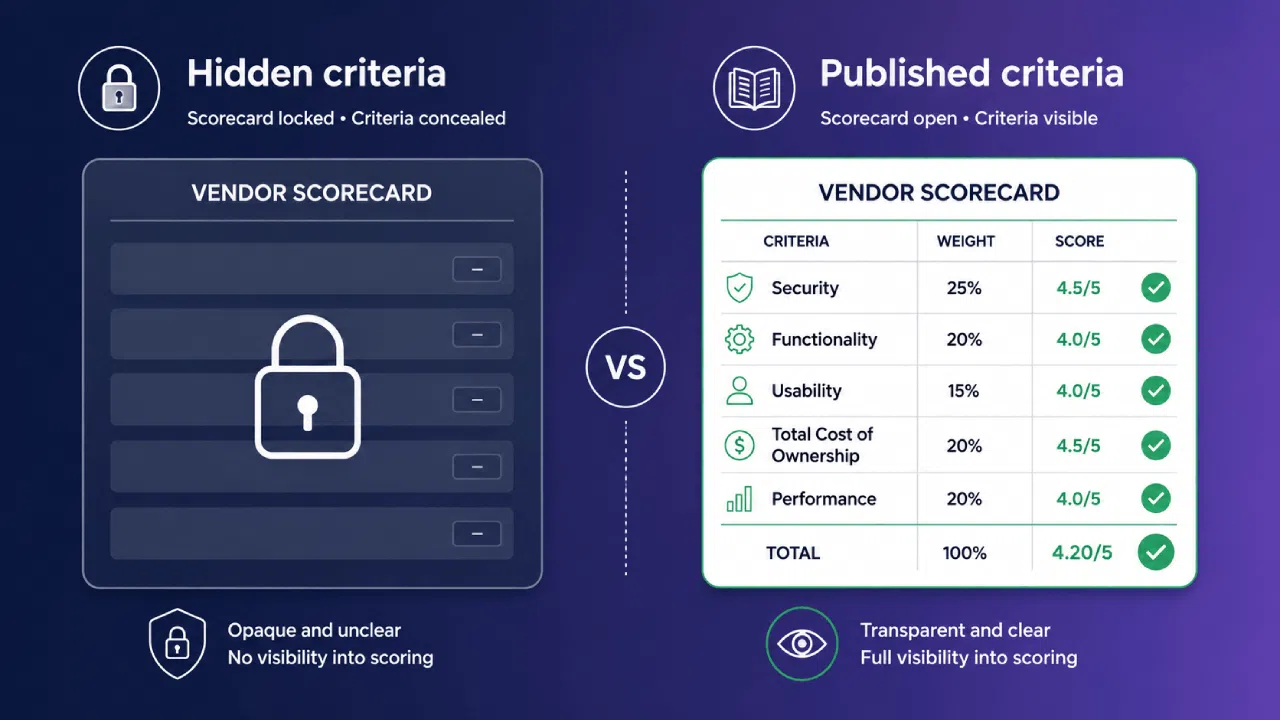
The contrast with published criteria is stark:
| Reviewer’s-head criteria | Published, consistent criteria |
|---|---|
| Every Kill looks arbitrary or political | A rejection reads as information, not a verdict |
| Submitters can’t tell merit from politics | Submitters learn and come back stronger |
Consistency matters as much as visibility. Criteria that bend for whoever has the loudest sponsor erode trust even faster than no criteria at all.
Transparency is the cheapest governance upgrade available. Publish the scorecard, apply it the same way every time, and most complaints about “unfair” decisions fade on their own.
5. Governance As A One-Time Checkpoint
Plenty of programs treat governance as a single gate an idea clears once. Approved means approved, and the project rolls forward long after its assumptions have gone stale.
This is where the linear, “check the box once” model shows its age. It fits incremental projects, but academic critics doubt a rigid one-pass gate suits disruptive work.
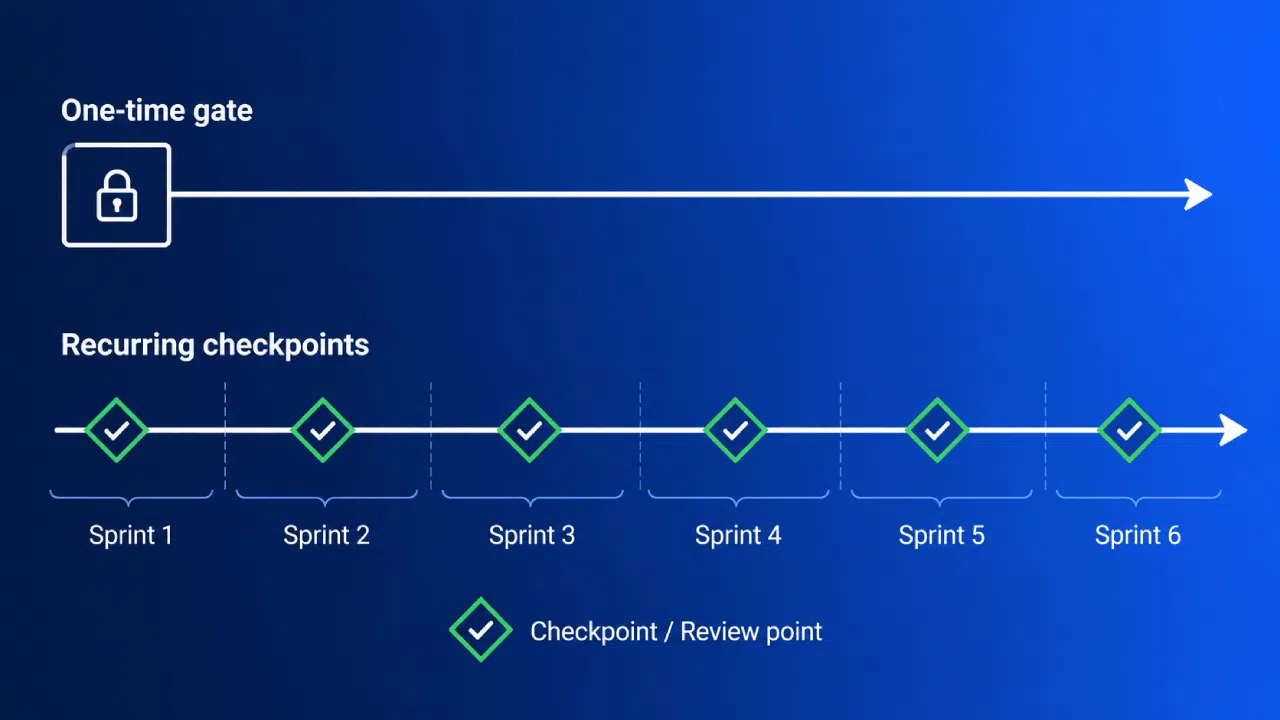
The trade-off is control versus adaptability:
| One-time gate | Recurring checkpoint |
|---|---|
| Clean approval record | Assumptions re-tested each cycle |
| Little responsiveness once approved | Adapts as the plan changes |
The modern fix is a hybrid rhythm: Stage-Gate decisions layered over an Agile sprint cadence.
Governance becomes a recurring checkpoint rather than a one-time stamp. Kill decisions stay available at every cycle, not just at the start.
Governance works best as a recurring heartbeat. If your process only asks “should this proceed?” once, it stops governing the moment the answer is yes.
6. Silence After Submission: The Feedback Black Hole
An employee submits an idea, then nothing. No acknowledgment, no status, no explanation, just silence that stretches until they decide the whole exercise was theater.
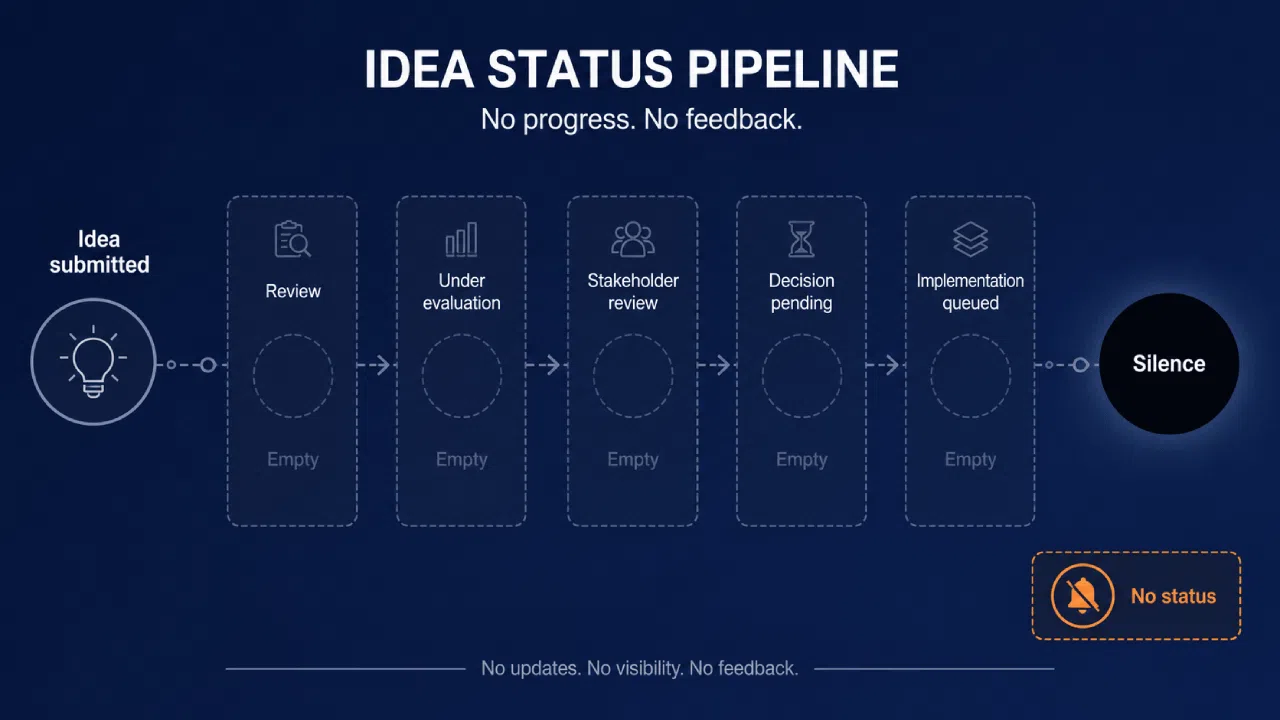
This is the black hole effect, one of the more reliable ways to quietly kill participation. Silence reads as devaluation, and it teaches everyone watching not to bother.
Two benchmarks show the alternative:
- Toyota’s long-running suggestion program pairs tiered rewards with fast feedback, which keeps its credibility on the shop floor
- Cisco’s “Innovate Everywhere Challenge” swaps slow committee review for recognition, funding, and executive mentorship
The loss is bigger than one missed idea. Most employees never submit directly, but many will comment on and improve ideas when invited, so silence squanders them too.
The fix is unglamorous and effective: automated status updates at every stage, including rejection, because a clear “no, and here’s why” keeps the door open for the next idea.
7. Metrics That Reward Activity, Not Outcomes
Most innovation dashboards measure the wrong end of the funnel. They count ideas submitted, projects active, and patents filed, all upstream activity that’s easy to tally.
The problem is that activity isn’t impact. Too many companies lack effective metrics, and 65% plan to increase active projects even though real innovation output has stayed flat.
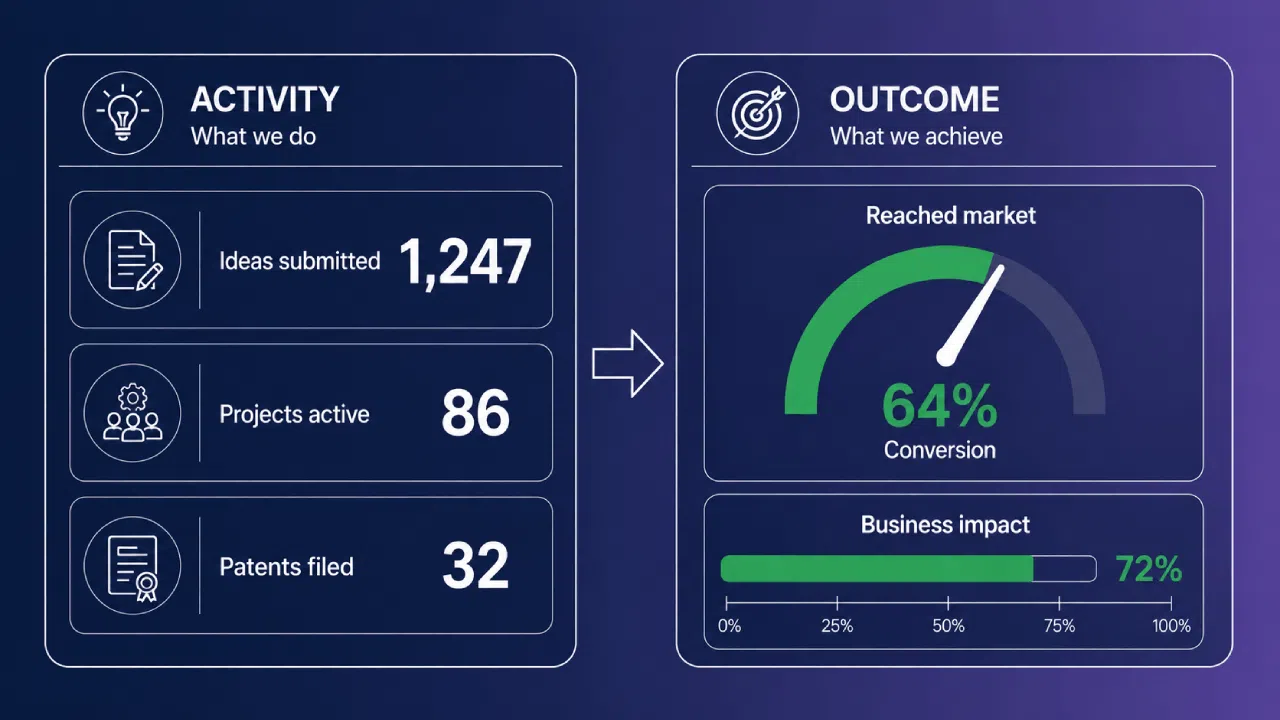
The shift McKinsey prescribes is from counting activity to tracking conversion:
| Activity metrics (easy, misleading) | Outcome metrics (harder, honest) |
|---|---|
| Ideas submitted, projects active, patents filed | Ideas that reach commercialization |
| Motion: more projects, same output | Measurable business impact per project |
As McKinsey puts it, too many incremental projects end up absorbing resources “for reasons that have nothing to do with performance.”
This is one place where AI quietly earns its keep. As a scoring layer, it can weight ideas against outcome criteria and surface portfolio patterns a spreadsheet buries.
It doesn’t make the Go/Kill call. It just makes the case for one harder to ignore.
Fix The Rhythm, Not Just The Rules
Read back through the seven patterns and one thread ties them together. Every failure traces to a shortage of ownership or visibility, never a shortage of process.
The fixes are unglamorous:
- Name one accountable owner at each stage
- Publish the criteria, then apply them the same way every time
- Close the feedback loop, even when the answer is no
The organizations that get this right don’t add more checkpoints. They make ownership explicit and decisions visible, then let structure do its real, lightweight work.
Accept Mission customers see 40% more participation and 25% higher idea output through data-driven scoring and shared decisions. That’s governance that measures, not guesses.
Start where it stings most. Pick the two patterns closest to home, name the owner, publish the criteria, and close the loop this quarter.
You don’t need a new framework this quarter. You need the one you have to actually decide something, and the right tools make that easier.
Download our ebook on innovation governance, or book a demo to see how Accept Mission handles gate routing, escalation, and full audit trails.






 English
 Dutch
Dutch Portuguese
 Spanish
 French
 German
 Arabic