
The Front Door Problem: Your Idea Funnel Isn’t Broken, Your Intake Is10 min read

You built the funnel: a scoring model, a review committee, a process that looks clean on a slide. Then two hundred submissions arrive, most missing the mark.
The usual response is to fix evaluation itself:
- Tighten the rubric
- Add more reviewers
- Build a better scorecard
- Add new scoring dimensions
None of it works, because the funnel isn’t broken. It just processes whatever intake hands it, and intake handed it noise this time.
The genuinely good submissions are still in there, buried under everything the front door let through unchecked, since intake design shapes everything that happens after.
You’re Optimizing the Wrong Stage
Evaluation feels like the bottleneck because it’s where the pain shows up. The strain is visible in three places:
- Reviewers fall behind and decisions stall
- Meetings run long because nobody can tell what half the submissions propose
- Scoring drags even after rubrics and reviewers get added
So teams pour more effort into the scoring stage, and the queue stays slow anyway.
They redesign rubrics, recruit reviewers, and add scoring dimensions, the same stage-gate fixes that fail when ideas never exit the funnel to begin with.
Here’s the thing: evaluation is slow because it’s processing noise that intake let through.
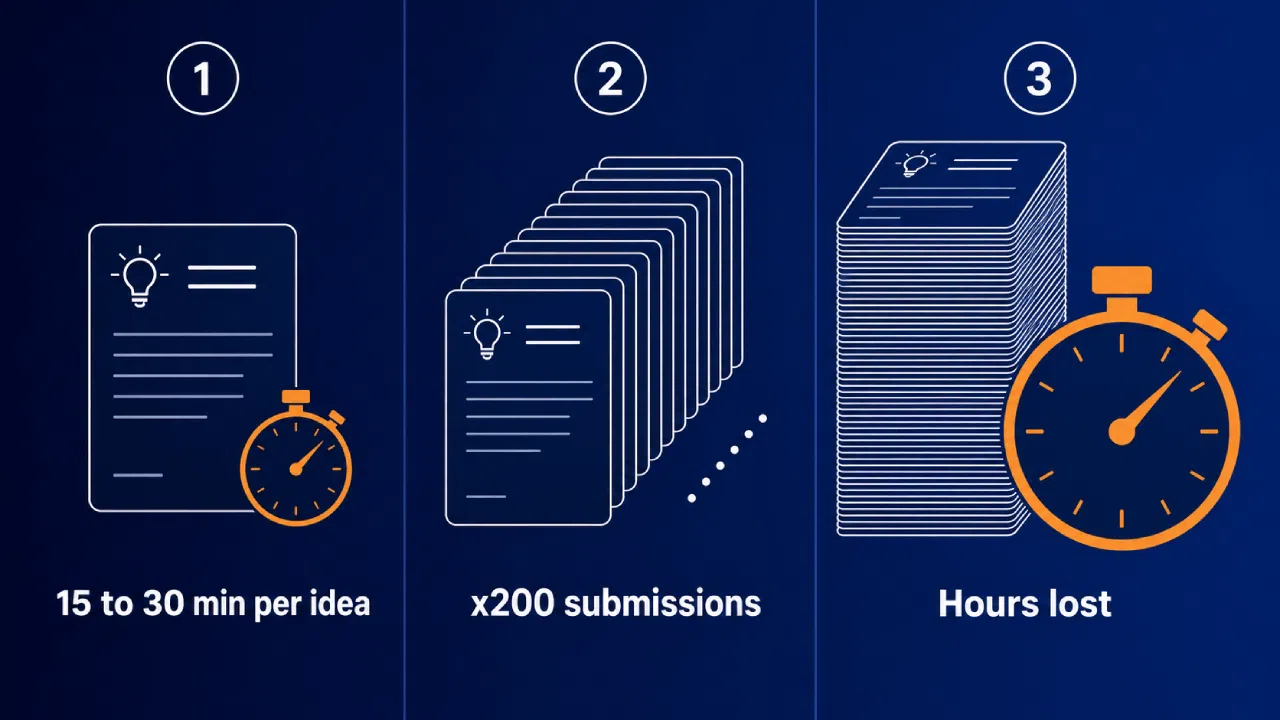
A reviewer can spend 15 to 30 minutes on a single unstructured idea just to grasp basic intent. Multiply that across 200 submissions and the math gets bleak fast.
The intake stage is the invisible variable. It doesn’t consume visible meeting time, so it escapes scrutiny, and it determines the raw material every downstream stage works with.
The gap isn’t small. Around 80% of executives rank innovation as a top-three priority, yet only 6% are satisfied with their innovation performance.
That dissatisfaction gets blamed on evaluation, though it was decided upstream. Fix the scoring model and you process noise faster; fix the front door and there’s less to process.
Three Symptoms of a Broken Front Door
You can usually read the health of your intake from the submissions themselves. Three patterns show up most often.
| Symptom | What You See | What It Reveals About Your Intake |
|---|---|---|
| Low advancement rate | High volume in, very little progresses past first review | No upstream filter; everything lands in the queue regardless of fit |
| Underdeveloped submissions | Missing problem statement, no data, no sense of impact | The form asked for an idea but never asked contributors to think it through |
| Off-topic ideas | Submissions that don’t map to any active priority | No framing told contributors what the organization actually needed |
The first one is worth sitting with. When intake has no upstream filter, it’s common for only a small fraction of submissions to advance beyond initial review.
That points to intake letting nearly everything through, pushing the filtering burden downstream. Each symptom points to the same place: none is solved by a better scorecard.
What’s Actually Causing the Noise
Noisy intake is rarely the contributors’ fault. People respond to the structure they’re given.
Most intake structures are built to collect anything rather than to surface something. Five causes account for most of it:
- Vague prompts. “Share your ideas for improvement” invites everything and directs nothing. A specific question (“how might we reduce product returns by 10%?”) gives people a target to aim at. A well-written challenge topic is half the work.
- Open, always-on portals. A permanent idea box with no theme or deadline produces a slow drip of unfocused input. Time-bound challenges concentrate attention. They funnel ideation efforts toward a select few priorities instead of scattering them.
- Blank submission boxes. A single empty text field asks contributors to guess what good looks like. Most won’t guess well. The structure of the form is what teaches people what a complete idea contains.
- Broadcast audience. Sending every challenge to everyone feels inclusive, but it pulls in people with no context on the problem. Targeted invitations reach the contributors who actually understand the domain.
- Incentive misalignment. Rewarding the number of ideas submitted produces a higher number of ideas. It doesn’t produce better ones, and we’ll come back to why that distinction matters.
Three of these five come down to framing rather than effort. The contributors were willing, but the intake never told them what willingness should point at.
And framing is more powerful than it looks. Product development research finds that once-promising radical ideas can shrink into marginal, incremental innovations through how leaders frame the work.
The frame shapes the output before anyone writes a word.
How to Diagnose: Front Door or Evaluation?
Not every pipeline problem lives at intake. Some live further down, in how ideas get owned and moved after they arrive.
Before you rebuild anything, work out which stage is actually failing.
| What You’re Seeing | Where the Problem Lives |
|---|---|
| Ideas arrive vague, thin, or off-topic | Front door: intake is not filtering or framing |
| Ideas arrive solid but stall after submission | Evaluation or ownership: no clear routing, scoring, or decision rights |
| Some of both | Layered problem: fix intake first, then sequence the downstream fix |
The order matters. If ideas are arriving badly formed, no evaluation fix will help, because the inputs are already compromised.
And if ideas arrive well-formed but die in the queue, tightening intake just slows down good submissions for no reason.
Run the diagnosis before the renovation. It tells you which door to fix, and saves you from optimizing a stage that was never broken.
Four Structural Fixes
Once you know the front door is the issue, the fixes are concrete, not a headcount problem. They come to deciding, before intake opens, what good input looks like.
1. Replace Open Boxes With Focused Challenges
Swap the always-on idea box for time-bound challenges: a specific topic, real context, and a deadline.
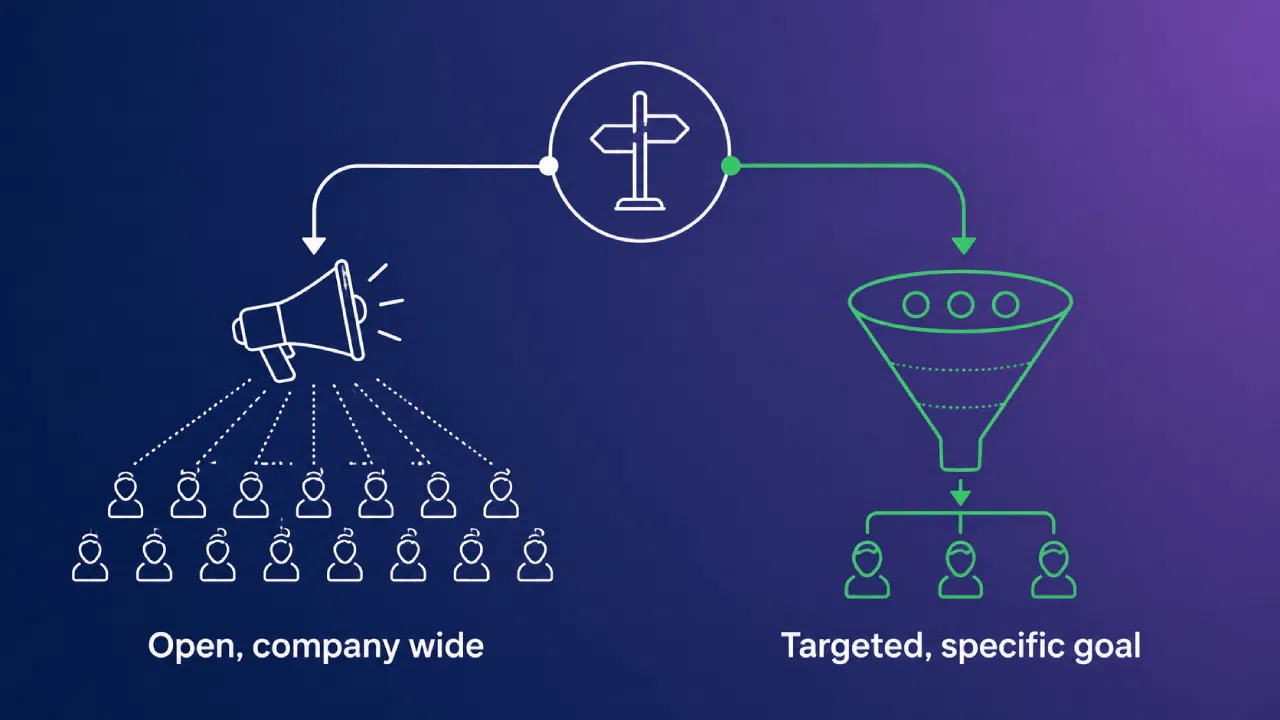
Decide the campaign type before anything opens: whether open and company-wide or targeted at a specific goal. That choice frames what contributors think about.
Context drives quality here.
Before asking employees for product ideas, share the customer persona data, consumption patterns, timing data, and the reason the priority matters right now.
When contributors see the same data leadership is working from, the resulting ideas map to real gaps instead of guesses. The context comes first; the quality follows.
The same logic applies to operational challenges. Open a cost-reduction campaign with a detailed explanation of the process, and participants spot real inefficiencies instead of generic suggestions.
Specificity at the front door produces relevant solutions at the back.
2. Make the Submission Form Do the Filtering
A good form is a self-selection tool. It discourages noise and elevates serious concepts, because a contributor who can’t articulate the problem tends not to finish it.
If they can’t define the why, the what is irrelevant.
Build the form around a few load-bearing fields:
- Problem statement. What specific problem does this address?
- Impact quantification. What’s the expected effect, in numbers where possible?
- Resource requirements. What would this take to pursue?
- Strategic alignment. A dropdown linking the idea to a corporate objective.
- Supporting evidence. Any data, customer signal, or precedent.
Keep it to six to eight fields. Completion rates drop beyond eight fields, so every field has to earn its place.
The goal is enough structure to force thought, not so much that people abandon the form halfway. There’s a real limit to templating, though.
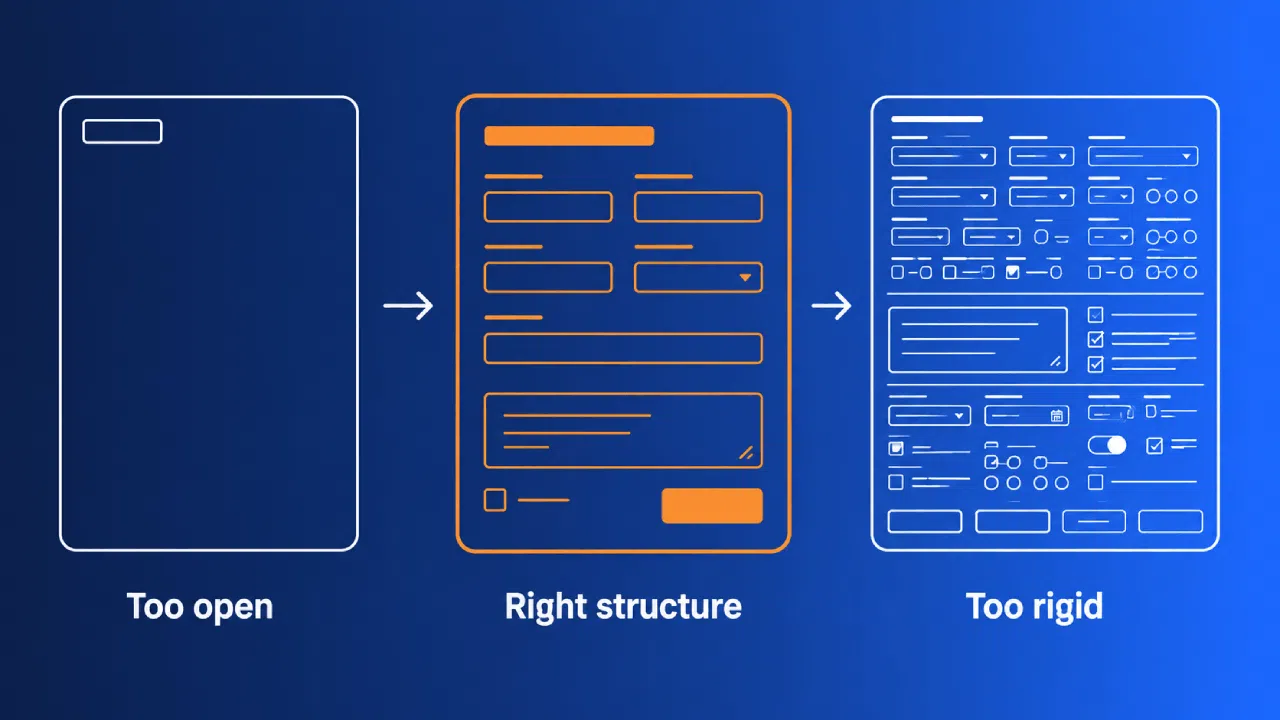
Research on idea convergence finds that a complete absence of options reduces noise but lowers signal, while too many ill-considered options create confusion.
The target is a middle level of constraint. Structured prompts work because they cut the extraneous cognitive load and let contributors spend their mental energy on the idea itself.
3. Brief Contributors Before You Ask
People submit better ideas when they understand the problem first. The more context participants have about a priority, the higher-quality ideas they tend to submit.
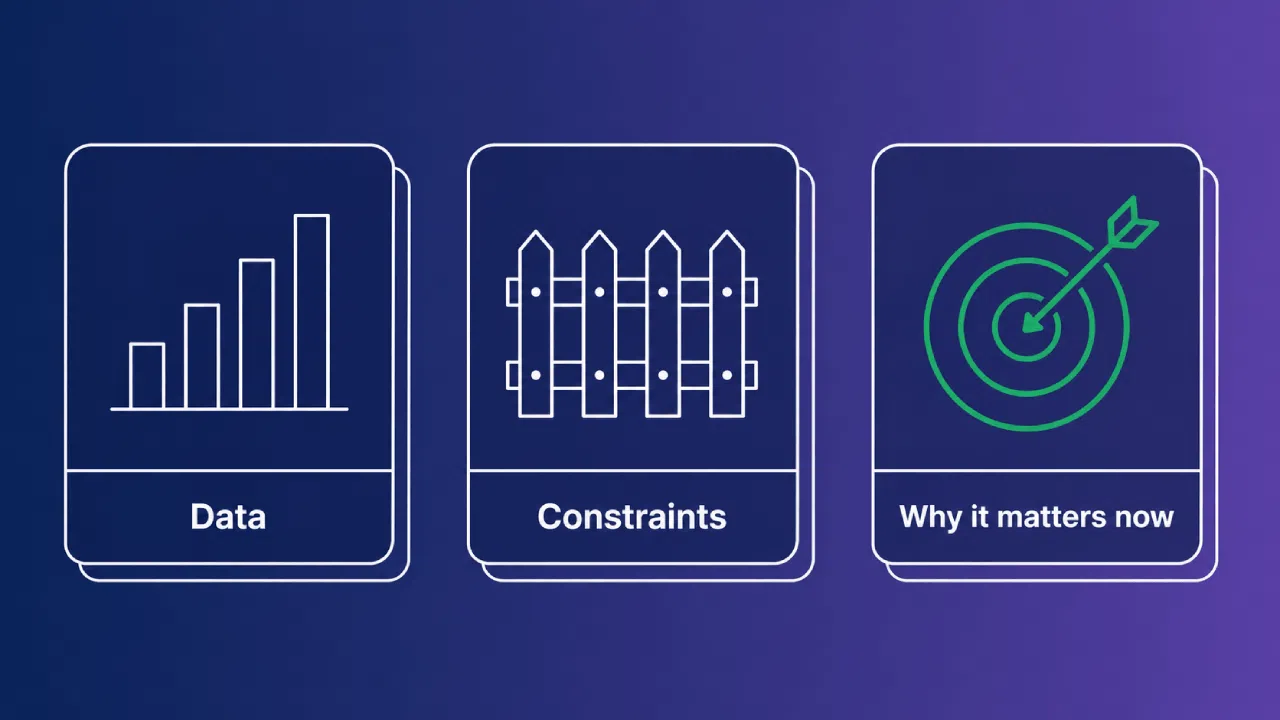
So brief before you ask. Share the data, the constraints, and the reason this matters now.
A university-led campus improvement challenge built on guided questions rather than open prompts saw participation concentrate around a handful of strong, implementable ideas instead of scattering across generic suggestions.
Guidance focused participation rather than narrowing it.
4. Publish Evaluation Criteria Upfront
Tell contributors how ideas will be judged before they submit. When they can see the standards, they self-filter against them.
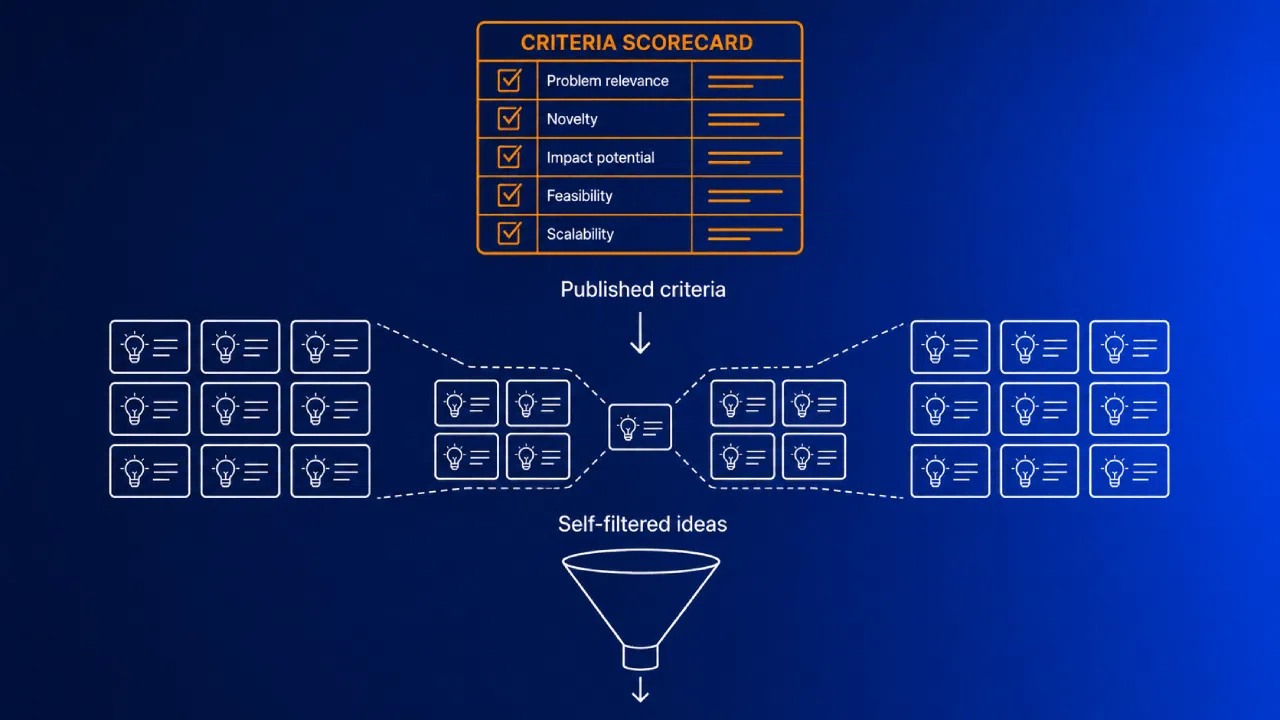
Teams that introduce a transparent, multi-criteria scoring system upfront tend to see evaluation move faster and cross-functional participation rise, because contributors already know what they’re being measured against.
Publishing the standard upstream did as much work as the scoring itself. Visible criteria give contributors something to aim at before they submit.
The Incentive Trap
What you reward is what you get, and that’s exactly the problem with most program metrics.
Count submissions and celebrate the total, and contributors will optimize for the count. The research is clear on the split:
| Incentive Type | What It Rewards | What You Get |
|---|---|---|
| Output incentives | The number of ideas submitted | Higher volume, no lift in quality |
| Input incentives | The effort and time spent generating ideas | The effort that quality actually depends on |
A leaderboard tracking who submitted the most ideas is a noise generator with a scoreboard attached. It rewards exactly the behavior a broken front door already produces too much of.
Reward thoughtfulness instead: the developed problem statement, the supporting evidence, the clear strategic tie. Decision quality follows from what you choose to measure.
Fix the Front Door First
Fixing the front door costs less than the evaluation overhaul teams reach for instead, and the fixes are simple design decisions.
Those decisions come down to four things:
- A focused challenge instead of an open box
- A structured submission form
- A briefing before the ask
- Published evaluation criteria
The payoff compounds downstream. When ideas arrive framed and developed, reviewers move faster and decisions rest on inputs built to be decided on.
Teams that align innovation with business objectives see it pay off, and structured intake is what makes that alignment repeatable.
Quality is built at intake, long before any reviewer sees a single idea.
Download our ebook on building higher-quality idea intake, or book a demo to see how Accept Mission structures challenges, submissions, and scoring end to end.












 English
 Dutch
Dutch Portuguese
 Spanish
 French
 German
 Arabic