
Best Innovation Pipeline Tracking Tools for Enterprises (Don’t Choose Without Reading This!)9 min read

Innovation is the engine that keeps modern enterprises moving forward, but keeping track of ideas from the first spark to final launch can feel overwhelming.
Without the right tools, you risk losing momentum, missing valuable concepts, and getting stuck in endless spreadsheets.
That’s why more organizations are turning to innovation pipeline tracking tools, since they bring order, visibility, and speed to your entire innovation process.
What to Look for in Enterprise Innovation Pipeline Tools
Choosing the right platform for your team is about finding a solution that fits your organization’s size, compliance needs, workflow complexity, and culture.
Most enterprise-grade innovation tracking tools go far beyond basic idea collection.
They offer automated workflows, analytics dashboards, secure integrations, and AI to help your team work smarter.
Here are a few must-have considerations:
- Real-time pipeline visibility so everyone knows what’s moving forward and what’s stalled
- Seamless integrations with tools you already use, such as Microsoft Teams, Slack, Power BI, and Jira
- Enterprise-grade security and compliance, including GDPR and ISO 27001
- AI-powered scoring and automation to prioritize the best ideas and reduce manual work
- Flexible permission settings to manage external collaborators and large, distributed teams
While every company is different, focusing on these essentials will help you narrow down your choices and avoid common pitfalls later.
The Best Innovation Pipeline Tracking Tools for Enterprises
Finding the right innovation pipeline tool can feel daunting with so many choices on the market.
To help, here’s a closer look at the top platforms trusted by large organizations worldwide.
Each tool is presented with key features, integration strengths, security standards, and a quick guide to who benefits most.
1. Accept Mission
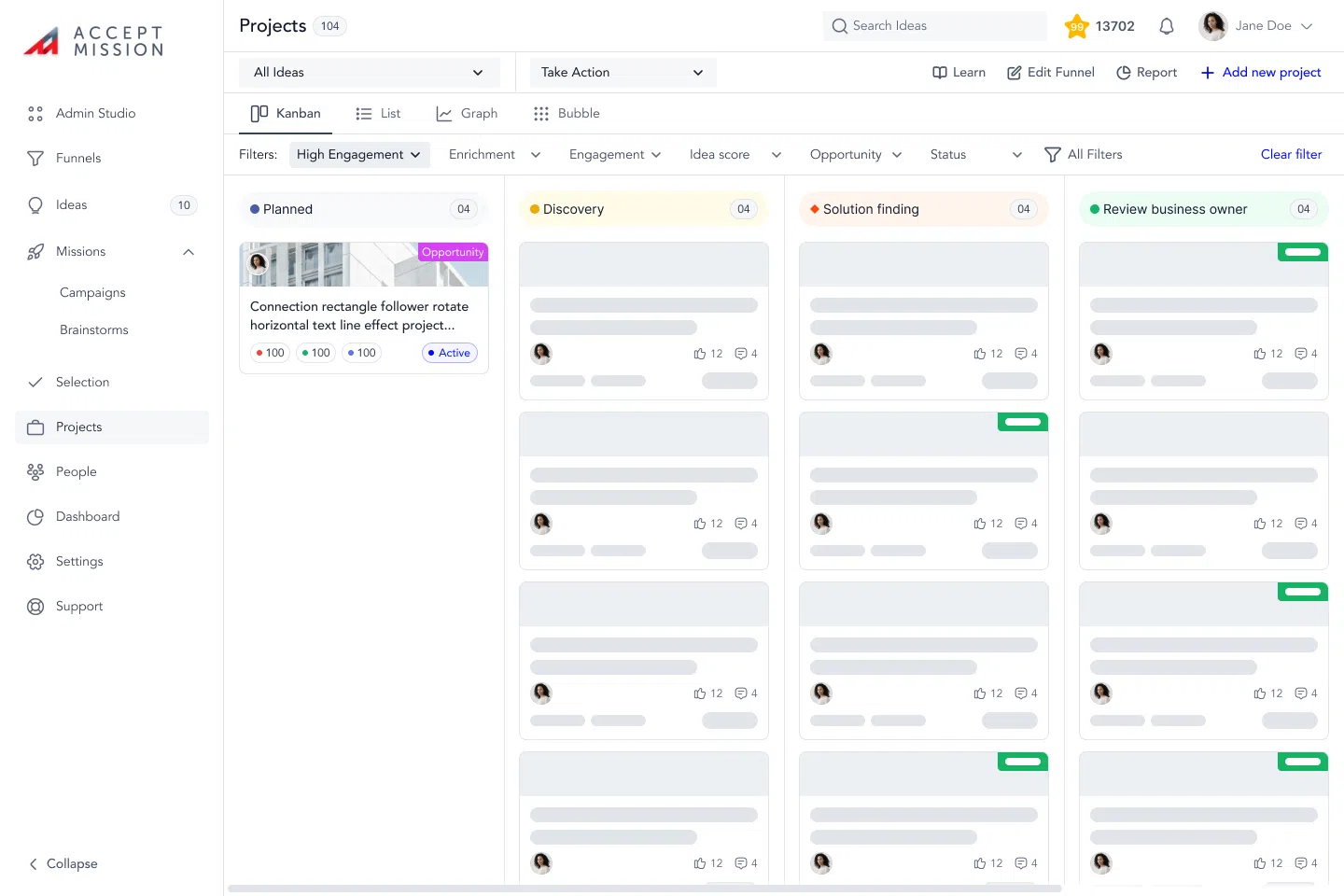
Accept Mission is designed for enterprises that need to manage complex innovation processes while keeping teams engaged and informed.
It’s a great fit for organizations looking to scale innovation across multiple departments and locations.
Key Features
- Customizable innovation funnels and stage-gate workflows
- Real-time dashboards with advanced analytics
- AI-powered idea scoring to surface high-potential concepts
- Automated notifications and bottleneck alerts
- Built-in team engagement and gamification features
Accept Mission integrates natively with Microsoft Teams, Power BI, Slack, and other enterprise tools, and also offers open API access for custom integrations.
The company highlights strong data security and GDPR compliance, which is important for global organizations.
AI features include idea scoring and analytics to help you identify high-potential concepts more efficiently.
A unique aspect is Accept Mission’s strong gamification, which boosts engagement and participation throughout the innovation process.
- Best for: Large organizations needing advanced analytics, compliance, and engagement
- Pros: Real-time insights, robust security, excellent team engagement
- Cons: Some users may need extra onboarding to leverage all advanced features
2. Brightidea
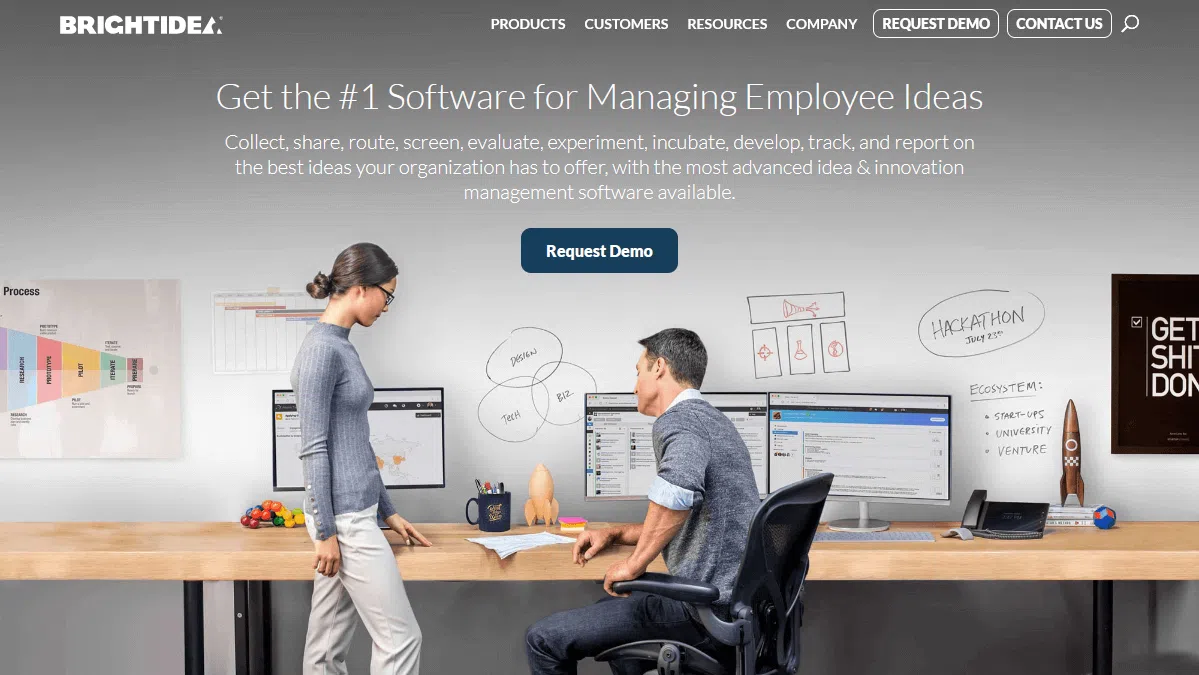
Brightidea helps enterprises turn ideas into outcomes with a flexible, scalable platform.
Its strong focus on process automation and integration makes it a solid choice for organizations managing innovation across multiple business units.
Key Features
- Configurable stage-gate workflows
- Real-time portfolio and pipeline dashboards
- Idea collaboration and evaluation modules
- Automated progress tracking and alerts
- Robust reporting and analytics
Brightidea integrates with Microsoft Teams, Jira, Salesforce, and Slack, making collaboration and data sharing easy for enterprise users.
Security is a priority, and the platform holds SOC 2 Type II certification and complies with GDPR.
Take note that AI features focus mainly on analytics and reporting rather than predictive scoring or resource allocation.
Brightidea stands out for its flexibility and its ability to support complex innovation processes in large organizations.
- Best for: Enterprises with diverse innovation needs and a focus on process automation
- Pros: Highly configurable, strong integration options
- Cons: May feel complex for smaller teams or those new to structured innovation processes
3. Planview (IdeaPlace)
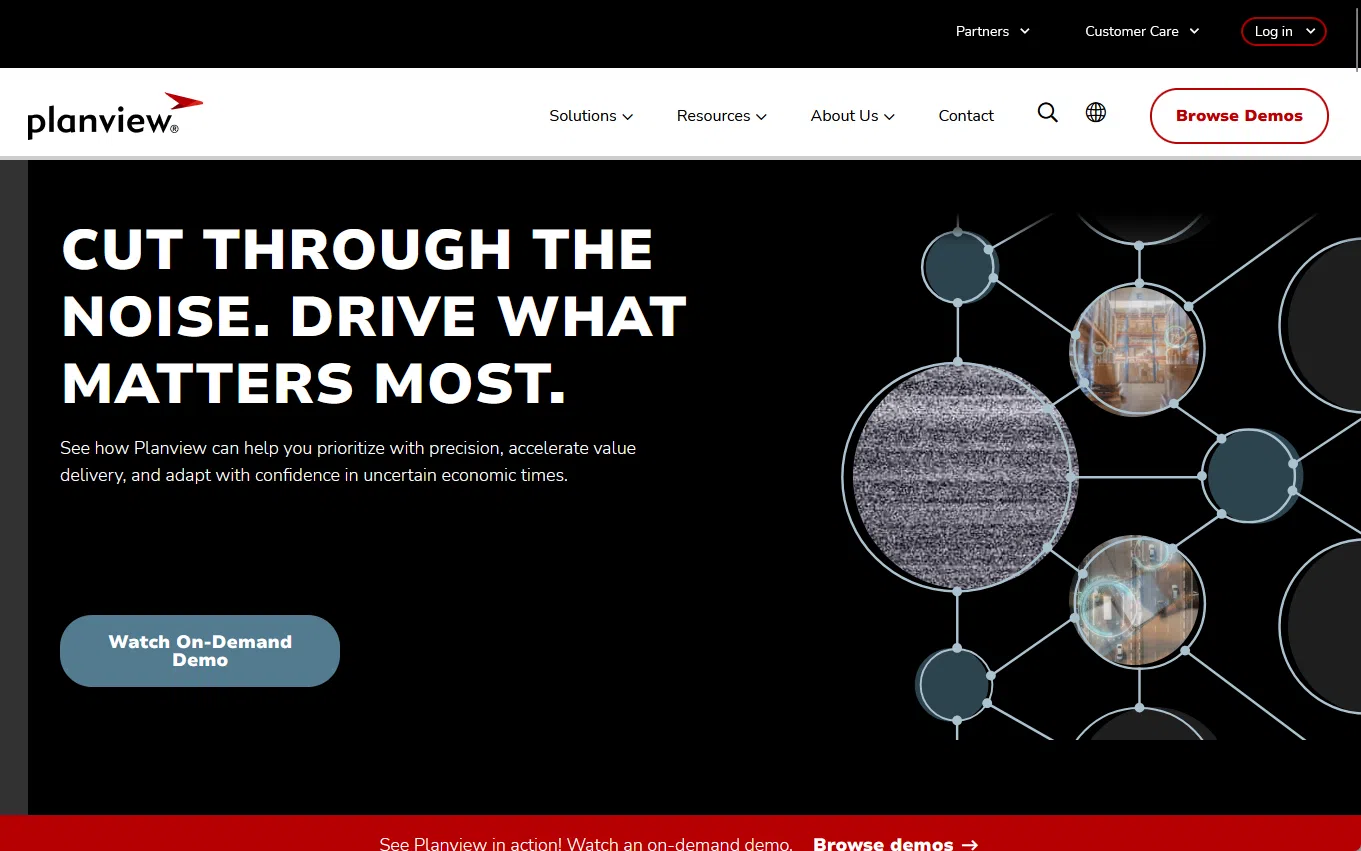
Planview (formerly IdeaPlace) is a leading platform for managing innovation portfolios and new product development pipelines.
It’s especially popular among enterprises with a strong focus on strategy, resource planning, and cross-team collaboration.
Key Features
- End-to-end innovation portfolio management
- Visual pipeline and stage-gate tracking
- Centralized idea submission and evaluation
- Detailed analytics and reporting dashboards
- Resource and capacity planning tools
Planview connects with Microsoft Teams, Power BI, Jira, and SAP, making it easy to integrate with your existing enterprise systems.
The platform offers ISO 27001 and SOC 2 certifications, along with GDPR compliance, so your data stays secure.
While Planview mentions using global data centers, specific regional hosting details aren’t public (confirm this with their team for compliance).
Overall, Planview stands out for linking innovation directly to strategy and resource management in large organizations.
- Best for: Enterprises focused on aligning innovation with strategy and resource management
- Pros: Excellent integration with business systems, strategic portfolio management
- Cons: May be overkill for organizations looking for a lighter, simpler tool
4. Qmarkets
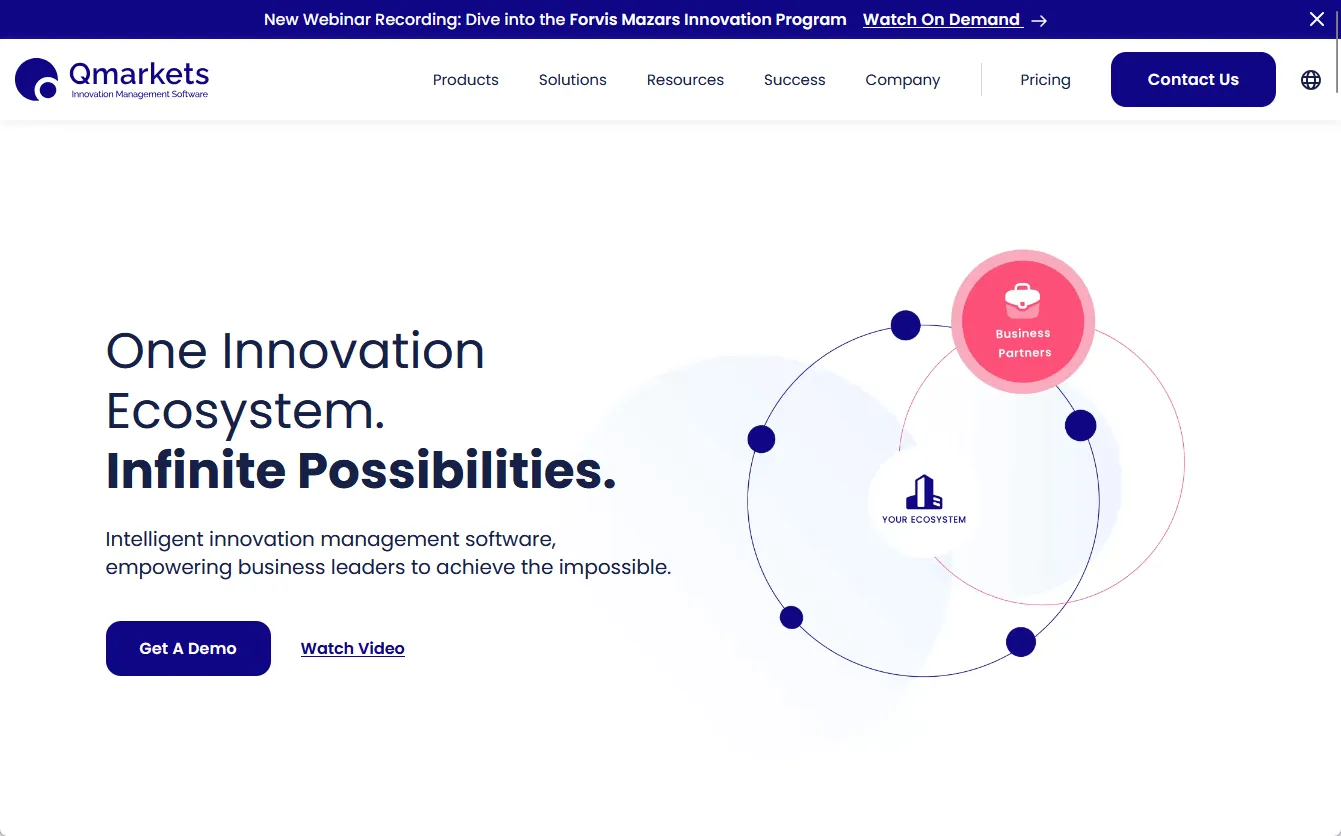
Qmarkets is known for its global reach and flexible idea management system, making it a strong option for large organizations needing tailored innovation solutions.
Its modular design allows you to scale and adapt the platform as your needs grow.
Key Features
- Customizable idea capture and evaluation workflows
- Real-time analytics and reporting tools
- Collaboration and crowd voting modules
- Automated alerts and progress tracking
- Multilingual support for global teams
Qmarkets integrates with Microsoft Teams, Slack, Jira, and other leading enterprise tools, plus it supports custom connections through an open API.
The company emphasizes strong data security and GDPR compliance to support enterprise requirements.
Qmarkets offers automation for notifications and reporting, and its AI focuses on idea evaluation and trend spotting.
- Best for: Enterprises needing flexible, modular innovation management across multiple regions
- Pros: Highly customizable, great for global teams
- Cons: Initial setup can take longer due to the modular nature
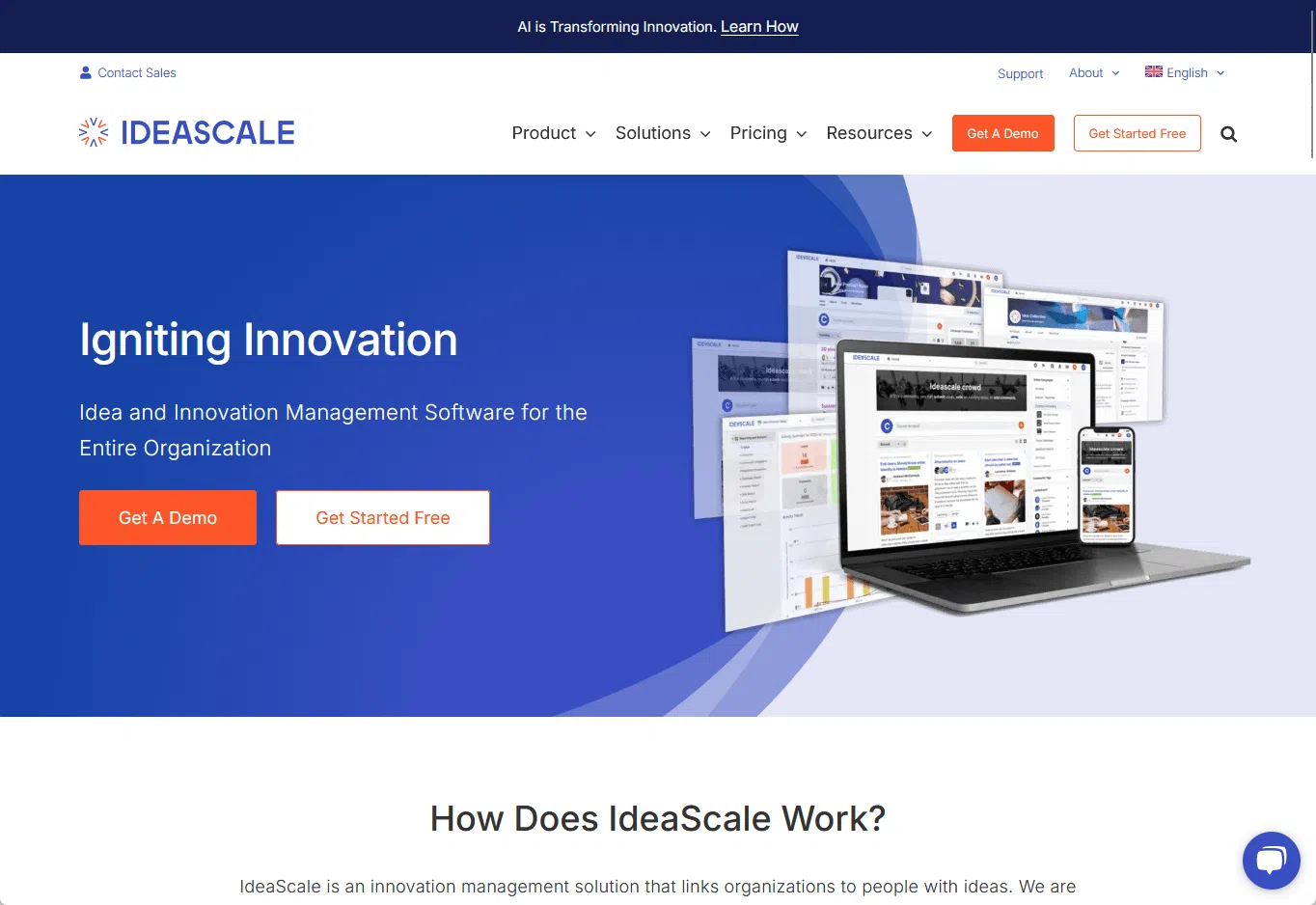
5. IdeaScale
IdeaScale stands out for its accessible, community-driven approach to innovation management.
It’s used by organizations of all sizes, but its strong compliance and automation features make it attractive for enterprises as well.
Key Features
- Customizable innovation workflow and idea stages
- Crowd voting and collaboration tools
- Real-time analytics and reporting
- Automated routing and notifications
- Mobile and multilingual support
IdeaScale connects with Slack, Teams, Jira, and Zapier, as well as other platforms like Trello and Power BI, making integration simple for most enterprise stacks.
GDPR compliance is a priority for IdeaScale, and the platform provides various security and privacy features to support enterprise needs.
IdeaScale hosts customer data on AWS and lets you choose between US and EU regions, though it’s smart to check with their team for the latest options.
The platform focuses on automating workflow steps and delivering AI-driven insights, which help you spot trends and highlight the most promising ideas quickly.
- Best for: Large organizations wanting broad participation and accessible innovation management
- Pros: Easy to use, strong community, and mobile features
- Cons: Some advanced analytics require higher-tier plans
Key Features at a Glance
Choosing the right tool can be tough, especially with so many options out there. This comparison table breaks down the most important differences in one place.
| Tool | Key Features | Integrations | Security/Compliance | AI/Automation | Best For |
|---|---|---|---|---|---|
| Accept Mission | Stage-gate workflows, dashboards, gamification | Teams, Power BI, Slack, API | GDPR | AI scoring, automation | Analytics-driven large orgs |
| Brightidea | Configurable workflows, analytics, collaboration | Teams, Jira, Salesforce, Slack | SOC 2, GDPR | Automation, analytics | Diverse, process-driven orgs |
| Planview | Portfolio management, resource planning | Teams, Power BI, SAP, Jira | ISO 27001, SOC 2, GDPR | Automation, analytics | Strategy-focused enterprises |
| Qmarkets | Modular workflows, crowd voting, analytics | Teams, Slack, Jira, API | GDPR | AI trend spotting, automation | Global, modular needs |
| IdeaScale | Workflow automation, voting, mobile support | Slack, Teams, Jira, Zapier | GDPR | AI insights, automation | Broad participation needs |
It’s clear that each tool shines in different ways, making your specific priorities, like compliance, flexibility, or analytics, critical to your choice.
Some platforms stand out for their integrations, while others are stronger in security or workflow automation, so it’s worth weighing what matters most to your organization.
Why Accept Mission Is a Standout Choice for Enterprises
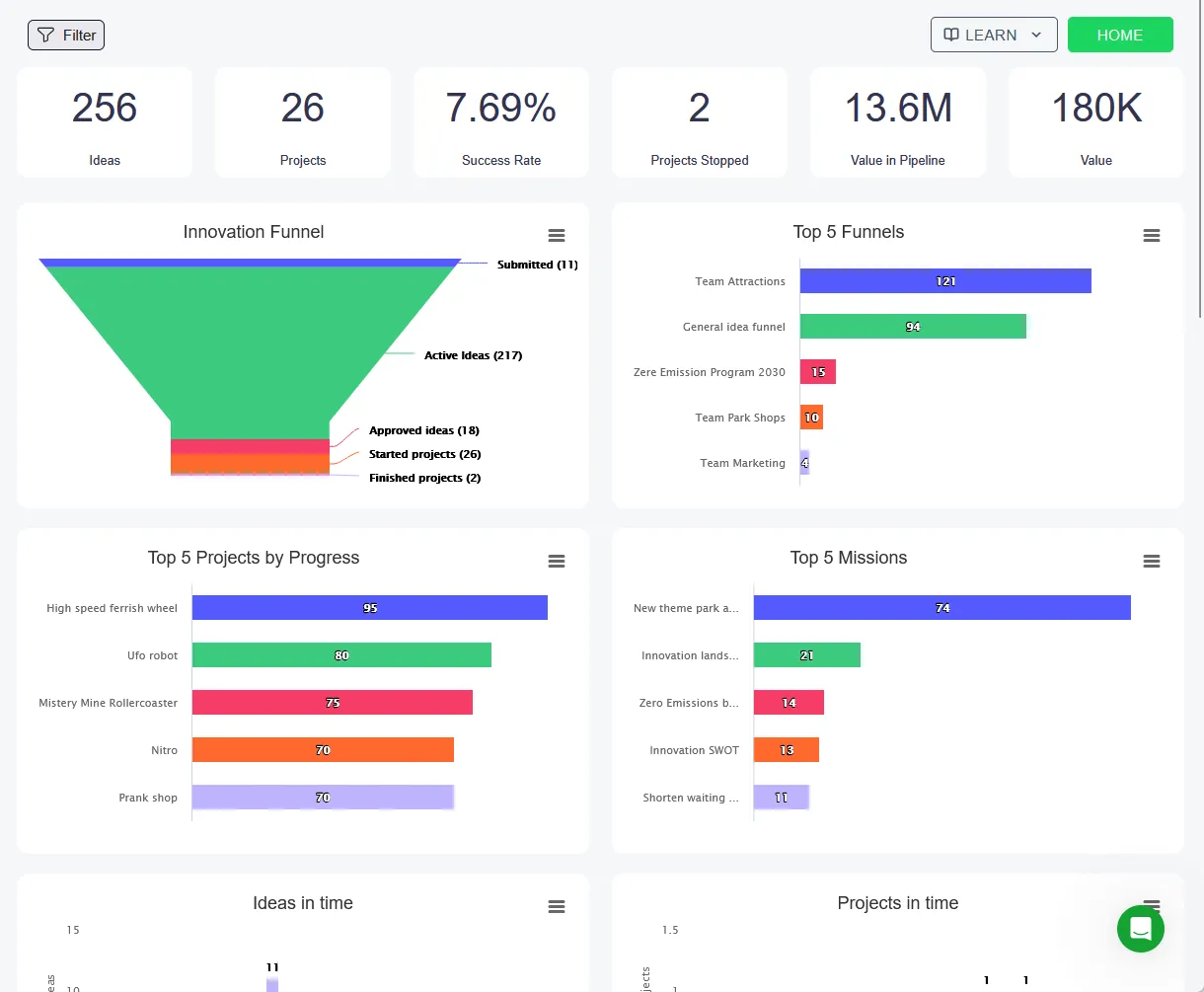
Many enterprises choose Accept Mission because it combines powerful analytics with features that motivate participation across departments.
You don’t have to overhaul your entire workflow to implement it, since it connects smoothly with Microsoft Teams and other familiar platforms.
Here are several ways Accept Mission addresses the real challenges of enterprise innovation pipeline tracking:
- Enables real-time pipeline visibility across departments, so you spot bottlenecks fast
- Integrates natively with Microsoft Teams and Power BI, keeping everything in sync with your workflow
- Uses AI to help score and prioritize the most promising ideas, cutting down decision time
- Gamifies participation, encouraging broader team engagement and boosting idea submissions
- Supports secure, GDPR-compliant collaboration (important for enterprises with sensitive data)
- Offers customizable workflows, making it easy to adapt the platform as your organization grows
With Accept Mission, you get instant visibility across your entire innovation pipeline, so leaders can quickly make informed decisions.
Plus, automation features help keep projects moving forward by reducing repetitive manual tasks.
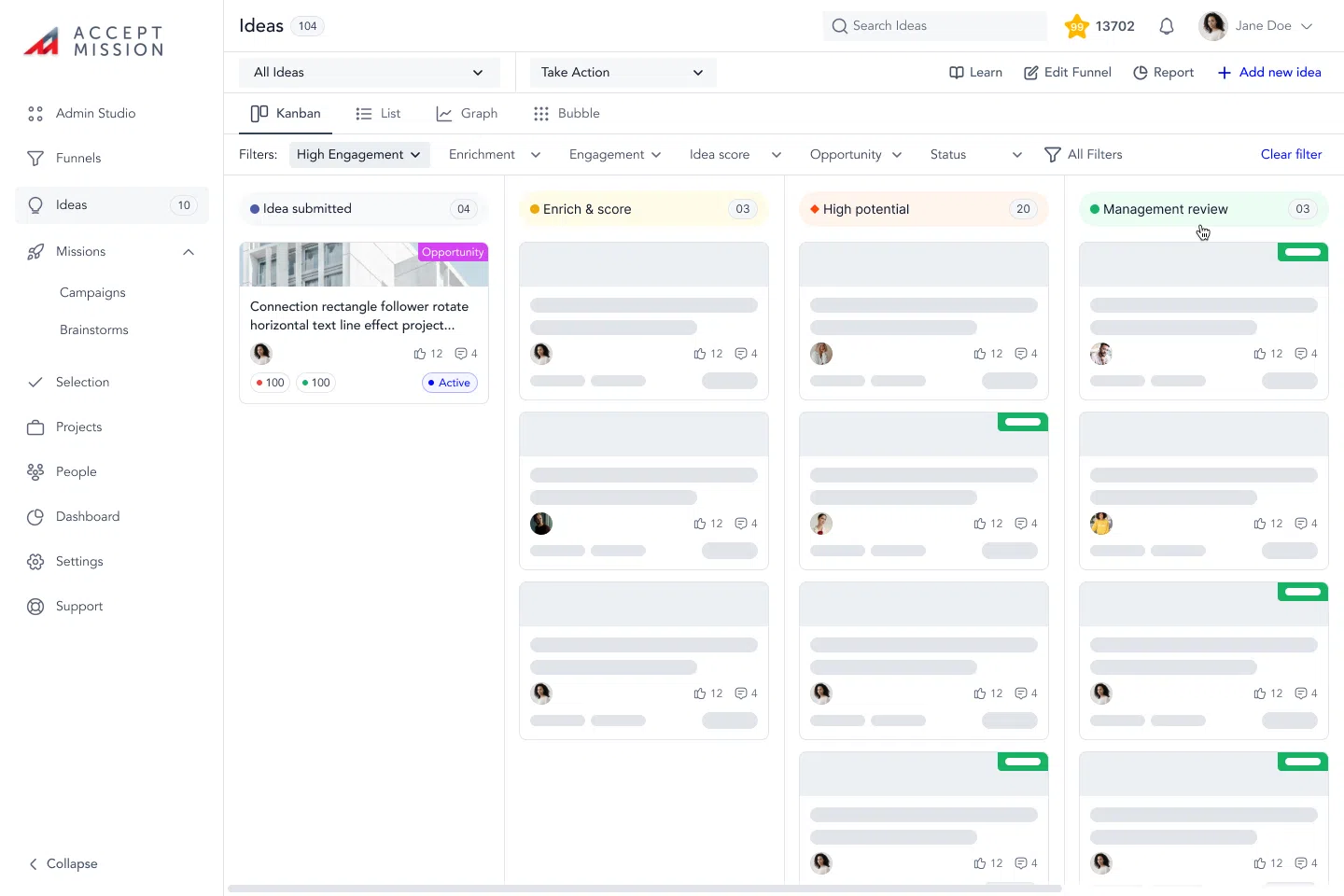
Because gamification encourages your team to participate, you never miss out on promising ideas.
As your organization grows, you can easily adapt workflows and integrate with familiar platforms, making innovation management simpler for everyone.
Moving Forward with Innovation Pipeline Tracking
Innovation never stands still, and neither should your approach to managing it.
Investing in a powerful innovation pipeline tracking tool makes it easier for your teams to collaborate, evaluate, and act on new ideas…no matter where they start.
With the right platform, you get real-time visibility, smarter prioritization, and the confidence to launch your best concepts faster.
Now’s the time to assess your options and take the next step toward a more organized and impactful innovation strategy.
Ready to see Accept Mission in action? Book a demo today and discover how it can transform your enterprise innovation process.








 English
 Dutch
 Portuguese
 Spanish
 French
 German
 Arabic
