
From ‘Pending’ to ‘Validating’: How Stage Names Drive Participation11 min read

Most idea funnel stage names were never really chosen. They shipped with a tool, got copied from a process doc, and never changed.
Most programs are still running some version of these:
- Submitted
- Under Review
- Pending
- On Hold
These names describe a database state, not a contributor experience. And that difference shows up directly in participation rates.
The label a contributor sees when they check on their idea is doing real behavioral work. It signals movement and progress, or confirms that nothing is happening.
Getting from ‘Pending’ to ‘Validating’ doesn’t require rebuilding your funnel. It requires rethinking the words on the status badge.
What Contributors Actually See When They Submit an Idea
The most documented failure in corporate innovation programs has a nickname: the black hole. Ideas go in, nothing comes back out.
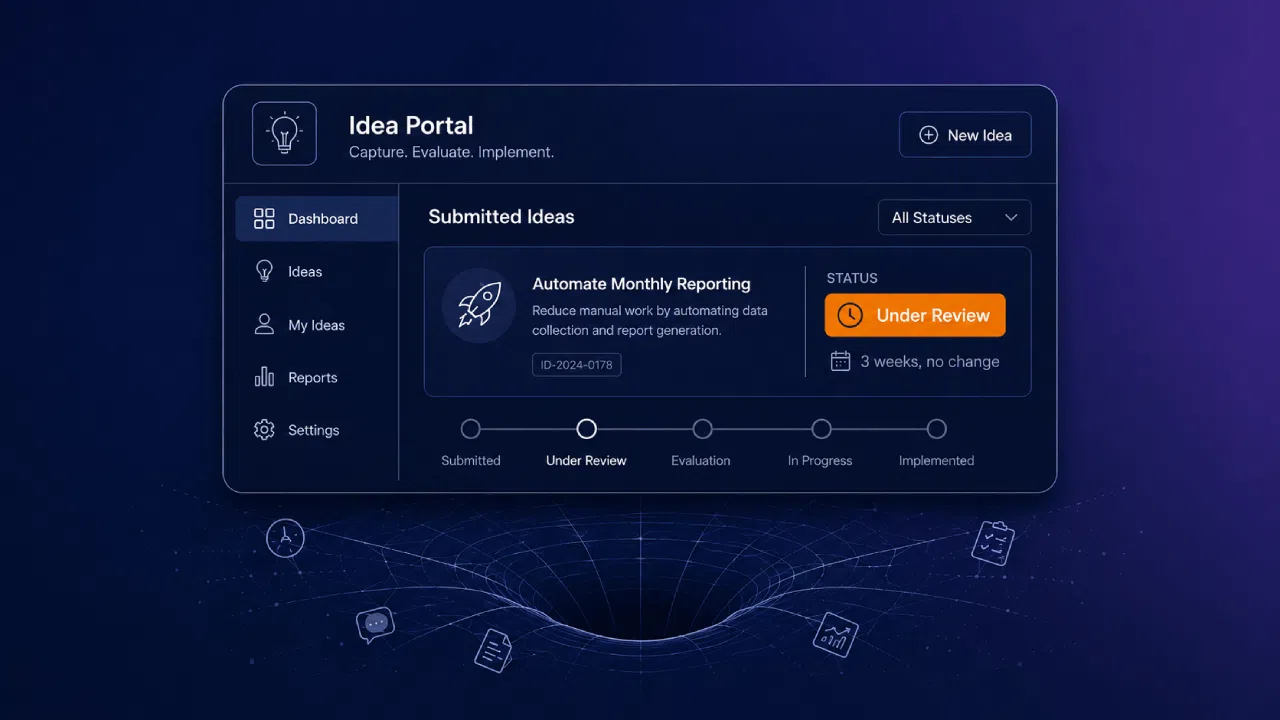
Contributors submit, hear nothing, and quietly conclude their input doesn’t matter. Participation collapses from there.
The numbers are blunt. Most employee idea programs fail within the first year, largely because contributors get zero feedback.
Stage names are the primary visibility mechanism most programs have. They’re the one check a contributor has to confirm something is moving.
A passive name kills that signal. “Under Review” for three weeks reads identically to “Under Review” for three months: motionless.
When the only feedback a contributor gets is a static label, the label is doing real work. It’s either telling them progress is happening or confirming their suspicion that nothing is.
The Psychology Behind Stage Naming
Three well-studied effects explain why a single word on a status badge changes behavior. None of them are subtle.
The Progress Principle
Harvard researchers Teresa Amabile and Steven Kramer analyzed nearly 12,000 diary entries from 238 employees across 26 teams. Their finding was clear.
The single most powerful driver of positive inner work life is making progress in meaningful work. They called these “small wins.”
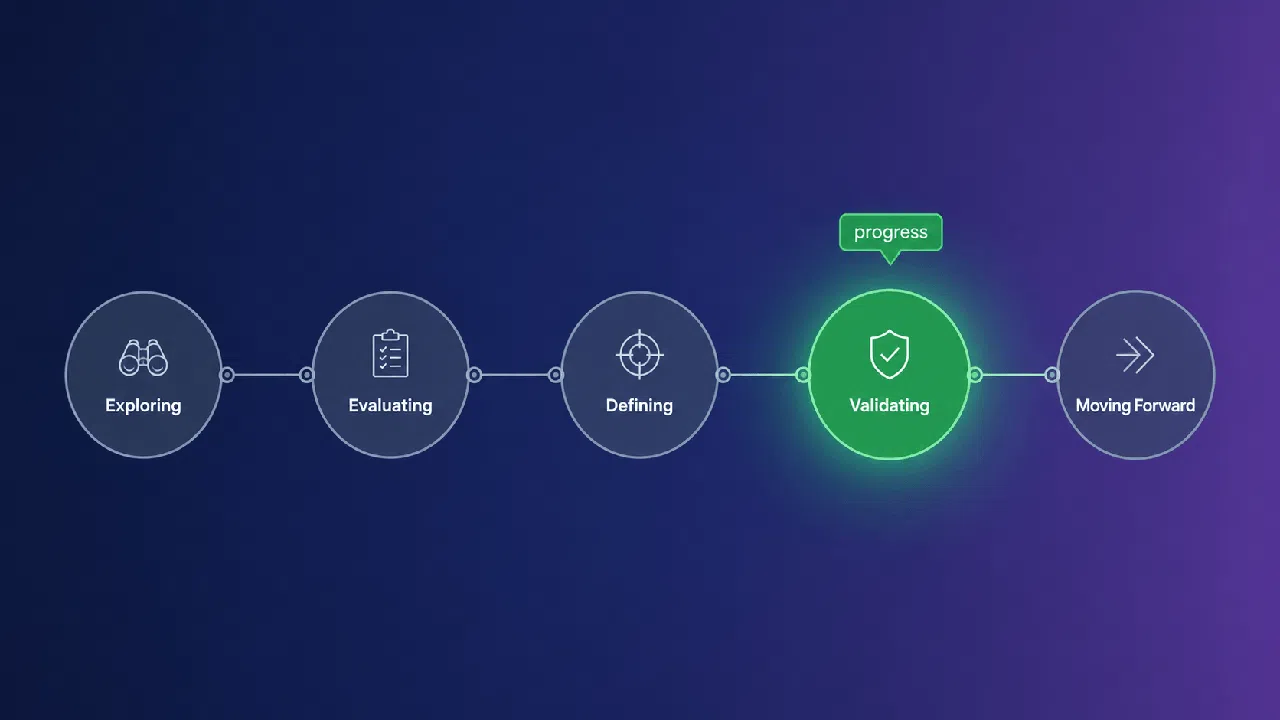
A stage advancing from one named step to the next is a small win made visible. The contributor sees movement, and movement sustains motivation in a way that praise or money doesn’t.
The Goal Gradient Effect
People accelerate their effort as they get closer to a goal. The effect was first documented in 1932 and replicated in modern consumer research by Columbia’s Ran Kivetz.
Stage names create proximity to a real outcome. “Validating” implies a finish line is near; “Pending” implies the line doesn’t exist yet.
The Labeling Effect
Labels shape how people see themselves and act. Call someone an explorer and they explore; tell them they are “pending” and they wait.
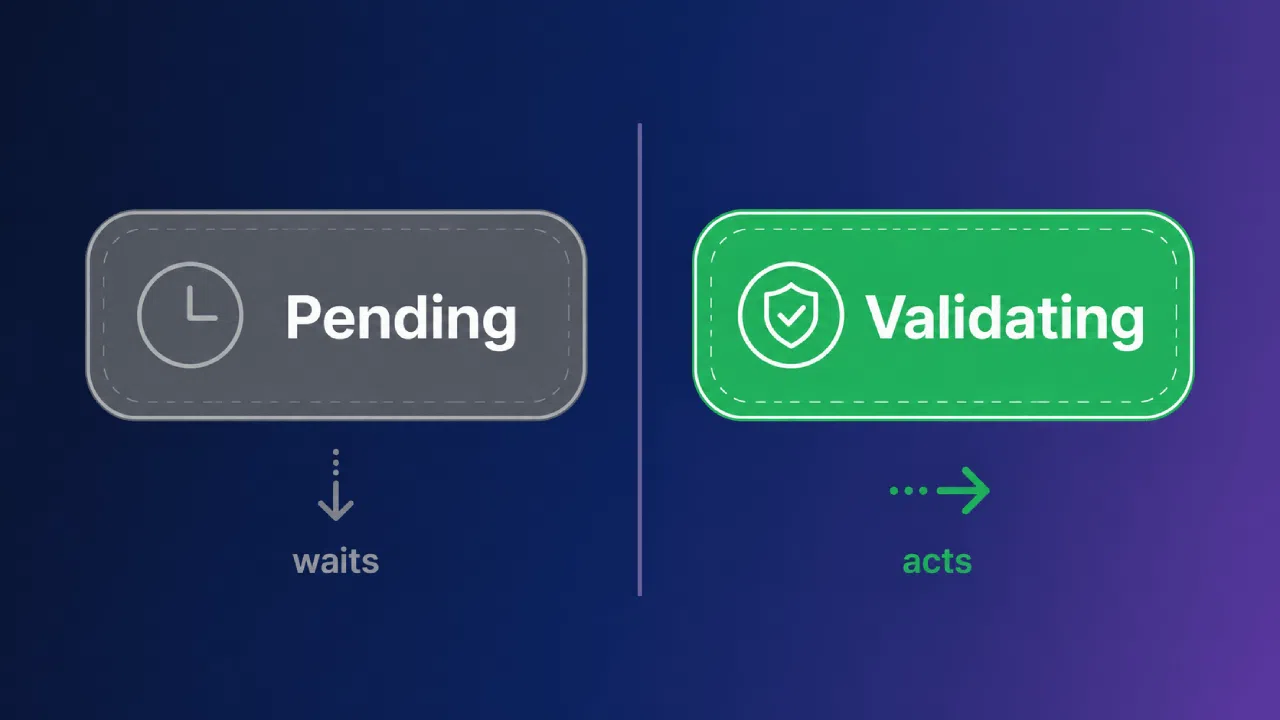
This is the self-fulfilling prophecy in action. The status badge a contributor wears influences the energy they bring to the next step.
Put together, these effects point the same direction. Names that signal movement, proximity, and active identity sustain participation, while names that signal stasis quietly drain it.
There’s also a fairness dimension.
When contributors can see a clearly named stage and understand the criteria being applied, they perceive the process as fairer, even when their idea is rejected.
Four Naming Patterns, From Weakest to Strongest
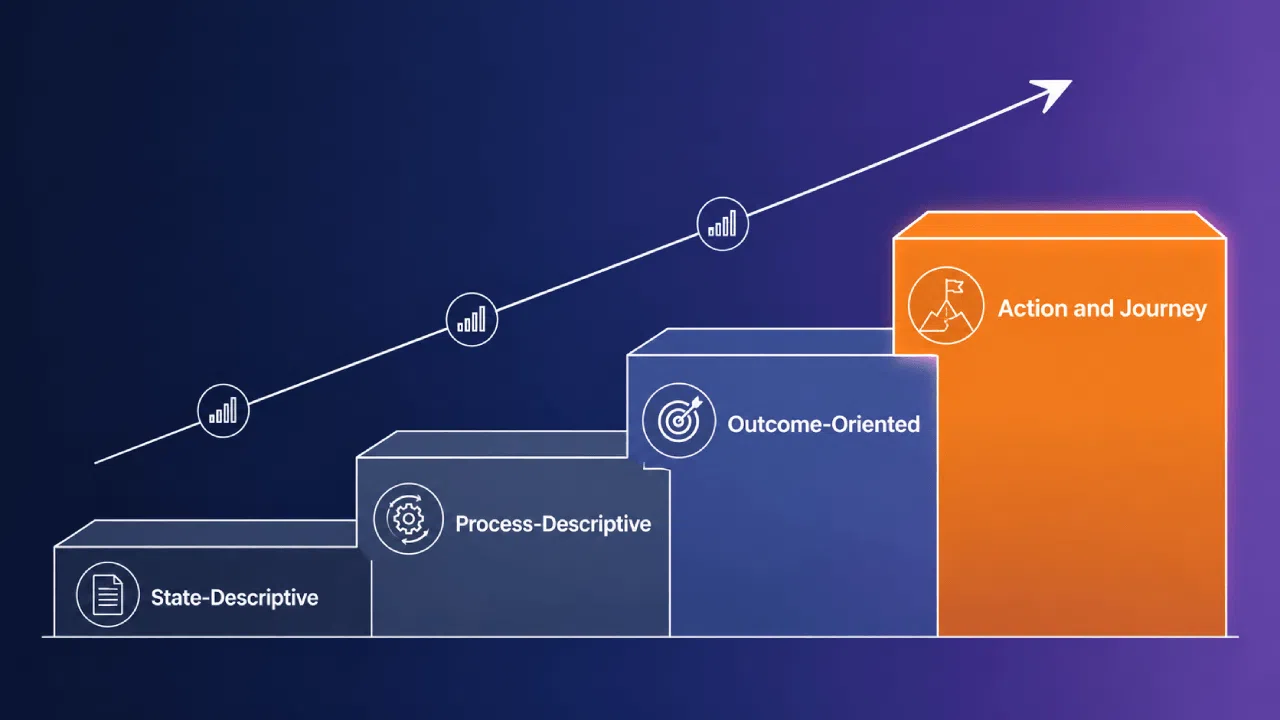
Not all stage names are created equal. They fall into four patterns, and the gap between the weakest and strongest is wide.
| Pattern | Example Names | Psychological Effect |
|---|---|---|
| State-descriptive (passive) | Submitted, Under Review, Pending, On Hold, Awaiting Decision | Signals stasis. High black-hole risk, low contributor agency. |
| Process-descriptive (org-facing) | Evaluation, Business Case, Scoping, Validation | Describes what the org does, not the contributor’s progress. Moderate. |
| Outcome-oriented | Concept Definition, Feasibility, MVP, Pilot | Names a destination. Activates the goal gradient. |
| Action/journey (active) | Explore, Validate, Build, Scale | Strongest progress signal and highest agency. |
Real programs map onto this scale. The Stage-Gate model, for example, uses process-descriptive names: Scoping, Build Business Case, Testing and Validation.
It was designed for professional R&D teams, not broad employee participation. The naming and the audience are mismatched.
One widely-used idea management model goes a step further with outcome-oriented stages, including a “Refinement” step that explicitly invites rough early ideas and community improvement.
The strongest example engaged 75,000 employees across 90 countries. Its stages read like a startup journey: Ideation, Investigation, Seed Funding, Implementation.
How to Redesign Your Stage Names
You don’t need a consultant or a workshop to fix this. You need four principles and a willingness to revisit names you probably set once and forgot.
1. Name What the Organization Is Doing For the Idea
“Under Review” describes a holding state. “Evaluating Business Potential” describes work being done on the idea’s behalf.
The second version tells the contributor that effort is being invested in their submission. That distinction shows up directly in microcopy research.
The Nielsen Norman Group’s three I’s of microcopy are inform, influence, and interact. A good stage name does all three; a passive label does none.
2. Make the Evaluation Criteria Visible
A stage name can carry information about what is actually being judged. “Assessing Feasibility” tells a contributor the question on the table is whether the idea can be built.
That visibility builds procedural fairness. People accept outcomes more readily when they can see the criteria, which is the “voice effect” in organizational justice research.
3. Use Outcome-Facing Language
Point the name at where the idea is heading, not where it is parked. “Defining the Concept” beats “Pending Assessment” because it implies forward motion toward a deliverable.
Active verbs and outcome nouns consistently outperform noun-state labels for sustained engagement. Gain-framed language holds participation better than neutral or passive framing.
4. Reserve Dead-End Naming for Clear Exits
Some ideas won’t move forward, and that’s fine. What’s not fine is silent archiving, which recreates the black hole at the worst possible moment.
A named exit closes the loop. It tells the contributor the decision was made, not that their idea simply vanished.
Keep stage count between four and six. Too few and there’s no progress signal; too many and the goal feels distant.
A Naming Set You Can Start With
You don’t have to invent this from scratch. The set below maps common passive labels to active alternatives, phase by phase.
| Phase | Passive Version (Avoid) | Active Version (Use) |
|---|---|---|
| Entry | Submitted | Exploring |
| Initial review | Under Review | Evaluating |
| Deeper assessment | Pending Assessment | Defining the Concept |
| Validation | Under Consideration | Validating |
| Selection | Awaiting Decision | Moving Forward |
| Exit (not selected) | Archived / Rejected | Not Pursuing (This Cycle) |
Treat these as a starting point, not gospel. The exact words should reflect your organizational culture; the pattern matters far more than any single label.
What matters operationally is that the names stay visible and consistent everywhere a contributor encounters them.
When stage names live in a structured platform, they can be configured once and seen consistently across the entire funnel.
AI plays a supporting role here too, helping score and evaluate ideas at scale. But the stage name is still what the contributor sees and reacts to.
Common Naming Mistakes to Avoid
Three naming habits quietly undermine the progress signal you are building. Each one is easy to make and easy to fix.
Jargon creep is the first. Stages get named for the internal process instead of the contributor’s experience.
“Concept Validation Gate” means something to your steering committee. To the person who submitted the idea, it means nothing.
“Stage 2 Review” is worse, because it names a position in your workflow, not anything happening to the idea. The contributor can’t tell whether Stage 2 is good news, bad news, or no news.
The label points inward, at your process, when it should point outward, at their idea.
Inconsistency across channels is the second mistake. The dashboard says one thing, the notification email says another, the manager report says a third.
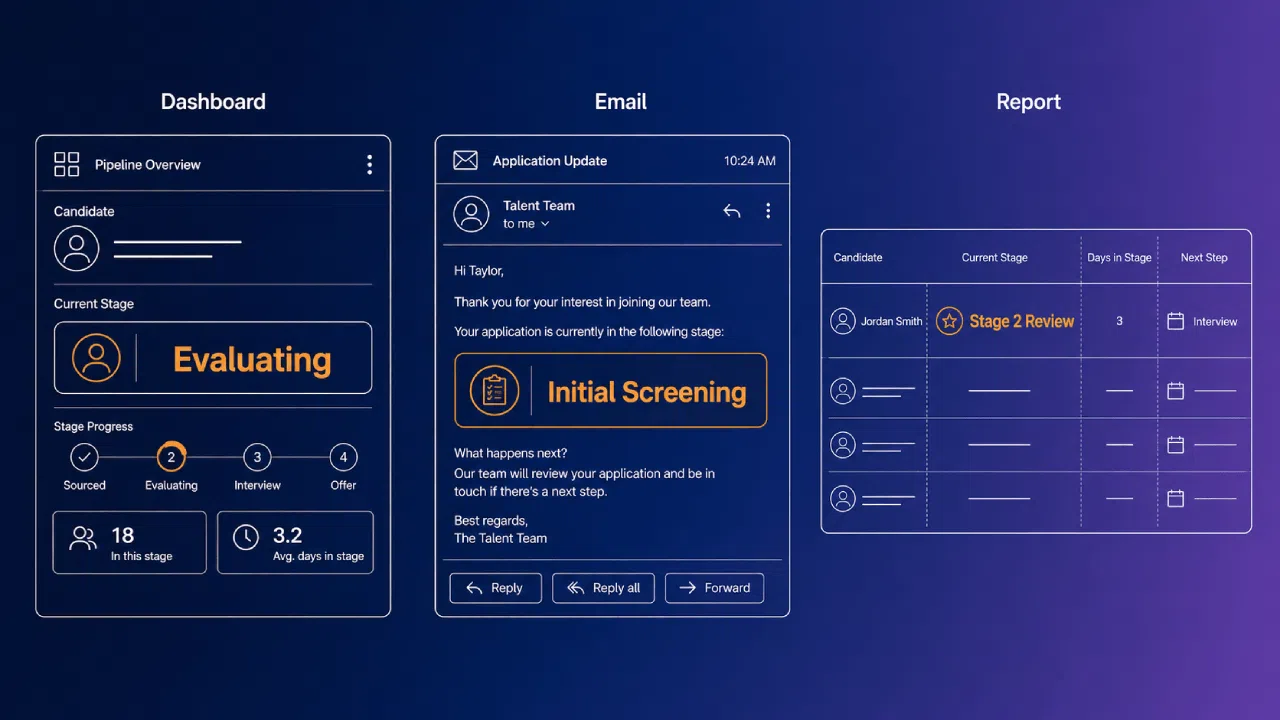
A contributor sees “Evaluating” on the portal, then gets an email about “Initial Screening.” Same stage, two names.
That mismatch reads as disorganization. It tells the contributor nobody is really watching their idea, which is the exact opposite of the signal you want.
Pick one name per stage and use it everywhere, across your dashboard, emails, and reports. The progress signal only works when it’s consistent.
The third mistake is renaming stages mid-program without explanation. Someone tracking “Under Consideration” logs in and finds “Reviewing Feasibility” instead.
No announcement, no context, just a different label where the old one used to be. You meant it as an improvement; they read it as instability.
Renames are sometimes necessary. When you make one, tell contributors what changed and why, so the new name reads as progress rather than churn.
Stage Names in Automated Notifications
Most platforms fire an automated message when an idea changes stage. For most contributors, that’s the only contact before a final decision.
That makes the stage name in a notification the highest-stakes naming you do. On a dashboard, the name sits among other context; in a notification, the name is the message.
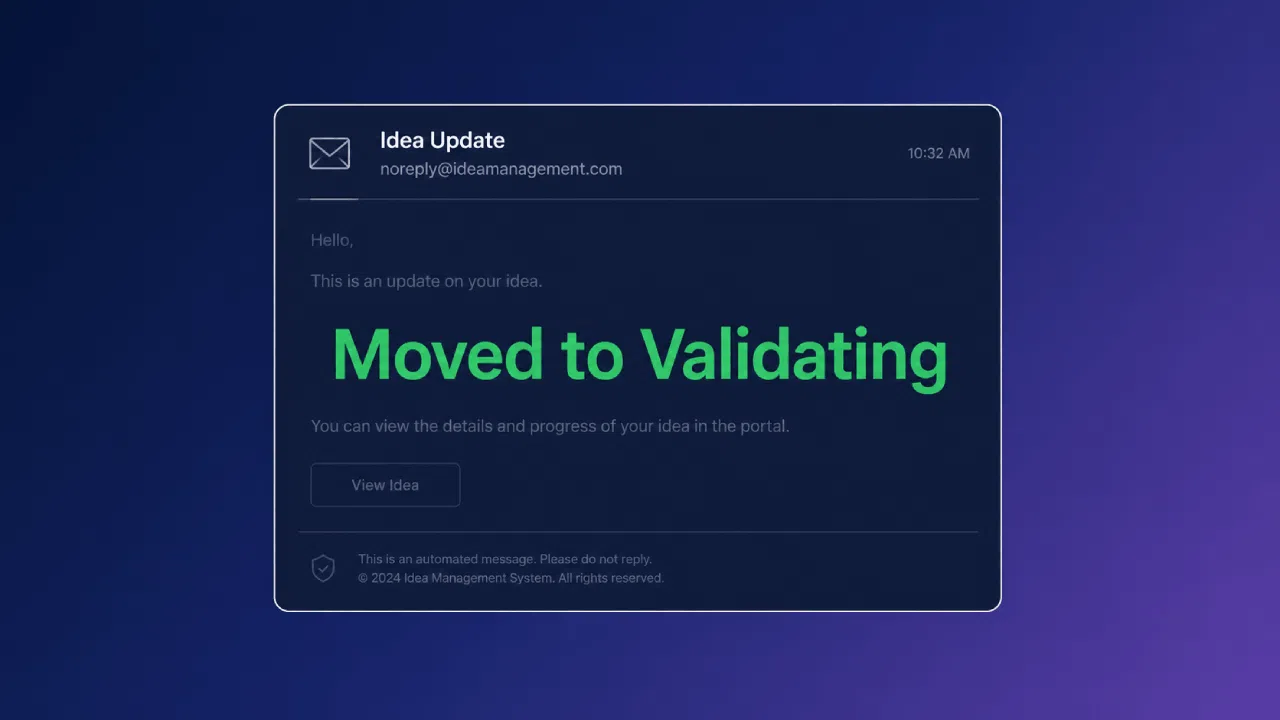
There’s no surrounding interface to soften it, no other signals to read. The contributor opens the email, sees the stage, and draws a conclusion from that phrase alone.
Compare two versions of the same notification. One reads “your idea is now Under Review.” The other reads “your idea moved to Validating.”
The first describes a parked state. It could mean active work or a forgotten queue, and the contributor has no way to tell.
The second describes motion. “Moved to Validating” says a person did something, and names what comes next.
It reads as momentum, not storage. Same idea, same actual progress, two very different messages received.
Naming only helps when the process behind it moves, though. A perfectly named stage that an idea never leaves still goes silent.
“Validating” sent once, then nothing for two months, lands exactly like “Under Review.” The contributor’s experience is silence, whatever the label said.
Good naming and a moving process are a pair. Name the stages well, then make sure ideas actually advance through them, so the notifications keep arriving.
Adapting Stage Names for Different Program Types
One naming convention won’t serve every program. The right vocabulary depends on who is contributing and how fast they move.
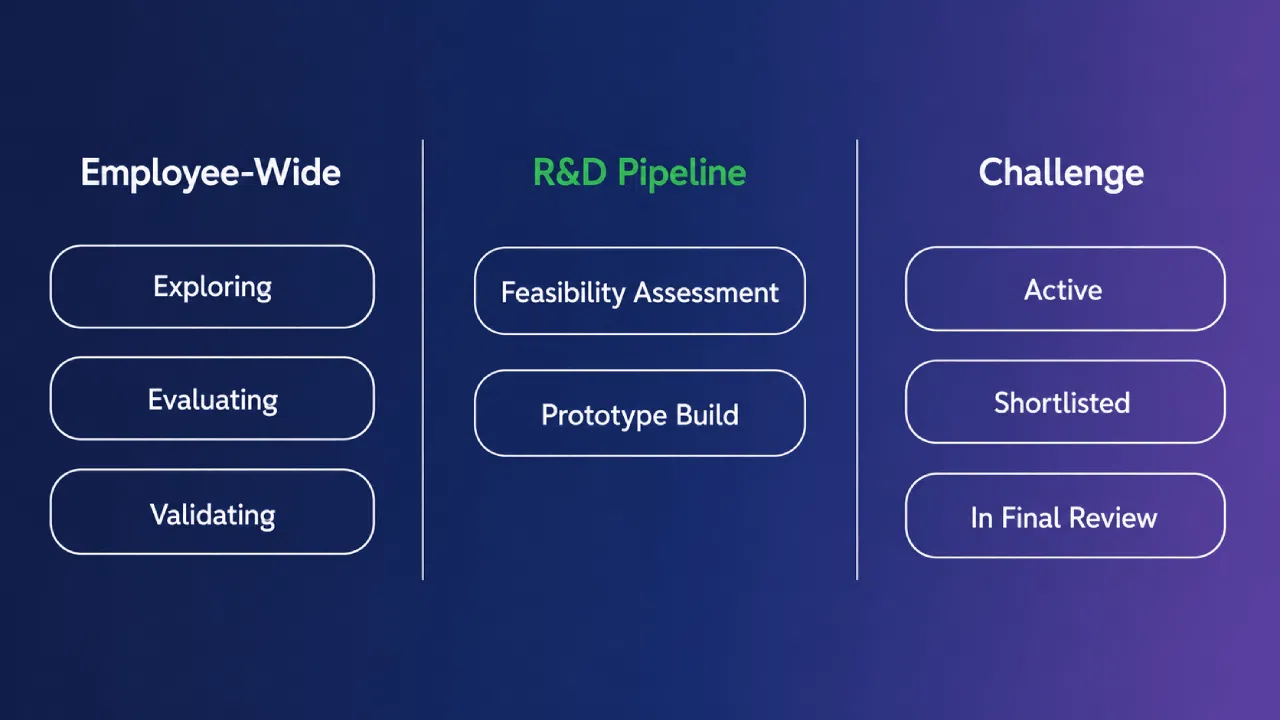
Employee-wide ideation programs run on high volume and casual contributors, most of whom submit an idea once and move on. That audience needs accessible, journey-oriented language.
Words like Exploring, Evaluating, and Validating carry meaning to anyone, no innovation vocabulary required. A first-time contributor should understand exactly where their idea sits without learning your process.
R&D and specialist pipelines are different. The audience is smaller, professional, and already fluent in the language of development.
For them, technical descriptors are an asset, not a barrier. Stages like Feasibility Assessment and Prototype Build communicate precisely.
Dumbing those names down would cost you credibility with experts. Match the vocabulary to the audience’s fluency.
Time-bounded challenge campaigns run on a third logic. Contributors enter expecting speed, and the naming should signal that pace.
Sprint-style labels like Active, Shortlisted, and In Final Review match what a deadline-driven participant expects. A leisurely “Under Consideration” would feel wrong in a two-week challenge.
Applying one naming set everywhere, regardless of audience or pace, is the mistake. Program type should drive the naming logic, every time.
Redesign the Contract, Not Just the Labels
Stage names are a contributor’s first contact with your funnel’s culture. In one or two words, they communicate whether their idea is moving or stored.
Three moves matter most:
- Replace passive labels with action or outcome language (“Validating” instead of “Under Review”)
- Use one name per stage everywhere a contributor encounters it
- Match the vocabulary to the program type, since employee-wide, R&D, and challenge programs need different approaches
Most organizations that go through this discover naming was never just about the labels. It surfaces questions about process ownership, feedback cadence, and how decisions get made.
Naming is a diagnostic. The fix usually points to structure: the kind that turns scattered submissions into decisions with measurable business impact.
Start with the words contributors actually see. That’s where participation is won or lost.
Download our ebook on enterprise idea management, or book a demo to see how Accept Mission handles automated routing, escalation workflows, and audit trails.










 English
 Dutch
Dutch Portuguese
 Spanish
 French
 German
 Arabic