
The Ultimate Innovation Strategy Blueprint: 7 Proven Plans to Drive Growth16 min read

Did you know that 84% of executives say innovation is critical to their company’s growth strategy, but only 6% of them are delighted with their innovation performance?
That stark gap highlights why treating innovation as a one-off brainstorm won’t cut it. Instead, you need a repeatable system that delivers measurable results.
In this article, we’re offering you a blueprint made to work, whether you’re building something from scratch or scaling within an established company.
Who Should Use This Guide: Startups and Established Businesses
Startups hunt for product–market fit, while large companies juggle legacy systems, risk, and shareholder pressure. You face different resource constraints, but you share one goal: steady growth.
This blueprint bridges the gap by offering flexible steps for any team size. It also shows how each plan plugs into real revenue targets, so finance stays on board.
Whether you build SaaS in a garage or manage a global portfolio, you will find tactics that match your pace.
- Startups need fast learning loops rather than complex stage gates
- Mid‑market firms benefit from portfolio thinking because it spreads risk
- Enterprises gain leverage when they tap hidden assets like data and brand trust
These three points reveal why a one‑size approach never works.
Each group brings unique strengths and bottlenecks. When you match the right plan to your stage, execution speeds up. Moreover, success stories become easier to share across the company.
Plan 1: Fit Your Innovation Strategy to Your Growth Stage
Choosing the right innovation strategy starts with an honest assessment of where your company stands today.
Assess Your Current Phase and Choose the Right Approach
One practical way to assess your company’s growth stage is to use a simple scale: explore, expand, or exploit.
This method helps you clarify priorities and allocate resources where they matter most.
- Explore: Search for new value propositions and test bold ideas.
- Expand: Build on traction by widening your customer base and scaling promising offerings.
- Exploit: Optimize and defend mature cash cows while also seeding fresh bets for future growth.
Map your major projects to one of these buckets. That way, you avoid mixing goals and can spot gaps or overlaps early.
This structure not only keeps everyone aligned but also makes it easier to spot which areas might need more focus or investment.
Adapt Methods for Startups vs. Established Companies
Startups thrive on lean experimentation because cash is tight, so they run cheap tests that show whether customers care before investing more.
On the other hand, corporations can afford to fund moonshot projects, but they also have to navigate heavier governance and compliance hurdles.
To manage this, it helps to create a two-track system:
- Set up a lightweight sandbox for early ideas
- While maintaining a formal path for larger strategic programs
This split keeps speed without ignoring risk.
- Define a stage‑appropriate funding model, such as milestone grants for early ideas.
- Align decision checkpoints with explore, expand, and exploit gates.
- Keep executive reviews short and focused on learning, not on perfect forecasts.
Quick example: For instance, an early-stage fintech might experiment with a few lending concepts by setting up simple landing pages and running small ad campaigns. Within two weeks, the team could see which page attracts more interest, then focus resources on the winner while shelving the rest. At the same time, a large bank could use a sandbox environment to explore blockchain solutions, running 90-day pilots to avoid endless debates and quickly learn what works.
These actions ensure resources match project maturity, and they also reduce waste from over‑planning early experiments.
As a result, teams understand expectations at every stage, and the portfolio stays healthy and transparent.
Plan 2: Link Innovation Initiatives to Revenue Goals
Clear revenue goals keep innovation grounded in business reality, which ensures every new idea has the potential to drive measurable growth.
Set Measurable KPIs That Tie to Business Outcomes
A metric matters only if it guides a funding choice, so always tie your KPIs to real decision points.
For instance, start by picking two or three leading indicators, such as:
- Solution adoption rate
- Customer sign-ups
- Payback period at launch
These indicators help you spot early progress and know if your idea is moving in the right direction.
Then, add a lagging indicator, like gross margin after year one or total revenue generated by the new initiative.
Once you have these metrics, post them on a live dashboard so everyone sees real-time progress, helping teams stay focused and making it easy for different departments to stay informed.
If possible, include a visual element like traffic-light colors or trending graphs to make key shifts easy to spot.
Create Feedback Loops Between Results and Strategy
Set up monthly learning reviews where the team comes together to look at what they expected versus what really happened.
Use these sessions to gather insights, then adjust the roadmap within 48 hours so changes happen fast. That way, the team learns from what didn’t work, without anyone feeling singled out or blamed.
- Map each idea to a revenue lane, for example, new product sales or upsell potential.
- Agree on stage‑based budgets that unlock when KPIs hit targets.
- Share wins and losses in a short narrative so stakeholders grasp the story.
Quick example: For instance, a product team could tie a new feature, like “smart alerts”, directly to reducing churn. If churn drops after launch, the team might unlock more funds or fast-track the next sprint. By making these KPIs visible, finance and leadership can quickly see what’s working and keep momentum high.
These steps knit innovation to the P&L. Finance trusts the process because they see numbers, not hype.
Teams move faster since approvals follow clear triggers. Meanwhile, leadership can re‑prioritize based on fresh data.
Plan 3: Build and Manage a Balanced Innovation Portfolio
A healthy innovation portfolio means spreading your bets instead of putting all your resources into one idea.
Diversify Projects by Risk and Reward
A good rule of thumb is to use a 70-20-10 spread for your resources.
In other words:
- Allocate 70 percent to core improvements
- Dedicate 20 percent to adjacent plays
- Reserve 10 percent for bold bets
This approach allows you to protect current revenue streams while also investing in future growth.
Maintaining this balance means you avoid putting all your eggs in one basket, while also giving yourself the freedom to test big ideas without putting the entire business at risk.
Use Dashboards and Metrics to Monitor Balance
Dashboards quickly show your spend, project speed, and how far each idea is in validation. With simple traffic-light colors, you can instantly spot overloaded or underfunded areas.
When you see red, shift funds to the right bucket right away, instead of pushing teams to chase targets that probably won’t pay off or bring results.
Here’s how to keep your innovation pipeline fresh and active:
- Track project velocity in weeks, not months
- Report market signals, such as customer interviews per sprint
- Retire stale projects quickly and re‑allocate their budget in the same quarter
Quick example: For instance, if a company notices its bold-bet budget has slipped, it could shift under-performing projects into maintenance mode. This would free up funds to launch a new pilot, like a sustainability initiative, that could become a future growth driver if successful.
Keeping your pipeline fresh with regular reviews and quick metrics prevents zombie projects from eating up cash.
As a result, morale rises because teams spend their energy on ideas that matter, and it also makes portfolio health easier to explain to the board and helps everyone stay aligned.
Plan 4: Leverage Open Innovation for Strategic Advantage
Open innovation is more than a buzzword: it’s a way for companies to reach beyond their own walls and tap into outside expertise, resources, and fresh thinking.
Identify External Collaboration Opportunities
To get started, scan universities, startups, and suppliers for skills or IP you don’t have in-house.
Next, rank potential partners based on two things:
- Strategic fit with your goals
- How easy will it be to work with them
It helps to use a simple scoring table like the one below to keep your team aligned:
| Potential Partner | Strategic Fit | Ease of Partnership | Quick-Win Pilot Idea |
|---|---|---|---|
| Berlin Tech Univ. | High | Medium | New material testing for sensors |
| Local AI startup | Medium | High | AI prototype for customer insights |
| Supplier Z | Low | High | Sustainable packaging experiment |
After ranking, focus first on quick-win pilots: those that solve a real, urgent problem for your business, such as testing new materials or building an AI prototype.
These small bets build trust and show results quickly, making it easier to expand the partnership later.
Structure Partnerships and Protect Intellectual Property
Before any data or intellectual property is shared, it’s important to draft clear “who owns what” clauses so everyone knows the ground rules from day one.
Set up joint steering committees to keep partnerships on track, with fixed milestones for accountability, then release funds only as they deliver agreed outputs.
Here are a few steps to make open innovation partnerships run smoothly:
- Run time-boxed pilots, usually 90 days, to test collaboration speed
- Assign an internal champion who removes blockages daily
- Share data in a secure sandbox with audit trails
Quick example: For example, a food-tech startup could loan its plant-based protein IP to a snack brand for a limited pilot run. The snack brand might handle distribution, while the startup receives milestone payments based on performance. Both companies could agree to co-own any process tweaks that come out of the collaboration, which would help avoid disputes down the line.
These actions build trust while guarding secrets and also show outsiders that you move decisively.
Over time, your company becomes a preferred partner. And that reputation attracts even better opportunities.
Plan 5: Foster a Culture and Governance Model that Accelerates Innovation
Culture shapes how fast and far your innovation efforts go. If your people feel empowered to share and test new ideas, your company will spot more opportunities and react to change faster.
Launch Employee-Driven Idea Programs
If you want to build a truly innovative culture, start by making sure everyone feels included in the process, not just your product or engineering teams.
Here are some ways to open up innovation across your company:
- Invite employees to pitch problems, not just solutions
- Give small budgets to test assumptions with real customers
- Celebrate learning, even when ideas fail
When you create space for all voices and reward experiments, teams learn faster. Even failed ideas become lessons, and will help the company move forward and build confidence to try new things.
Streamline Decision‑Making and Approvals
Instead of requiring multi-page business cases, switch to one-page experiment charters for simplicity and speed.
Make sure ideas get approved within five working days so teams keep momentum, as this window balances speed with thoughtful review and avoids stalled ideas or lost support.
Meanwhile, offer legal and compliance support through on-demand office hours to remove bottlenecks and keep projects moving.
To make sure your innovation program is working, try these :
- Create a simple scoring rubric that rates desirability, feasibility, and viability.
- Recognise top contributors each quarter with non‑monetary rewards like exposure to senior leadership.
- Track idea‑to‑launch cycle time and publish trends company‑wide.
Quick example: For instance, a telecom operator could cut its idea approval time from 30 days to 5 by switching to a one-page canvas. This might double participation and lead to employee ideas that save hundreds of thousands in yearly costs.
These moves make innovation everyone’s job.
Red‑tape reduction boosts speed, while recognition fuels participation. Over time, the organization shifts from permission seeking to proactive problem solving.
Plan 6: Accelerate Innovation with the Right Technologies
Selecting the right technologies for innovation can make the difference between slow progress and real breakthroughs.
Use AI and Digital Tools to Boost Ideation and Evaluation
To really accelerate innovation, consider adopting AI-driven ideation platforms that can spot weak signals in places like patent filings and social media chatter.
There are several reasons why it makes sense to use these tools in your innovation process:
- They help you surface opportunities and threats earlier than manual research
- They streamline how teams brainstorm and prioritize ideas across departments
- They reduce busywork, letting your team focus on what matters most
As you use these platforms, you will also find it easier to prioritize ideas based on data rather than gut feel, which leads to smarter decisions.
Moreover, by automating much of the information-gathering process, your team can focus more energy on creative problem-solving instead of endless research.
Choose Technologies That Fit Your Team and Strategy
With Accept Mission, you can get started right away using off-the-shelf tools that integrate with your existing systems.
Plus, integrations with Microsoft Teams, Excel, Power BI, and Zapier make it easy to connect Accept Mission with your daily workflows and dashboards.
Here are a few practical ways Accept Mission supports your innovation workflow:
- Run idea campaigns (missions) to gather suggestions and engage employees in real time
- Use AI-powered tools to enrich idea content, spot patterns, and rate ideas more effectively
- Track idea and project progress with built-in dashboards and analytics
Quick example: For instance, a company could use Accept Mission to launch an idea campaign across different regions, gather suggestions from employees in real time, and track the best ideas using built-in dashboards. As a result, leadership can quickly spot promising ideas and move them to the next stage, helping the company act on innovation opportunities much faster.
Instead, keeping your tech stack simple is the best way to avoid overload and unnecessary complexity.
With Accept Mission, you can start small, running pilot idea campaigns or collecting feedback quickly, so you can show value early and get buy-in from stakeholders.
As teams see real results and leaders gain confidence, it becomes easier to expand your innovation program at your own pace.
Over time, using a focused platform like this can help your organization move new ideas from pilot to rollout, making innovation a repeatable habit rather than a one-off event.
If you’re ready to put these strategies into action, why not see Accept Mission in action for yourself?
Book a free demo today and discover how the platform can help you turn innovation plans into measurable results (no matter your company size or industry).
Plan 7: Turn Sustainability into a Profitable Innovation Driver
Sustainability isn’t just good for the planet; it can also become a powerful growth driver for your business when you embed it into every step of your innovation process.
Embed Sustainability into New Products or Processes
Start with customer pain points that overlap with environmental gains, so you create solutions that are both practical and impactful.
Here are some practical ways you could embed sustainability in your process:
- Design packaging that not only lowers shipping costs, but also reduces waste
- Test your prototypes using a life-cycle impact calculator to understand the environmental benefit
- Simplify materials or enable easier recycling based on customer feedback
As you gather feedback, look for ways to further simplify materials or enable easier recycling for customers.
Focusing on these overlapping needs and validating them with real data will help you launch innovations that benefit both your business and the planet.
Measure and Communicate the Business Impact
To show the value of your sustainability initiatives, you should start by tracking metrics such as cost savings, new revenue from green segments, and emission reductions.
Next, make sure to publish these results in plain language, so customers and investors can easily understand the benefits and see the tangible value your efforts are creating.
As your positive impact becomes more visible, your brand reputation grows stronger and, over time, clear communication about your progress can open doors to valuable partnerships and funding.
Consider these action steps to make sustainability a real driver of profit in your company:
- Identify quick wins, like energy‑efficient retrofits, that pay back within 18 months.
- Partner with suppliers who share data on their carbon footprint.
- Apply for green grants or tax credits to offset upfront costs.
Quick example: For example, a European skincare company could switch to recyclable refill pods for its popular products. This change might lower packaging costs, attract eco-conscious customers, and encourage the team to add a sustainability checklist to every new product brief.
As you implement these changes, profit can emerge through lower input costs, the ability to charge premium prices, and increased brand loyalty.
Eventually, as these strategies prove successful, sustainable design often becomes the default way to approach every project.
Next Steps: Pilot and Scale Your Chosen Plans
Once you’ve chosen your innovation plans, it’s time to move from strategy to real action.
Start small by running focused pilots to learn quickly and reduce risk, then use those results to decide whether to scale, pivot, or stop.
Make sure your pilots are set up for success:
- Choose just one or two plans to test at a time
- Set clear metrics and review checkpoints from the beginning
- Bring in finance early, so budget hurdles don’t slow you down
When you review results, use those lessons to build a roadmap for scaling successful initiatives, so your innovation program steadily matures and new ideas can thrive.
Now that you’ve explored seven practical plans, start with the one that tackles your biggest challenge, learn quickly as you go, and share your results to build momentum.
Want to see how all of this works in practice? Schedule a free Accept Mission demo today and explore how the platform can support every step of your innovation journey.
Engage Your Circle: Share This Article on
Related Posts








In This Article
How mature is your innovation system?
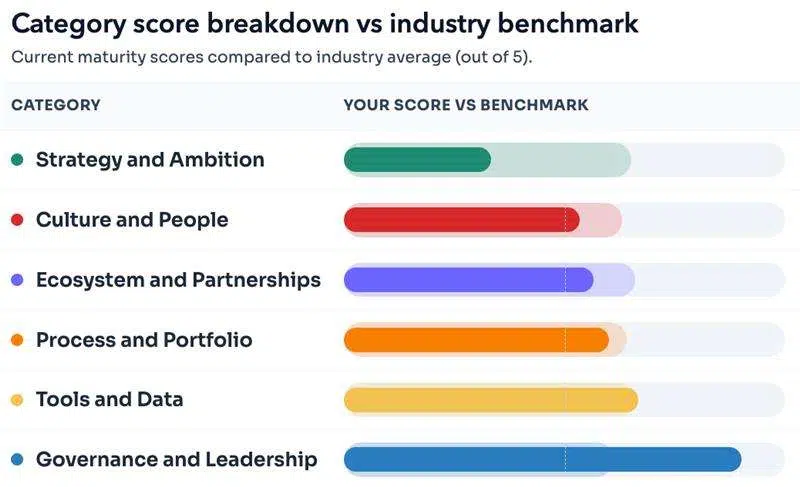
Benchmark your governance, portfolio visibility, and decision making in minutes.
Start the benchmark →






 English
  Dutch
Dutch  Portuguese
  Spanish
  French
  German
  Arabic